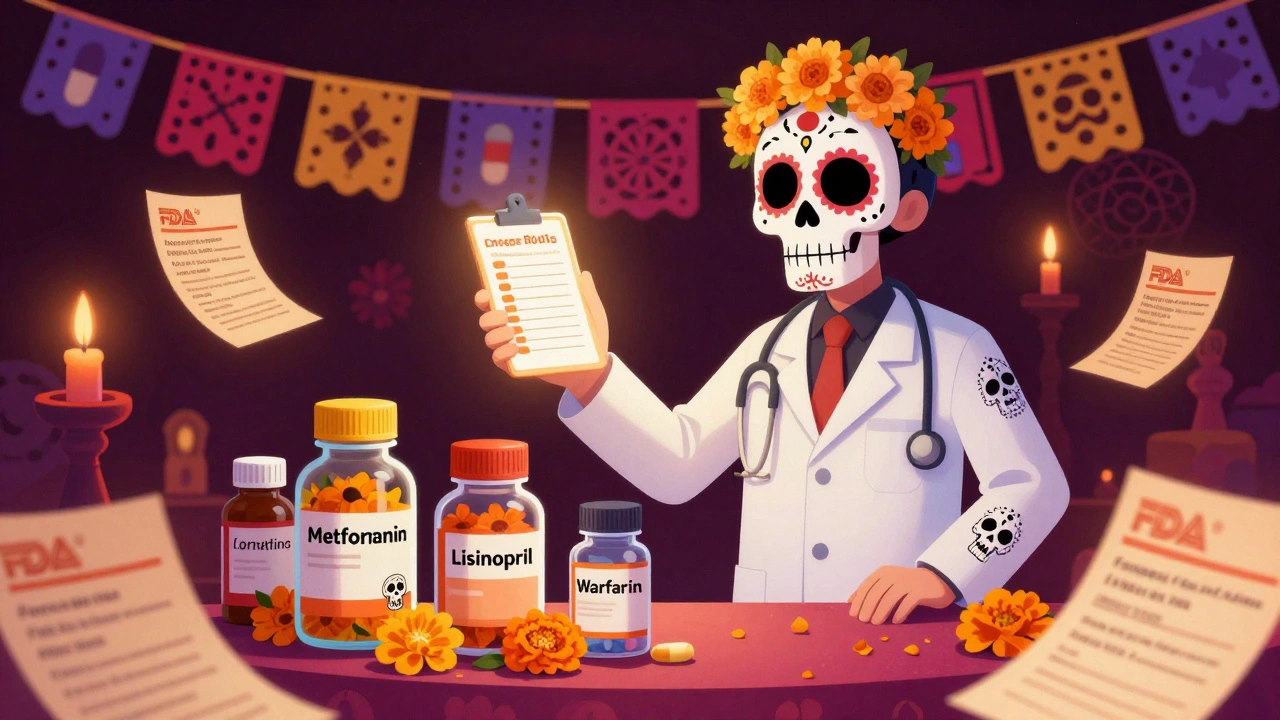
Doctors aren’t just prescribing pills-they’re making decisions that affect patient budgets, adherence, and long-term health. And when it comes to generics, those decisions matter more than ever. In 2025, generic drugs make up over 90% of all prescriptions filled in the U.S., yet they account for less than 23% of total drug spending. That’s not just a cost-saving trick-it’s a clinical advantage. But for many physicians, keeping up with the latest on generics isn’t automatic. It takes deliberate, ongoing education.
Why Generics Aren’t Just Cheaper-They’re Clinically Equivalent
A lot of patients still worry: "Is this generic the same as the brand?" The answer, backed by the FDA, is yes-for the vast majority of drugs. The agency requires generics to prove they’re bioequivalent: same active ingredient, same strength, same dosage form, and the same rate and extent of absorption as the brand-name version. This isn’t a loophole. It’s a rigorous process. In 2023 alone, the FDA approved over 1,000 new generic drugs under its GDUFA III program.But here’s what many doctors don’t realize: bioequivalence doesn’t always mean identical in every clinical scenario. For drugs with a narrow therapeutic index-like warfarin, levothyroxine, or phenytoin-even small differences in absorption can matter. That’s why continuing education isn’t just about memorizing names. It’s about understanding when and how to switch safely.
A 2023 study in JAMA Internal Medicine found that when doctors prescribed generics instead of brand-name drugs, medication adherence jumped by 23.7%. Why? Cost. Patients are far more likely to skip doses if a pill costs $150 instead of $10. Generics remove that barrier. But only if doctors feel confident prescribing them.
What CME Requirements Actually Look Like Today
There’s no national standard for continuing medical education (CME) when it comes to generics. It’s a patchwork. Forty states require between 20 and 50 hours of CME every two years. Ten states have no requirement at all.California demands 50 hours of Category 1 CME every two years-but doesn’t specify how much must be pharmacology-focused. Maryland requires three hours of CME on opioid prescribing, with half an hour dedicated to Prescription Drug Monitoring Programs. Georgia mandates 10 hours of Category 1 credits every two years, including three hours on responsible opioid prescribing for DEA-registered doctors.
Then there’s the MATE Act, which went into effect in June 2023. It requires every DEA-registered practitioner-no matter their specialty-to complete eight hours of training on substance use disorders. That includes education on generic alternatives to controlled substances. This isn’t optional anymore. Compliance is due by June 2025.
And it’s not just opioids. California updated its rules in January 2024 to include two hours on biosimilars-complex, biologic generics that are changing how we treat autoimmune diseases and cancer. These aren’t your grandfather’s generics. They require different knowledge.
What Doctors Actually Learn in Pharmacology CME
Most accredited pharmacology courses now cover the same core topics:- Distinguishing generic names from brand names (e.g., metformin vs. Glucophage)
- Understanding the FDA’s Orange Book-where therapeutic equivalence ratings (AB codes) are listed
- Recognizing drugs with narrow therapeutic indices and when to avoid substitutions
- Identifying common drug interactions, especially with over-the-counter supplements
- Using drug databases like UpToDate or Lexicomp to verify equivalence in real time
One study found that physicians who completed targeted pharmacology CME improved their generic substitution decisions by 17.3%. That’s not a small number. It means fewer patients getting stuck with expensive brand drugs because their doctor didn’t feel confident switching.
But here’s the catch: not all CME is created equal. A 2022 survey by the American Medical Association found that 42% of physicians found pharmacology CME "somewhat to not at all useful." Why? Because it’s often generic (pun intended). A radiologist forced to sit through 12 hours of pain management modules isn’t learning anything relevant to their daily practice. The same goes for dermatologists or ophthalmologists who rarely prescribe controlled substances.
The Real Problem: One-Size-Fits-All CME
The biggest flaw in today’s system? It treats all doctors the same. But a cardiologist, a psychiatrist, and a radiologist don’t prescribe the same drugs. Why should they take the same 10-hour pharmacology course?On physician forums like Sermo and Reddit, the frustration is clear. One family doctor in California said her 10-hour CME module on bioequivalence helped her explain to patients why generics work-and reduced their concerns by 40%. Another doctor, a radiologist, said: "I’ve never prescribed a single opioid. Why am I wasting hours on this?"
That’s why the National Academy of Medicine is pushing for a shift-from hours to competencies. Instead of counting credits, they want to test whether doctors can correctly identify equivalent generics, assess drug interactions, and justify substitutions based on patient data. Pilot programs are already launching in 12 states.
How to Actually Stay Current (Without the Boring Stuff)
You don’t need to sit through another 8-hour webinar to stay up to date. Here’s what works:- Use your EHR. UpToDate and Epic now integrate CME credits directly into clinical workflows. Reviewing a drug monograph during a patient visit? You earn 0.5 credits automatically.
- Bookmark the FDA’s Orange Book. It’s free. Updated quarterly. It tells you exactly which generics are rated AB (therapeutically equivalent).
- Follow the ASHP. The American Society of Health-System Pharmacists offers short, practical online modules on generics and biosimilars. 41% of doctors use them.
- Ask your pharmacy. Many hospital pharmacies have clinical pharmacists who can answer quick questions about substitutions. Use them.
- Focus on your specialty. If you’re in primary care, prioritize drugs you prescribe daily: statins, antihypertensives, metformin. If you’re in psychiatry, learn about SSRI generics and switching protocols.
And here’s a pro tip: when a patient asks, "Is this generic okay?"-don’t just say yes. Say: "This generic has the same active ingredient and is proven to work the same way in your body. It’s been approved by the FDA. The only difference is the price-and your wallet." That simple script builds trust.
The Future: AI, Personalization, and Real-Time Learning
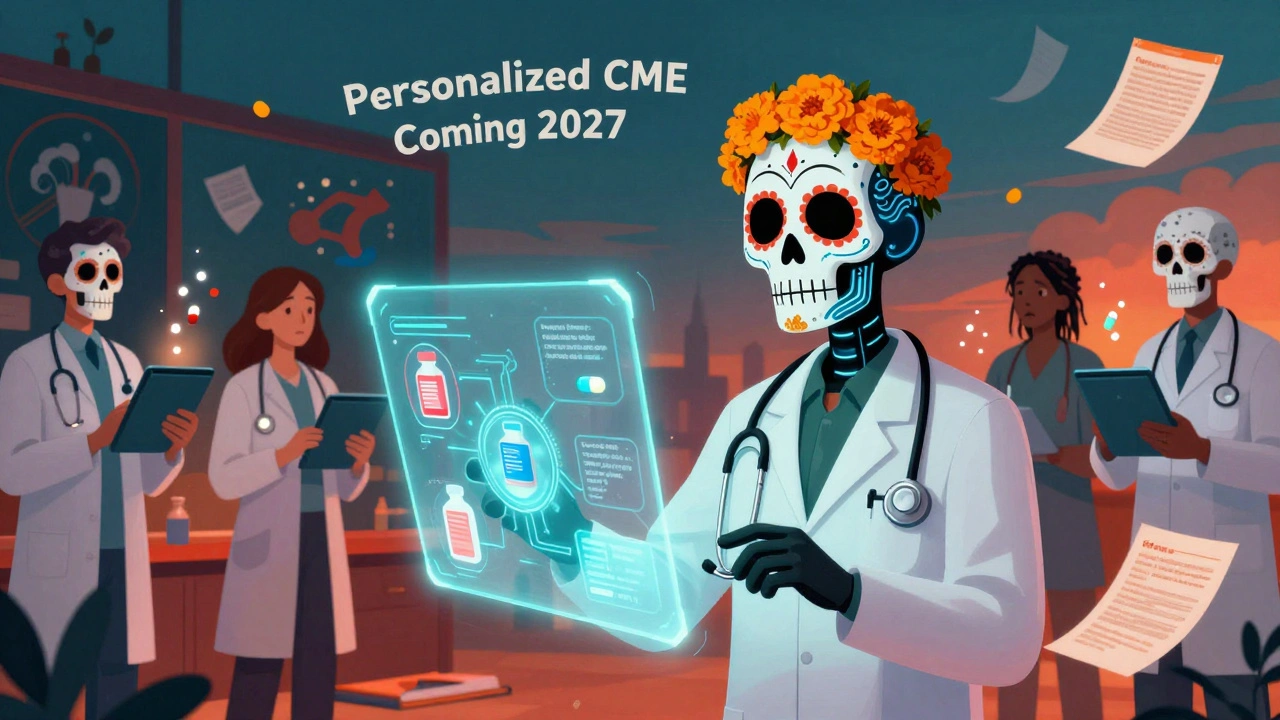
By 2027, most CME will be personalized. AI will analyze your prescribing patterns and recommend only the modules you need. If you rarely prescribe opioids, you won’t get forced into opioid training. If you’re prescribing a new generic for rheumatoid arthritis, you’ll get a 10-minute update on its bioequivalence data.That’s the future. And it’s coming fast. The CME market is worth $1.2 billion, and 38.5% of that is pharmacology-focused. With 83% of doctors now using digital platforms, the shift to mobile, bite-sized learning is already happening. Mobile completions for pharmacology courses grew 47% year-over-year in 2023.
The goal isn’t to turn every doctor into a pharmacologist. It’s to give them the confidence to prescribe generics when appropriate-and to know when not to.
Frequently Asked Questions
Are generic drugs really as effective as brand-name drugs?
Yes-for most drugs. The FDA requires generics to prove they’re bioequivalent: they deliver the same amount of active ingredient at the same rate as the brand. Studies show they work just as well in treating conditions like high blood pressure, diabetes, and depression. The only exceptions are drugs with a narrow therapeutic index, like warfarin or levothyroxine, where small differences in absorption can matter. Even then, switching is often safe if done carefully and monitored.
Do all states require CME on generics?
No. While 68% of state medical boards require some form of pharmacology education, only 42 states include generic vs. brand-name identification as a specific requirement. Some states, like California, have no standalone requirement but expect pharmacology content to be covered within broader CME hours. Others, like Maryland and Georgia, have specific opioid or controlled substance rules that touch on generics. The MATE Act now requires all DEA-registered doctors to complete eight hours of training that includes generic alternatives to controlled substances.
Why do some doctors hesitate to prescribe generics?
Three main reasons: lack of confidence, outdated beliefs, and patient pressure. Some doctors still believe generics are "inferior" because of old marketing or anecdotal experiences. Others worry about liability if a patient has a bad reaction. And patients sometimes refuse generics because they think brand = better. Proper CME helps doctors overcome these myths with data-and gives them clear, evidence-based language to explain why generics are safe and cost-effective.
How can I find good CME courses on generics?
Look for courses accredited by the ACCME. Platforms like UpToDate, Medscape, and the American Society of Health-System Pharmacists (ASHP) offer high-quality, specialty-specific modules. Check if the course covers the FDA’s Orange Book, therapeutic equivalence ratings (AB codes), and real-world prescribing scenarios. Avoid courses that just list drug names-look for ones that teach you how to think about substitutions.
Is there a difference between generics and biosimilars?
Yes. Generics are chemically identical copies of small-molecule drugs-like metformin or lisinopril. Biosimilars are copies of complex biologic drugs-like Humira or Enbrel. They’re not exact copies because biologics are made from living cells. But they’re proven to have no clinically meaningful differences in safety or effectiveness. California now requires CME on biosimilars, and more states will follow. Don’t assume all "generics" are the same-biosimilars need their own learning path.
What Comes Next
The push for generics isn’t slowing down. With drug prices still rising and 90% of prescriptions already being generics, the focus is shifting from "can we use generics?" to "how do we use them better?"For doctors, that means staying curious. Don’t wait for your state to mandate a course. Check the FDA’s Orange Book once a month. Ask your pharmacist about new generic approvals. Use your EHR’s built-in CME tools. And when you prescribe a generic, explain why-it’s not just about saving money. It’s about helping patients stay on their meds, every day.

There are 8 Comments
Rob Purvis
Wow, this post is exactly what I’ve been trying to tell my residents for years-generics aren’t just cheaper, they’re often better for adherence. I had a patient on warfarin who switched from brand to generic, and her INR went haywire for two weeks-turned out the filler in the generic changed her absorption slightly. Now I check the Orange Book every time I switch someone on a narrow-therapeutic-index drug. It’s not about fear-it’s about precision.
Levi Cooper
Why are we even talking about this? In my state, we’ve been using generics since the 90s. The FDA doesn’t even test them properly-half the time they’re just repackaged Chinese crap with different dyes. I don’t care what the Orange Book says, I won’t prescribe a generic unless I’ve personally seen it work in my clinic. And if you’re a radiologist, you shouldn’t be forced to sit through this junk. We don’t write prescriptions. End of story.
Ashley Skipp
I used to hate generics until I started using UpToDate during rounds. Now I just pull up the AB rating and tell patients ‘this is the same pill cheaper’ and they’re fine. No more ‘I can’t afford this’ stories. My clinic’s refill rate went up 30%. It’s not rocket science. Just use the tools that already exist.
Nathan Fatal
Let’s be real-the problem isn’t the lack of education, it’s the structure of CME itself. We’re treating physicians like undergrads who need to sit through a lecture on everything. A neurologist doesn’t need eight hours on opioid alternatives. A dermatologist doesn’t need to memorize AB codes for statins. Competency-based learning isn’t a buzzword-it’s the only ethical way forward. We should be tested on what we actually prescribe, not what some bureaucrat thinks we should know. The data supports this. The AMA’s 2022 survey showed 42% of docs found pharmacology CME useless. That’s not a failure of knowledge-it’s a failure of design.
And AI-driven personalization? That’s not the future. It’s already here. My EHR nudges me every time I prescribe a new generic. I get a 3-minute video from ASHP with the latest bioequivalence data. No more 12-hour webinars. Just-in-time learning. That’s what doctors need-not more hours, but smarter content.
The FDA’s Orange Book is free. It’s updated quarterly. It’s the single most underused resource in medicine. Bookmark it. Use it. Teach it. Stop treating CME like a box to check and start treating it like a clinical tool.
And if you’re still scared of generics because of some anecdote from 2005? You’re not being cautious-you’re being outdated. The science has moved on. The patients are waiting. The system is ready. It’s time we caught up.
nikki yamashita
YES. This. I just told a patient today ‘this generic is literally the same pill, just cheaper’ and she cried because she’d been skipping doses for months. We don’t need more lectures. We need to stop pretending brand = better. It’s not magic. It’s math. And patients deserve to know that.
Laura Weemering
But… what if the FDA is lying? What if the ‘bioequivalence’ is just a marketing ploy? I read this one study-anonymous, from a .org site-that said generics in 2024 had 12% more inactive ingredients than brands… and those fillers are linked to chronic inflammation. And don’t get me started on the Chinese manufacturing… and the lack of transparency… and the fact that the same company owns both the brand and the generic… it’s all connected… and the DEA… they’re in on it… I’ve seen the patterns…
Also, I think the Orange Book is fake. I tried to access it once and it redirected me to a .gov page that looked… too clean. Like it was made in 2003. And why does it only have AB codes? Where are the AC, AD, AE ratings? Are they hiding them? I’m not paranoid-I’m informed.
Stacy Foster
They’re forcing this on us because Big Pharma wants us to switch so they can charge more for biosimilars later. It’s a trap. They make the brand, then let the generic expire, then release a ‘new’ version as a biosimilar and charge $10,000 a month. It’s all a scheme. I saw a doc on TikTok say the FDA gets kickbacks from drug companies. I don’t know if it’s true… but it feels true. And why do they make us learn about this if they’re just going to replace generics with even more expensive stuff? It’s manipulation. And they’re using CME to brainwash us.
Donna Anderson
OMG YES I JUST DID THIS TODAY. Patient asked why I switched her to metformin generic and I said ‘same pill, 90% cheaper’ and she was like ‘wait really?’ and then gave me a hug. I’ve been using the ASHP modules and they’re like 5 mins each and actually helpful. My EHR even gives me credits when I look up a drug. It’s not boring anymore. Just use the tools. Seriously. It’s not hard.
Write a comment
Your email address will not be published. Required fields are marked *