
After finishing cancer treatment, many survivors feel a mix of relief and confusion. The constant appointments, scans, and treatments are over-but now what? You’re told to "take care of yourself," but no one clearly explains what that actually means. That’s where a survivorship care plan comes in. It’s not just a piece of paper. It’s your roadmap for life after cancer-detailing what tests you need, when to see which doctor, and how to spot problems early before they become serious.
What Exactly Is a Survivorship Care Plan?
A survivorship care plan is a written document that pulls together two key parts: your treatment summary and your follow-up plan. The treatment summary lists every detail of your cancer journey-what type you had, when you were diagnosed, what stage, what surgeries you had, which chemotherapy drugs and doses, how much radiation you received, and whether you were part of a clinical trial. It also includes the names and contact info of your oncology team. The follow-up plan tells you what happens next. It lays out a schedule: when to get your next mammogram, blood test, or CT scan. It warns you about possible late effects-side effects that show up months or even years later. And it gives you advice on staying healthy: how to eat, how much to move, whether to quit smoking, and when to get vaccines. This isn’t just for you. It’s also for your primary care doctor. Most survivors end up seeing their family doctor for routine checkups after treatment. But unless that doctor has your plan, they won’t know you had radiation to your chest at age 28, which means you now need an echocardiogram every five years to check your heart. Without this info, important screenings get missed.Why Follow-Up Isn’t Just About Checking for Recurrence
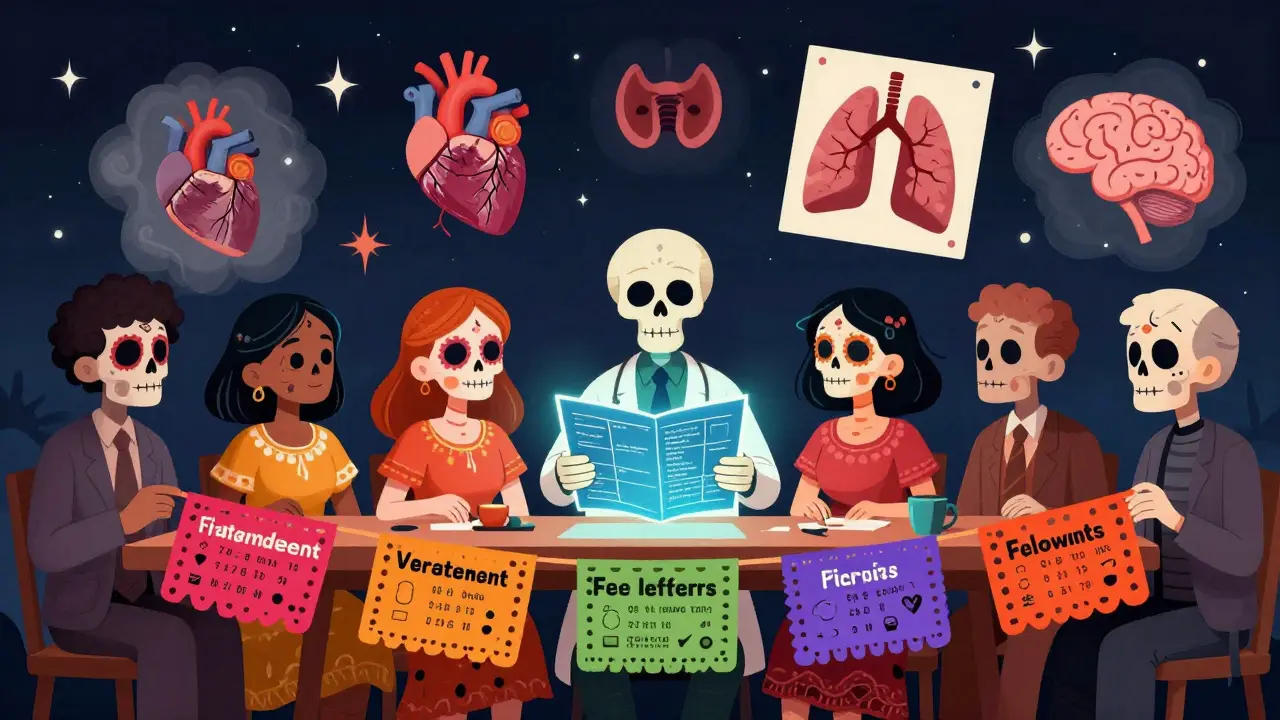
Many people think follow-up visits are only to see if the cancer came back. That’s part of it-but only part. Late effects are just as important, and sometimes more dangerous. For example, women who got chest radiation for Hodgkin lymphoma have a much higher risk of breast cancer later in life. The CDC recommends they start annual mammograms eight years after treatment, or at age 25, whichever comes later. Miss that, and you could miss a tumor in its earliest, most treatable stage. Men who received pelvic radiation for prostate cancer may develop bowel or bladder problems years later. People who got certain chemo drugs like doxorubicin (an anthracycline) need regular heart checks because the drug can weaken the heart muscle over time. If you received more than 250 mg/m² of this drug, guidelines say you need an echocardiogram every five years. Even newer treatments like immunotherapy and CAR-T cell therapy can cause delayed issues-like thyroid problems, nerve damage, or autoimmune conditions-that weren’t seen with older therapies. The Children’s Oncology Group updated their guidelines in 2022 to include 26 new late effect recommendations just for these newer treatments. Your plan should list all these risks based on your exact treatment. One-size-fits-all doesn’t work here. Your plan must be built from your unique history.Screening After Cancer: What You Need and When
Screening after cancer isn’t the same as for someone who never had cancer. It’s more frequent, more specific, and often starts earlier. Here are real examples based on actual guidelines:- If you had breast cancer and got radiation, you may need an MRI every year, in addition to your mammogram.
- If you had colorectal cancer, you’ll need a colonoscopy one year after surgery, then every three to five years after that-instead of every ten like average-risk adults.
- If you had childhood leukemia and received cranial radiation, you need yearly thyroid function tests starting five years after treatment.
- If you had testicular cancer and got chemotherapy, you need annual lung X-rays for five years because of increased risk of secondary lung cancer.
Late Effects: The Silent Risks You Can’t Ignore
Late effects aren’t just physical. They can be emotional, financial, or social too. Physical late effects include:- Heart disease from chemo or radiation
- Lung scarring from certain drugs or radiation
- Infertility or early menopause
- Nerve damage causing numbness or pain (peripheral neuropathy)
- Thyroid dysfunction
- Bone thinning (osteoporosis) from hormone therapies
- Secondary cancers caused by treatment
Who Creates the Plan-and When?
Ideally, your oncology team creates the plan right after your last treatment. But in reality, timing varies. About 83% of cancer centers give the plan at the end of treatment. The rest wait months later, sometimes because they’re overwhelmed or lack staff. Only 61% of cancer centers have dedicated staff to build these plans. The average time to create one? 45 minutes. That’s a lot of work for one person. That’s why digital tools like the OncoLife Survivorship Care Plan and ASCO’s new digital builder are changing things. These platforms can generate a personalized plan in under 10 minutes by pulling data from your medical record and matching it to national guidelines. But technology alone isn’t enough. The plan must be reviewed with you. You need to understand it. If you leave the office with a 20-page PDF you don’t know how to read, it’s useless.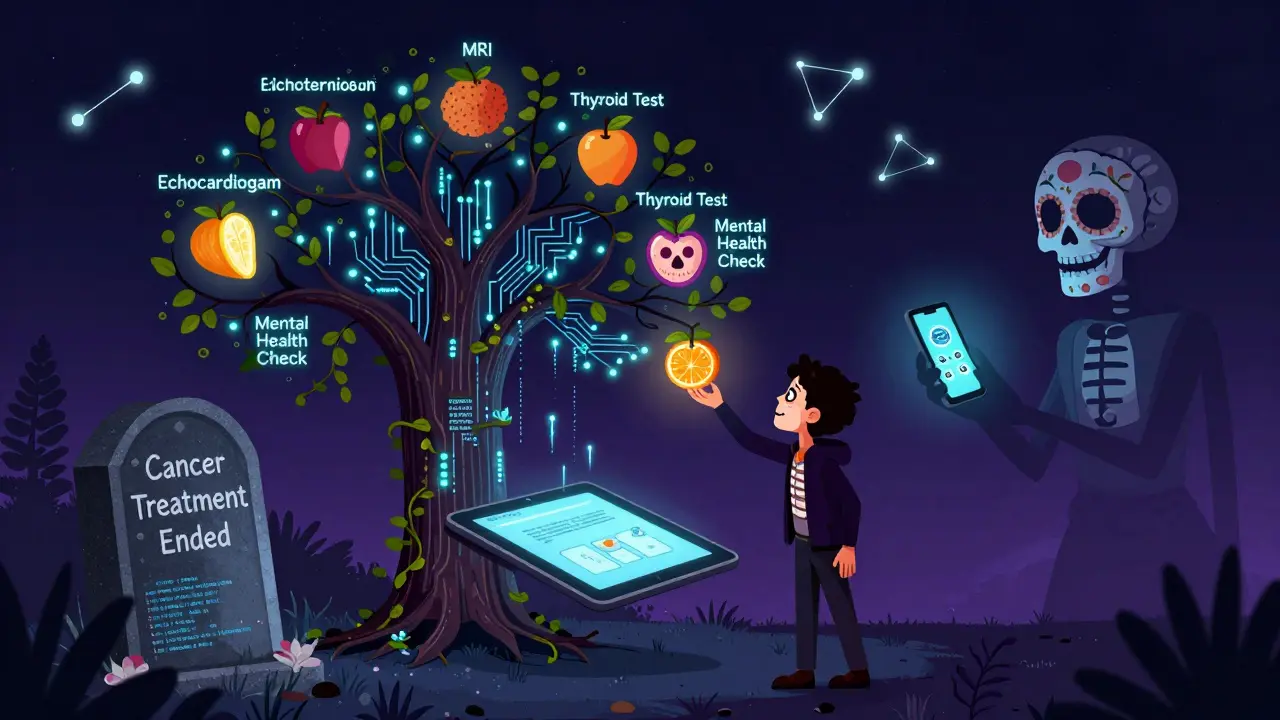
Why So Many Survivors Don’t Get a Complete Plan
Here’s the hard truth: only 42% of survivors get a full survivorship care plan with both treatment summary and follow-up recommendations. Even worse, only 38% of survivors say they actually have the plan in hand. Why? Three big reasons:- No reimbursement. Medicare pays $127.50 to create a plan-but the real cost is closer to $330. Most clinics lose money doing it.
- Broken systems. Your oncology records don’t talk to your primary care’s system. If your family doctor can’t access your plan, they can’t use it.
- It’s not prioritized. Oncologists are focused on treating cancer. Survivorship care often gets pushed to the bottom of the list.
What You Can Do Right Now
You don’t have to wait for your doctor to hand you a plan. Here’s what to do:- Ask for your treatment summary. Request it in writing. If they say no, ask for the name of the person who handles survivorship care.
- Ask for your follow-up plan. Specifically ask: "What tests do I need and when? What late effects should I watch for? Who should I see if I have a problem?"
- Bring the plan to every doctor visit. Even your dentist or physical therapist might need to know about your past treatments.
- Keep a copy. Store it digitally and on paper. Update it if your treatment changes or if you get new health issues.
- Use free tools. The OncoLife plan (oncolife.org) lets you build your own based on your treatment history. It’s free, easy, and matches national guidelines.
The Future: Personalized, Predictive, and Connected
The field is moving fast. By 2025, leading cancer centers will use AI to predict your personal risk for late effects. One model can predict heart damage after radiation with 84% accuracy. Others use your genes to estimate your risk of a second cancer. New apps are syncing with smartwatches to track your heart rate, sleep, and activity levels-alerting you and your doctor to changes before you even feel sick. And systems are finally starting to talk to each other. The CancerLinQ initiative is testing new standards so your survivorship data can move safely between your oncologist, your primary care doctor, and your pharmacy. But none of this matters if you don’t have the plan. If you’re a survivor, your care doesn’t end when treatment does. It changes. And you’re the most important person in making sure it changes for the better.What’s the difference between a treatment summary and a follow-up plan?
The treatment summary is a record of what you went through-your cancer type, stage, treatments, dates, and doctors. The follow-up plan tells you what to do now: which tests to get, when, and who should do them. It also lists possible late effects and healthy living tips. One tells your history; the other guides your future.
Do I still need to see my oncologist after treatment?
Yes, but not forever. Most survivors see their oncologist every 3 to 6 months for the first 2 to 5 years, depending on cancer type and risk. After that, you’ll likely switch to your primary care doctor for routine checkups, but you’ll still need periodic scans or blood tests ordered by your oncologist or a specialist. Your survivorship plan will spell out this transition.
Can my primary care doctor handle my follow-up care?
They can, but only if they have your survivorship care plan. Without it, they won’t know you need an annual echocardiogram because of past chemo, or that you should get a mammogram every year instead of every two. Studies show survivors who give their plan to their primary doctor are 2.3 times more likely to get the right screenings.
What if I never got a survivorship care plan?
It’s never too late to ask. Contact your oncology clinic and request your treatment summary and follow-up recommendations. If they don’t have one ready, ask for the name of the survivorship coordinator. You can also use free tools like OncoLife.org to build your own plan based on your treatment history. Having something is better than nothing.
Are survivorship care plans covered by insurance?
Medicare pays $127.50 for creating one, but that only covers about 38% of the actual cost. Most private insurers don’t have specific codes for this service yet. While the plan itself isn’t billed to you, the time and effort to create it isn’t fully reimbursed-so many clinics struggle to offer it. You shouldn’t be charged for the plan, but don’t be surprised if your clinic is slow to provide it.


There are 10 Comments
Shanna Sung
Allen Ye
mark etang
josh plum
Clint Moser
Ashley Viñas
Brendan F. Cochran
jigisha Patel
Jason Stafford
Mandy Kowitz
Write a comment
Your email address will not be published. Required fields are marked *