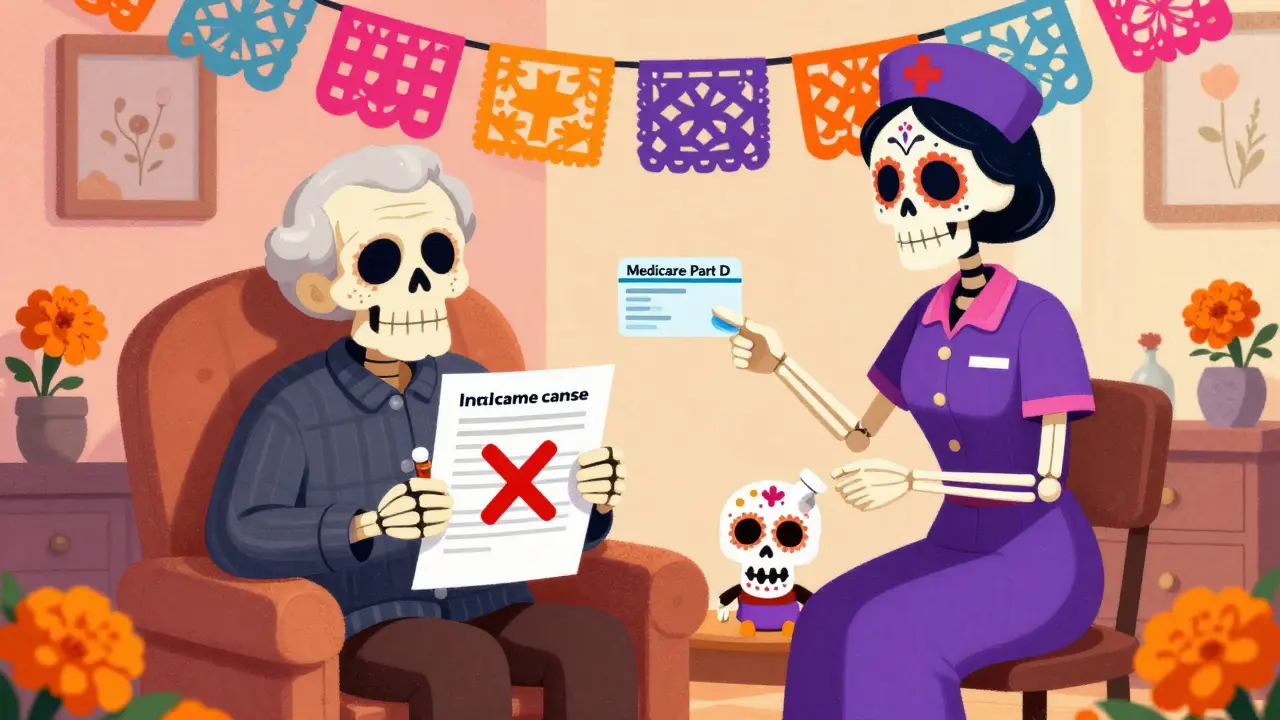
You might assume that a long-term care insurance policy covers everything while your loved one is in a nursing home. After all, the name suggests comprehensive protection for extended stays. But here is the hard truth: Long-term care insurance does not cover prescription drugs, including generic medications. This common misconception can lead to significant financial surprises and medication gaps if you are not prepared.
Understanding who actually pays for those daily pills is crucial for anyone planning for senior care or currently managing a family member’s stay in a facility. The system is complex, involving multiple layers of government programs and private plans. Let’s break down exactly how drug coverage works in nursing homes and what you need to watch out for.
The Hard Boundary: What Long-Term Care Insurance Actually Covers
Long-term care insurance is designed specifically for custodial care. This means it pays for services like help with bathing, dressing, eating, and moving around. It also covers room and board costs in facilities like assisted living or skilled nursing centers. However, it explicitly excludes medical expenses such as doctor visits and pharmaceuticals.
Think of it this way: your long-term care policy pays for the bed and the hands that help your loved one live their day-to-day life. It does not pay for the chemistry that keeps them healthy. Even if your parent lives in a high-end nursing home fully covered by their LTC policy, every pill they take must be paid for through a different channel. This separation has been the standard since modern LTC policies were introduced decades ago, but many families still get caught off guard when bills arrive.
Who Pays for Medications? Enter Medicare Part D
If long-term care insurance doesn’t handle prescriptions, who does? For the vast majority of residents, the answer is Medicare Part D. This federal program is the dominant source of drug coverage in long-term care settings today. Recent data shows that Medicare Part D accounts for over 82% of prescription drug coverage for Medicare enrollees in nursing facilities.
When a resident enters a nursing home, their medication needs don’t disappear; they just shift billing responsibility. If the resident is dually eligible for both Medicare and Medicaid, their prescriptions are typically covered under the Medicare Part D program. Pharmacies bill Medicare directly for these drugs. This setup ensures that most seniors have access to necessary medications without paying out-of-pocket for every single dose.
However, there are exceptions. About 9% of long-stay Medicare enrollees lack detectable drug coverage. These individuals either pay entirely out-of-pocket or rely on temporary assistance programs. This gap creates serious equity issues, as those without proper enrollment may face higher costs or limited access to essential generics.
Navigating Formularies and Plan Restrictions
Not all Medicare Part D plans are created equal. Each plan maintains its own formulary-a list of approved drugs. While plans must cover a wide range of medications, specific brands or generics might be excluded or placed in higher cost-sharing tiers. This is where things get tricky for nursing home staff and families alike.
Facilities must determine which drug plan a new resident is enrolled in and whether that plan works with the facility’s designated long-term care pharmacy. If a prescribed medication isn’t on the formulary, the facility or family must navigate an exceptions process. Plans are generally required to process non-formulary requests within 72 hours for nursing home residents, but delays can still happen. During these waiting periods, patients might miss doses, which can destabilize their health conditions.
To mitigate this, many successful facilities implement electronic systems that integrate with multiple Part D plan formularies. They also employ dedicated pharmacy liaison staff. These measures reduce medication access delays significantly, bringing the average wait time from over three days down to less than a day. For families, staying informed about your loved one’s specific plan details is vital.
Other Coverage Options: Private Insurance and Medicaid
While Medicare Part D leads the pack, other sources play smaller roles. Private insurance covers about 8.5% of drug costs in nursing homes. This usually applies to individuals who haven’t yet qualified for Medicare or have supplemental plans. Veterans Administration coverage accounts for a tiny fraction (0.2%), serving only eligible veterans.
For residents covered solely by Medicaid (without Medicare), the state generally pays for prescription drugs at acquisition cost plus a dispensing fee. This model is simpler administratively but offers fewer choices regarding pharmacies and sometimes brands. Understanding which payer applies to your situation helps predict out-of-pocket costs and potential coverage hurdles.
Recent Changes and Future Outlook
The landscape of drug coverage in nursing homes continues to evolve. The Inflation Reduction Act of 2022 introduced significant changes starting in 2025. Most notably, Medicare Part D beneficiaries now have an annual out-of-pocket cap of $2,000 for prescription drugs. This cap provides much-needed financial relief for seniors requiring expensive medications, though it primarily affects brand-name drugs rather than generics.
Additionally, CMS has implemented standardized formulary requirements for long-term care residents. Plans must now cover all medications on the Medicare Part D Formulary and adhere to stricter timelines for processing exceptions. These rules aim to simplify the process for facilities and improve consistency for patients. Despite these improvements, challenges remain, particularly in rural areas where pharmacy deserts make it harder to find providers willing to contract with all major plans.
| Coverage Source | Market Share (%) | Key Characteristics | Out-of-Pocket Potential |
|---|---|---|---|
| Medicare Part D | 82.4% | Standardized formularies, $2,000 annual cap (2025+) | Moderate (copays vary by tier) |
| Private Insurance | 8.5% | Varies widely by employer/plan | High (depends on specific policy) |
| Medicaid Only | 11.2% | State-funded, acquisition cost + fee | Low (often minimal copays) |
| Out-of-Pocket | 8.9% | No coverage, direct payment | Very High (full cost) |
Practical Steps for Families and Caregivers
Knowing the rules is one thing; applying them is another. Here is what you should do to ensure smooth medication management:
- Verify Enrollment Early: Confirm your loved one is actively enrolled in a Medicare Part D plan before admission. Lapses in coverage can lead to immediate billing issues.
- Check the Formulary: Obtain the current formulary from the chosen Part D plan. Cross-reference it with the resident’s prescribed medications. Flag any exclusions immediately.
- Designate a Pharmacy Liaison: Work with the nursing home to identify a staff member responsible for coordinating with pharmacies and insurers. This person becomes your primary point of contact for drug-related issues.
- Document Everything: Keep records of all prescription approvals, denials, and exception requests. This documentation is invaluable if disputes arise or appeals are needed.
- Review Costs Annually: Use the open enrollment period to compare Part D plans. Look for ones with robust networks of long-term care pharmacies and favorable pricing for your specific medications.
By taking these proactive steps, you can minimize stress and avoid unexpected bills. Remember, while long-term care insurance handles the living expenses, you must separately manage the healthcare expenses. Keeping these two worlds distinct in your mind will save you time, money, and heartache.
Does long-term care insurance cover generic drugs?
No, long-term care insurance does not cover generic drugs or any prescription medications. It only covers custodial care services like room, board, and assistance with daily activities. Prescription drugs are covered by separate health insurance plans, primarily Medicare Part D.
Who pays for medications in a nursing home?
Most commonly, Medicare Part D pays for medications in nursing homes, covering over 82% of cases. Other sources include private insurance (8.5%), Medicaid (11.2% for dual-eligible or Medicaid-only residents), and out-of-pocket payments (8.9%).
What happens if a drug isn't on my Medicare Part D formulary?
If a drug isn't on the formulary, the nursing home or family must file an exception request. Plans are required to process these requests within 72 hours for nursing home residents. Approval allows the plan to cover the non-formulary drug temporarily or permanently.
How much do residents pay out-of-pocket for drugs?
Out-of-pocket costs depend on the specific Medicare Part D plan and the drug's tier. Starting in 2025, there is an annual cap of $2,000 for Part D beneficiaries. Residents without adequate coverage may face much higher costs, potentially paying full price for all medications.
Do I need a special pharmacy for nursing home residents?
Yes, nursing homes typically use specialized long-term care (LTC) pharmacies. These pharmacies work directly with Medicare Part D plans and understand the unique billing and delivery requirements of facility-based care. Your chosen Part D plan must have contracts with these LTC pharmacies to ensure coverage.



There are 9 Comments
Gary Helminiak
Hey everyone! 👋 Just wanted to jump in and share a bit of my experience because this is such a huge topic that catches so many families off guard. I have worked in the healthcare administration space for over fifteen years now, and I can tell you from personal observation that the distinction between custodial care coverage and medical prescription coverage is one of the most misunderstood aspects of senior care planning today. It really is quite shocking how many people assume their long-term care policy is an all-encompassing safety net that will handle every single expense associated with a nursing home stay. The reality, as the post correctly points out, is that these policies are strictly designed to cover the cost of room, board, and assistance with activities of daily living like bathing, dressing, and eating. They do not touch the medical bills or the pharmacy costs at all. This separation means that you essentially need two completely different financial strategies: one for the facility fees and another for the healthcare needs. When we look at Medicare Part D, it becomes clear that this is the primary vehicle for medication coverage for the vast majority of residents. However, navigating the formularies can be a nightmare if you are not prepared. Each plan has its own list of covered drugs, and if your loved one’s specific medication is not on that list, you have to go through an exception process. This process can take up to seventy-two hours, which is an eternity when someone’s health is at stake. Many facilities have started using electronic systems to help streamline this, but it still requires vigilance from the family. You really cannot just set it and forget it. You have to actively monitor the plan details, check for formulary updates during open enrollment periods, and ensure that the pharmacy used by the facility contracts with the specific Part D plan your parent is enrolled in. It sounds complicated, but taking these steps early can save you from significant stress and unexpected bills later on. Don’t wait until admission day to figure this out! 📝💊
Nivetha Narayanan
oh wow thanks for sharing this info!! i was totally confused about who pays for meds in nursing homes lol. seems like such a mess but glad there is some help out there 😊✨
Frank Arlyss
My mother died waiting for her heart medication because the insurance company denied the exception request. They said it wasn't on the formulary. I screamed at the director. Nothing changed.
Tim Reynolds
The system is rigged. Big Pharma wants you to pay. Medicare is a trap. Always read the fine print. They lie.
Groman Neta
This article is incredibly basic and frankly insulting to anyone who has actually dealt with eldercare. If you think checking a formulary is 'practical advice,' you clearly have never managed a complex care situation. Most people here are too lazy to even understand what a tiered copay is, let alone navigate a prior authorization. Stop pretending that calling the pharmacy once a month is sufficient management. It is negligent.
Ryan Jones
you guys are all wrong. its not about the money. its about control. they want to control what you eat and what you swallow. the generic drugs are just placebos anyway. why do you trust them? nobody knows what is really in those pills. it is scary how blind you are to the truth. i am just saying. maybe you should question everything.
Lisa Russo
Everyone here is overcomplicating it. Just buy the drugs yourself if you can afford it. Insurance is a scam. Simple as that. Why listen to experts? They don't know anything about your life.
Gareth Tyler
i found this helpful. good to know about the $2000 cap. makes things slightly less stressful i guess.
Sharon O’Mahonh
let's reframe this narrative folks! instead of seeing the complexity as a burden see it as an opportunity for growth and advocacy. the paradigm shift happens when we realize that our engagement with the healthcare ecosystem is a collaborative dance rather than a transactional exchange. by leveraging our internal locus of control we can synergize with the administrative frameworks to create a holistic wellness journey for our loved ones. it is not just about the pills; it is about the empowerment of the patient community. embrace the chaos and find your center within the bureaucracy. you got this! 💪🌱
Write a comment
Your email address will not be published. Required fields are marked *