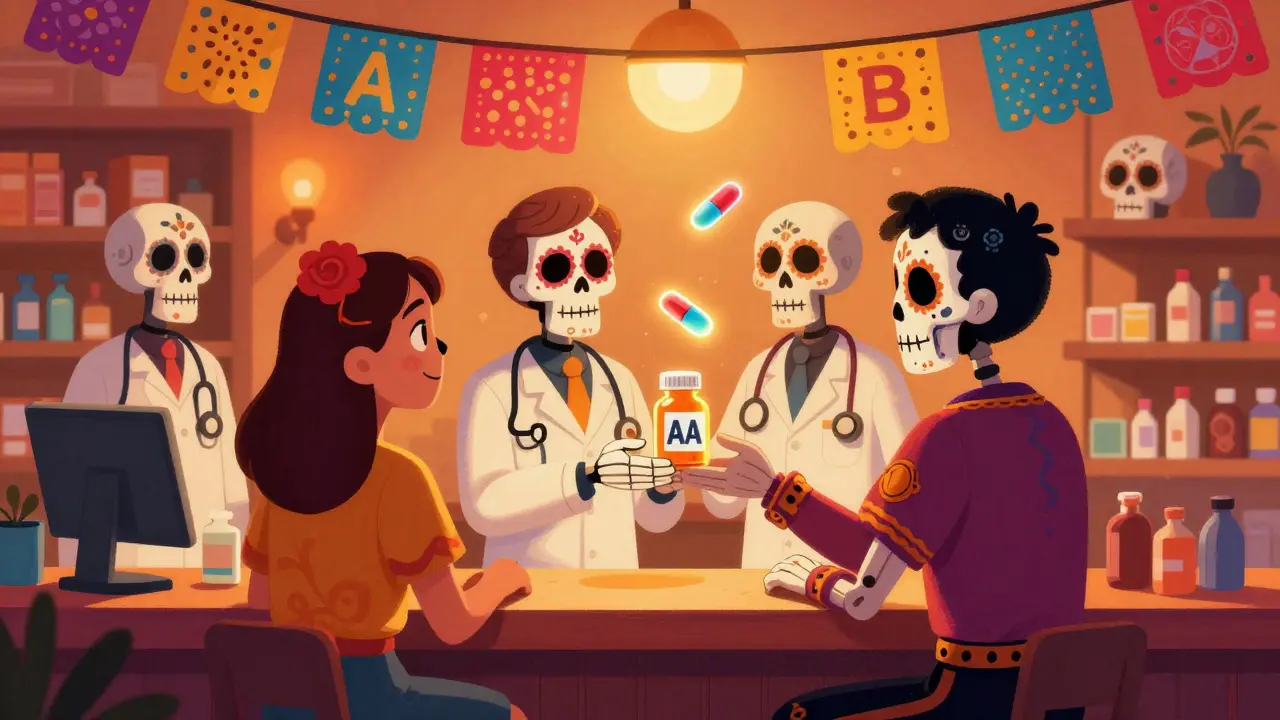
When you pick up a prescription at the pharmacy, you might not notice the difference between the brand-name pill and the generic one. But behind that swap is a detailed, science-backed system called Therapeutic Equivalence Codes-or TE Codes. These aren’t just labels. They’re the reason millions of Americans can take cheaper generic drugs with confidence that they’ll work just like the brand-name version. If you’ve ever wondered why your pharmacist swaps your Lipitor for atorvastatin, or why your insurance pushes generics, TE Codes are the answer.
What Are TE Codes and Why Do They Matter?
Therapeutic Equivalence Codes are assigned by the U.S. Food and Drug Administration (FDA) to prescription drugs that have been proven to be interchangeable. They appear in the Approved Drug Products With Therapeutic Equivalence Evaluations, commonly known as the Orange Book. This isn’t a marketing tool or a suggestion-it’s the official government guide that pharmacies, insurers, and state laws rely on to decide which drugs can be swapped.
Before TE Codes, pharmacists had no clear standard. Some states allowed substitution, others didn’t. Doctors were unsure if generics were truly equal. The system was created in 1984 under the Hatch-Waxman Act to fix that. Today, over 6 billion generic prescriptions are filled each year in the U.S., and nearly all of them depend on TE Codes to ensure safety and effectiveness.
The big win? Cost. Generic drugs with TE ratings cost 80-85% less than their brand-name equivalents. That’s not a guess-it’s FDA data from 2022. And because these drugs are proven to work the same way, they’ve saved the U.S. healthcare system over $2.2 trillion since 1995.
How TE Codes Work: The A and B System
Every drug in the Orange Book gets a TE Code made up of two or three letters. The first letter tells you everything you need to know:
- A = Therapeutically equivalent. This means the generic can be substituted without any concern.
- B = Not therapeutically equivalent. These drugs may have the same active ingredient, but they don’t perform the same in the body. Substitution isn’t recommended.
The second letter adds more detail about the drug’s form. For example:
- AA = Powder for oral solution (like some antibiotics)
- AN = Injectable solution
- AP = Powder for injection
- AT = Topical cream
So if you see a TE Code of AA next to levothyroxine (a thyroid medication), you know it’s an approved generic that can be swapped with confidence. But if you see B next to a generic version of a drug like warfarin, that’s a red flag-pharmacists are legally required to notify the prescriber before substituting.
What Makes a Drug Therapeutically Equivalent?
The FDA doesn’t just look at the active ingredient. They check three things:
- Pharmaceutical equivalence: Does the generic have the same active ingredient, strength, dosage form, and route of administration? If not, it’s out.
- Bioequivalence: Does the body absorb the generic at the same rate and amount as the brand? This is tested with blood samples. The FDA requires that the generic’s absorption falls within 80-125% of the brand’s. That’s not a wide range-it’s tight.
- Clinical equivalence: Does it work the same way in patients? This is harder to prove directly, but if the first two are solid, clinical outcomes usually match.
Manufacturers must submit years of data to prove this. Bioequivalence studies cost an average of $2 million per drug. That’s why not every generic makes it into the Orange Book. Only about 90% of generics that enter the market actually earn an ‘A’ rating.
How TE Codes Compare to Other Countries
The U.S. system is unique in how tightly it’s woven into law. All 50 states use the Orange Book as the official standard for automatic substitution. That means if a drug has an ‘A’ rating, pharmacists can swap it without calling the doctor-unless the patient or prescriber says no.
Compare that to Europe. The European Medicines Agency (EMA) doesn’t have a centralized coding system. Each country decides for itself whether to allow substitution. In Germany, the doctor has to approve the switch. In Canada, there’s a similar concept, but no standardized code system. That makes cross-border consistency impossible.
The U.S. model works because it’s clear, consistent, and legally binding. It’s why a pharmacist in Texas can fill a prescription the same way as one in Maine.
Where TE Codes Fall Short
TE Codes are powerful, but they’re not perfect. They were designed for simple pills-tablets and capsules. They struggle with complex drugs.
Take inhalers. Two generics might have the same active ingredient and strength, but if the propellant or nozzle design is slightly different, the dose delivered to the lungs can vary. In 2019, the FDA withdrew TE ratings for several generic budesonide inhalers after reports of inconsistent performance. The same issue exists with topical steroids and nasal sprays.
Then there are drugs with a narrow therapeutic index-medications where even a small change in dose can cause serious side effects. Warfarin (a blood thinner), lithium (for bipolar disorder), and levothyroxine (for thyroid issues) are classic examples. Even if two generics have the same ‘A’ rating, some patients report feeling different after switching. A 2022 study found 12.7% of patients noticed a change, even though lab tests showed no difference. That’s why many doctors still prescribe brand-name versions for these drugs-out of caution, not science.
And TE Codes don’t cover single-source generics. If only one company makes a drug, even if it’s generic, it doesn’t get a TE Code. That’s why some older, low-cost drugs still carry high prices-they’re not competing.
What Pharmacists and Patients Actually Experience
For pharmacists, TE Codes are a lifesaver. According to the National Community Pharmacists Association, 91% of pharmacists say they have high confidence in substituting TE-rated generics. Most pharmacy systems automatically flag TE Codes, so a tech can verify a substitution in under 30 seconds.
Patients, on the other hand, have mixed feelings. On GoodRx, TE-rated generics for conditions like high blood pressure and diabetes have 4.7 out of 5 stars from over 2,300 reviews. But on forums like Drugs.com, there are dozens of posts from people who swear their generic made them feel worse. One user wrote: "I switched from brand to generic warfarin and my INR shot up. My doctor had to adjust my dose twice. I’m going back to the brand."
The FDA acknowledges this. Their 2022 guidance says: "Therapeutic equivalence evaluations are product-specific and do not imply equivalence across all possible clinical scenarios." Translation: Just because two drugs have the same code doesn’t mean they’ll feel the same to everyone.
The Future of TE Codes
The FDA isn’t sitting still. In 2022, they finalized new rules to standardize how TE Codes are assigned, especially for complex products. They’re also preparing to extend the system to biosimilars-the next generation of biologic generics-starting in 2024.
There’s talk of adding real-world data to TE evaluations. Instead of just lab studies, they might look at how thousands of real patients respond after switching. That could help catch issues like the ones with inhalers before they become widespread.
By 2027, analysts predict over 93% of all prescriptions in the U.S. will be for TE-rated generics. That’s up from 90.1% in 2022. The system is evolving, but its core purpose stays the same: make safe, affordable medicine accessible to everyone.
How to Check a Drug’s TE Code
If you’re curious about your medication:
- Go to the FDA’s Orange Book website (it’s free and public).
- Search by brand name or generic name.
- Look for the TE Code under the "Therapeutic Equivalence" column.
Most pharmacy software shows this automatically. If you’re ever unsure, ask your pharmacist. They’re trained to read these codes.
Are all generic drugs assigned a TE Code?
No. Only generics that have been evaluated by the FDA and proven to be therapeutically equivalent get a TE Code. Some drugs, especially those with only one manufacturer or complex formulations like inhalers, may not qualify. If a generic doesn’t have a code in the Orange Book, it’s not officially approved for substitution.
Can I request the brand-name drug even if a generic has an ‘A’ rating?
Yes. Even if a generic has an ‘A’ rating, you can ask your pharmacist to dispense the brand-name version. Some insurance plans may require you to pay more out-of-pocket, or even the full price, if you choose the brand over the generic. Always check with your insurer.
Why do some people feel different after switching to a generic?
Even if two drugs are bioequivalent, small differences in inactive ingredients (like fillers or coatings) can affect how the drug is absorbed or how the body reacts. This is more common with drugs that have a narrow therapeutic index, like warfarin or levothyroxine. If you notice changes in how you feel-fatigue, dizziness, mood swings-talk to your doctor. It doesn’t mean the generic is unsafe, but it might not be the best fit for you.
Do TE Codes apply to over-the-counter (OTC) drugs?
No. TE Codes are only for prescription drugs evaluated under the FDA’s ANDA pathway. OTC drugs are regulated differently and don’t go through the same therapeutic equivalence review. That’s why you might see multiple brands of ibuprofen with no clear "equivalent" label.
How often is the Orange Book updated?
The FDA releases a new edition of the Orange Book every month. Changes can include new generics getting an ‘A’ rating, existing ones being downgraded to ‘B’, or new codes being added for complex products. Pharmacies update their systems regularly, but it’s always a good idea to double-check if you’re switching medications.
TE Codes are one of the quietest success stories in modern medicine. They don’t make headlines, but they save billions and keep people healthy. For most drugs, the generic is just as good. For some, it’s not. The code tells you which is which. And that’s the power of a well-designed system.


There are 11 Comments
Ray Foret Jr.
Also side note: my dog's flea med is cheaper than my coffee now. Win win.
Samantha Fierro
Robert Bliss
Peter Kovac
APRIL HARRINGTON
Then I switched back to brand and I was human again. The FDA doesn't care about how you feel they care about numbers
Leon Hallal
Judith Manzano
rafeq khlo
Morgan Dodgen
Erica Santos
George Vou
Write a comment
Your email address will not be published. Required fields are marked *