Imagine a world where a life-saving medication costs ten times more simply because of a brand name on the bottle, with no legal way for anyone else to make a cheaper version. For a long time, that was essentially the reality in the United States. The journey to the modern pharmacy shelf, where most of us get high-quality medicine without breaking the bank, wasn't a straight line. It was built on a series of tragedies, legal battles, and a massive shift in how the government views public health versus corporate profit.
Quick Summary: The Generic Journey
- Early Foundations: Started with the U.S. Pharmacopeia in 1820 to standardize drug quality.
- The Safety Era: Tragedies like the 1937 Elixir Sulfanilamide disaster forced the FDA to require safety testing.
- The Game Changer: The 1984 Hatch-Waxman Act created the modern pathway for generics to enter the market.
- Current Impact: Generics now make up over 90% of U.S. prescriptions, saving the system billions.
The Wild West of Early Pharmacy
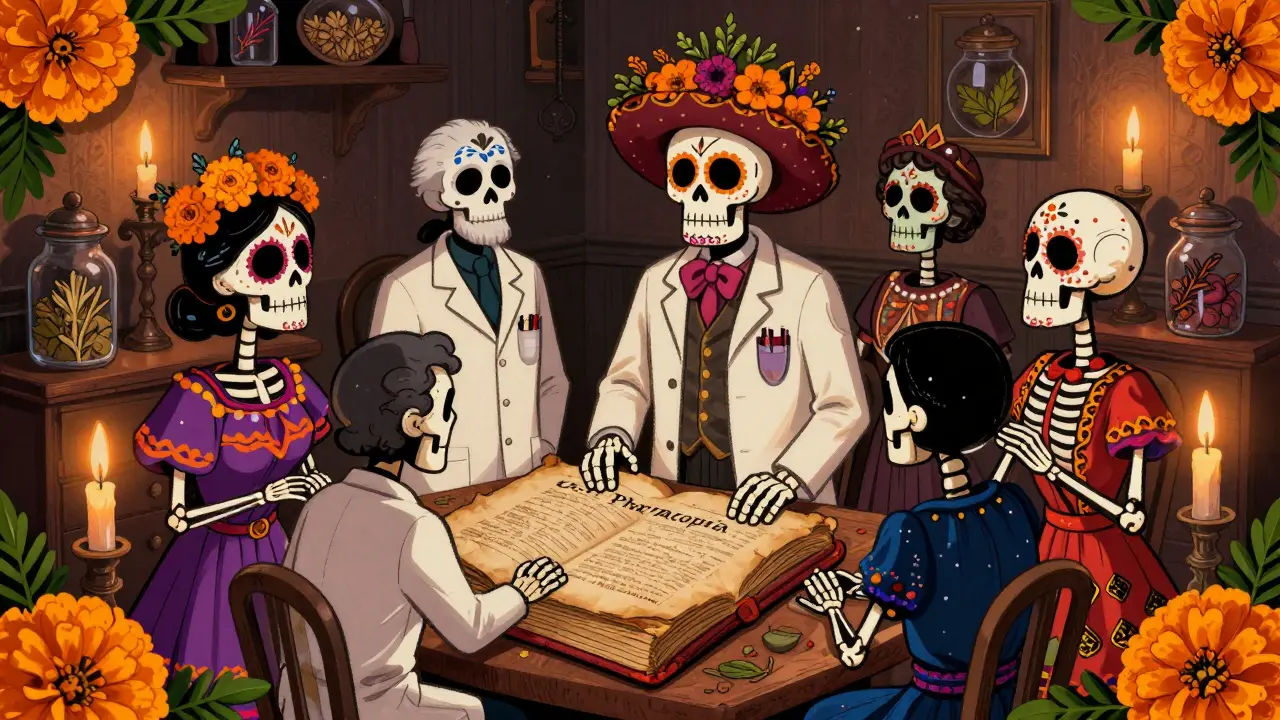
In the early 1800s, buying medicine was a gamble. There were no real rules about what went into a bottle. To fix this, eleven doctors met in Washington, D.C. in 1820 to create the U.S. Pharmacopeia, which was basically the first official handbook for standardizing drugs. This was the first real attempt to make sure a drug in one city was the same as a drug in another.
As trade grew, the government had to step in to stop dangerous imports. The 1848 Drug Importation Act let customs officers block adulterated drugs coming from overseas. By 1888, the American Pharmaceutical Association (APhA) launched the National Formulary. Why? Because counterfeiting was a huge problem. Branded products were being faked, and the APhA wanted to set a quality bar that everyone had to hit.
When Tragedy Forced the Law's Hand
Lawmakers usually don't move until something goes wrong. In 1906, President Theodore Roosevelt signed the Federal Food and Drugs Act. This was a big deal because it finally required labels on products, meaning companies couldn't lie about what was inside their medicine. This laid the groundwork for what we now know as the Food and Drug Administration (FDA), the agency responsible for protecting public health by ensuring the safety and efficacy of drugs.
However, the real turning point was the 1937 Elixir Sulfanilamide disaster. A company created a liquid version of a drug using diethylene glycol-essentially antifreeze. It killed 107 people, many of them children. The public outcry was so intense that Congress passed the 1938 Federal Food, Drug, and Cosmetic Act (FDCA). For the first time, manufacturers had to prove a drug was safe before they could sell it. It shifted the burden of proof from the government (which had to prove a drug was dangerous) to the company (which had to prove it was safe).
Refining the Rules: Efficacy and Prescriptions
Safety was one thing, but did the drugs actually work? In the 1950s and 60s, the system evolved further. The 1951 Durham-Humphrey Amendment created the distinction we still use today: some drugs are available over-the-counter, while others require a prescription from a licensed practitioner.
Then came the 1962 Kefauver-Harris Drug Amendments. This was a massive shift because it required companies to prove efficacy. It wasn't enough for a pill to be non-toxic; it had to actually treat the condition it claimed to treat. This created a high barrier for new drugs, which inadvertently made the eventually-available generic versions even more valuable, as the original research had been so rigorously vetted.
The Hatch-Waxman Act: The Birth of Modern Generics
If you've ever saved money on a prescription, you owe a thank you to the 1984 Drug Price Competition and Patent Term Restoration Act, better known as the Hatch-Waxman Act. Before this law, generic drugs were a rarity, making up only 19% of prescriptions. The problem was that generic makers had to repeat the expensive clinical trials that the original brand-name company had already done.
Hatch-Waxman fixed this by creating the Abbreviated New Drug Application (ANDA), a streamlined process that allows generic manufacturers to skip clinical trials if they can prove their drug is bioequivalent to the original. Instead of testing the drug on thousands of people again, they just had to prove it worked the same way in the body. In exchange, brand-name companies got a way to extend their patents to recover research costs.
| Metric | Pre-1984 (Approx.) | Modern Era (Post-2020) |
|---|---|---|
| % of Prescriptions Dispensed | 19% | Over 90% |
| Approval Pathway | Full Clinical Trials | ANDA (Bioequivalence) |
| Market Access | Slow/Restrictive | Rapid post-patent expiry |
The Cat-and-Mouse Game of Patents
It hasn't all been smooth sailing. Brand-name companies aren't always happy to let their patents expire. A common tactic is using the "30-month stay" loophole. Basically, a brand company can sue a generic maker, which triggers an automatic 30-month delay before the generic can even hit the market. This keeps prices high for millions of patients.
To fight this, the government passed the 2019 CREATES Act. This law targets "restricted distribution," where brand companies refuse to sell samples of their drug to generic companies, making it impossible for the generic makers to perform the bioequivalence tests required by the FDA. It's a legal chess match that continues to this day.
The Economic Engine of Public Health
The numbers behind generic drugs are staggering. In 2021, generic drugs saved the U.S. healthcare system about $373 billion. Over the last decade, that total is over $3.7 trillion. The Congressional Budget Office has noted that generics generally reduce spending by 80% to 85% compared to brand-name equivalents. When you consider that generic drugs represent about 90.5% of prescriptions but only roughly 23.4% of total drug spending, you can see how the system prevents a total financial collapse for many patients.
But this efficiency comes with a cost. Because generics are so cheap, the profit margins are slim. This has led to a dangerous reliance on global supply chains. Roughly 80% of Active Pharmaceutical Ingredients (API), the biologically active component of a drug that produces the intended effect, are made outside the U.S., primarily in China and India. When a factory in India shuts down, we see drug shortages in pharmacies across Ohio or Florida.
The Future: Biosimilars and New Frontiers
We are now entering the era of Biosimilars. Unlike traditional generics, which are simple chemical copies, biosimilars are copies of complex biological drugs (like insulin or monoclonal antibodies). These are much harder to make and regulate, but they represent the next great frontier for lowering costs in the pharmaceutical industry.
The FDA has also modernized its approach. Through the Generic Drug User Fee Amendments (GDUFA), the agency has slashed the time it takes to review an ANDA from 30 months down to about 10 months. This means that as soon as a patent expires, a cheaper version is more likely to appear on the shelf quickly, rather than years later.
What is the difference between a generic drug and a brand-name drug?
A generic drug is designed to be the same as the brand-name drug in every way that matters: it has the same active ingredient, strength, dosage form, and route of administration. It must meet the same quality, purity, and potency standards. The main differences are usually the inactive ingredients (like fillers or colors) and the price, which is typically much lower for the generic version.
Why are generic drugs so much cheaper than brand-name ones?
Generic companies don't have to pay for the initial research, development, and clinical trials that the original manufacturer spent millions on. They also don't spend money on massive marketing campaigns to launch the drug. Because they are essentially "copying" a proven formula, their only major costs are manufacturing and distribution, allowing them to sell at a fraction of the original price.
What is an ANDA and why does it matter?
ANDA stands for Abbreviated New Drug Application. It is the process established by the Hatch-Waxman Act that allows a generic company to get FDA approval without repeating costly clinical trials. The company only needs to prove that the generic version is bioequivalent-meaning it delivers the same amount of active ingredient into the bloodstream at the same rate-as the brand-name drug.
Are generic drugs safe if they aren't the original brand?
Yes. The FDA requires generic drugs to meet the same strict standards for quality and safety as the brand-name versions. While the manufacturers might be different, the chemical requirements for the active ingredients are identical. The FDA's oversight ensures that any approved generic is therapeutically equivalent to the innovator drug.
What are biosimilars and how do they differ from generics?
Standard generics are copies of simple chemical molecules. Biosimilars are copies of large, complex molecules produced in living cells (biologics). Because biological products are so complex, it is impossible to make an exact "copy." Instead, biosimilars are "highly similar" and have no clinically meaningful differences in safety or effectiveness compared to the original biologic drug.
Troubleshooting and Next Steps
If you're a patient trying to save money, always start by asking your doctor if a generic alternative exists for your prescription. However, be aware that some medications (especially those with a narrow therapeutic index) may require a specific brand for consistency.
For those interested in the policy side, keep an eye on the FDA's updates regarding the CREATES Act and the rollout of new biosimilars. The shift toward domestic API manufacturing is also a major trend to watch, as the US tries to reduce its reliance on overseas factories to prevent future drug shortages.
There are 14 Comments
dallia alaba
The shift to ANDA was honestly the best thing to happen to public health in the 80s. It's wild that before 1984, generic companies had to waste millions re-proving what was already known. Most people don't realize how much of a bottleneck that was for affordable care.
Arthur Luke
It is fascinating how the 1937 disaster completely flipped the legal burden of proof. It makes total sense that a tragedy of that scale would be the only thing to move the needle for Congress.
Lynn Smith
I totally agree with the point about saving money! It's so important to always ask doctors about generics first.
Tanya Rogers
The naive celebration of the Hatch-Waxman Act ignores the inherent tension between innovation and accessibility. One must ponder if the systematic erosion of profit margins for original developers eventually stifles the very creativity that leads to the breakthroughs we so greedily copy. It is a classic utilitarian trap where the immediate benefit to the masses blinds us to the long-term stagnation of high-level pharmaceutical research. We trade the potential for the next revolutionary cure for the comfort of cheap replicas of the old ones. Truly, it is a Faustian bargain dressed up as public health policy. The intellectual property debate is not merely about money, but about the incentive structures of human genius. When the reward for brilliance is a timed countdown until a corporate scavenger arrives, the incentive to risk everything on a moonshot drug vanishes. We are essentially subsidizing current health at the cost of future discoveries. It is an intellectual tragedy masquerading as an economic victory. The obsession with "bioequivalence" is a reductionist approach to medicine that forgets the artistry of drug development. I find the general enthusiasm for this "efficiency" rather quaint and fundamentally flawed in its philosophical architecture.
Shalika Jain
Ugh, typical elite mindset right there. Who cares about
Shalika Jain
Wait, I accidentally hit post too early. Basically, I'm saying that the "innovation" argument is just a fancy way for Big Pharma to keep charging $1000 for a pill that costs 5 cents to make. The drama of "stifled genius" is just a fairy tale for shareholders.
caesar simpkins
My goodness, the sheer audacity of brand-name companies using the 30-month stay loophole is absolutely heartbreaking!!! Imagine knowing a cheaper drug exists and just... blocking it for years. Truly a nightmare!
Akshata Kembhavi
It is very true about the API stuff. A lot of the raw materials come from India and China, so when there's a glitch there, we feel it everywhere.
Bob Collins
Fair point about the supply chain. It's a bit of a gamble relying so heavily on overseas factories, isn't it?
Tokunbo Elegbe
The CREATES Act is a necessary step!!! We must protect the integrity of the market... and the patients!!!
Valorie Darling
lol imagine actually caring about the 1820 pharmacopeia like who even reads this stuff
Brigid Prosser
Absolute madness that we ever let people sell antifreeze as medicine. The 1938 Act was a total lifesaver and the industry was basically a wild west of chaos before that.
Charlotte Boychuk
Biosimilars sound like a total headache to regulate, but man, if they can bring down the cost of insulin, that would be a freaking miracle.
Don Drapper
The catastrophic failure of domestic manufacturing is an absolute travesty of the highest order! We have surrendered our sovereignty for the sake of a few pennies per dose! It is an embarrassment!
Write a comment
Your email address will not be published. Required fields are marked *