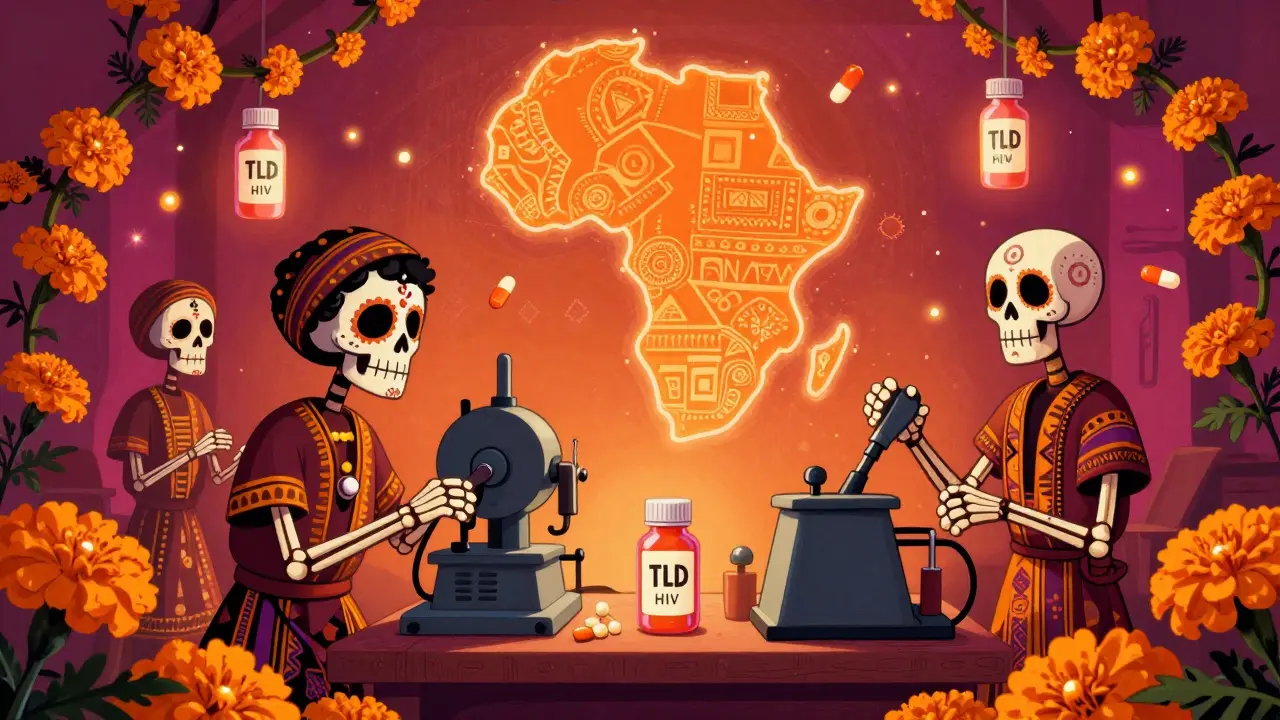
Africa is no longer just a recipient of HIV medicines-it’s making them.
For decades, African countries relied on imported drugs to fight HIV. Most of these came from India, where generic manufacturers slashed prices from $10,000 per patient per year in 2000 to under $100 by 2015. But that model had a flaw: supply chains stretched across oceans, vulnerable to delays, trade disruptions, and political shifts. When the pandemic hit, many African nations faced medicine shortages because factories overseas couldn’t ship on time. Today, that’s changing. On May 6, 2025, the Global Fund made history by buying its first-ever antiretroviral treatment made in Africa: TLD, a combination of tenofovir, lamivudine, and dolutegravir. It was produced by Universal Corporation Ltd in Kenya, the first African company to earn WHO prequalification for this first-line HIV regimen. The pills went straight to Mozambique, enough to treat 72,000 people each year.
Why local production matters more than cost alone
Cost is important, but it’s not the whole story. African-made generics aren’t just cheaper-they’re more reliable. When drugs are made on the continent, they don’t have to cross borders, wait in customs, or sit in warehouses for months. This cuts delivery time from weeks to days. In places like rural Malawi or eastern DR Congo, where clinics might only get shipments once a quarter, that speed saves lives. It also means health workers can respond faster when outbreaks spike or when patients need to switch regimens due to resistance.
The old system relied on a few global suppliers. If one factory had a quality issue, entire countries went without. Now, with multiple African manufacturers entering the market, there’s competition. And competition drives better prices, better service, and more innovation. South Africa’s recent approval of the twice-yearly HIV injection, cabotegravir long-acting, shows how quickly local regulators can act when they have the tools and support. Gilead Sciences licensed six South African companies to make generics of this injectable, with prices expected to drop 80-90% below brand name. That’s not just access-it’s scalability.
WHO prequalification: The gatekeeper to continent-wide access
Not every African-made drug can be used in public health programs. The World Health Organization has one standard: prequalification. It’s not a suggestion-it’s a requirement. To be bought by the Global Fund, UNICEF, or PEPFAR, a drug must meet the same safety, purity, and effectiveness benchmarks as those from the U.S. FDA or European Medicines Agency. Universal Corporation in Kenya didn’t just build a factory. They rebuilt their entire quality control system to pass WHO’s audit. That meant training staff, upgrading labs, and documenting every step of production. It took years. But now, their TLD regimen is on the WHO list, and that opens the door for every country in Sub-Saharan Africa to use it without fear.
Before this, only a handful of African manufacturers had passed WHO prequalification for ARVs. Now, more are on the path. By late 2025, at least three new facilities in Nigeria, Ethiopia, and Rwanda are expected to begin production. These aren’t small pilot projects-they’re scaled-up plants designed to meet millions of doses per year. The Medicines Patent Pool and WHO’s Health Technology Access Programme are helping them get there, not just with funding but with technical support: sharing manufacturing protocols, training inspectors, and even helping with packaging design so pills are easy to identify in low-literacy settings.
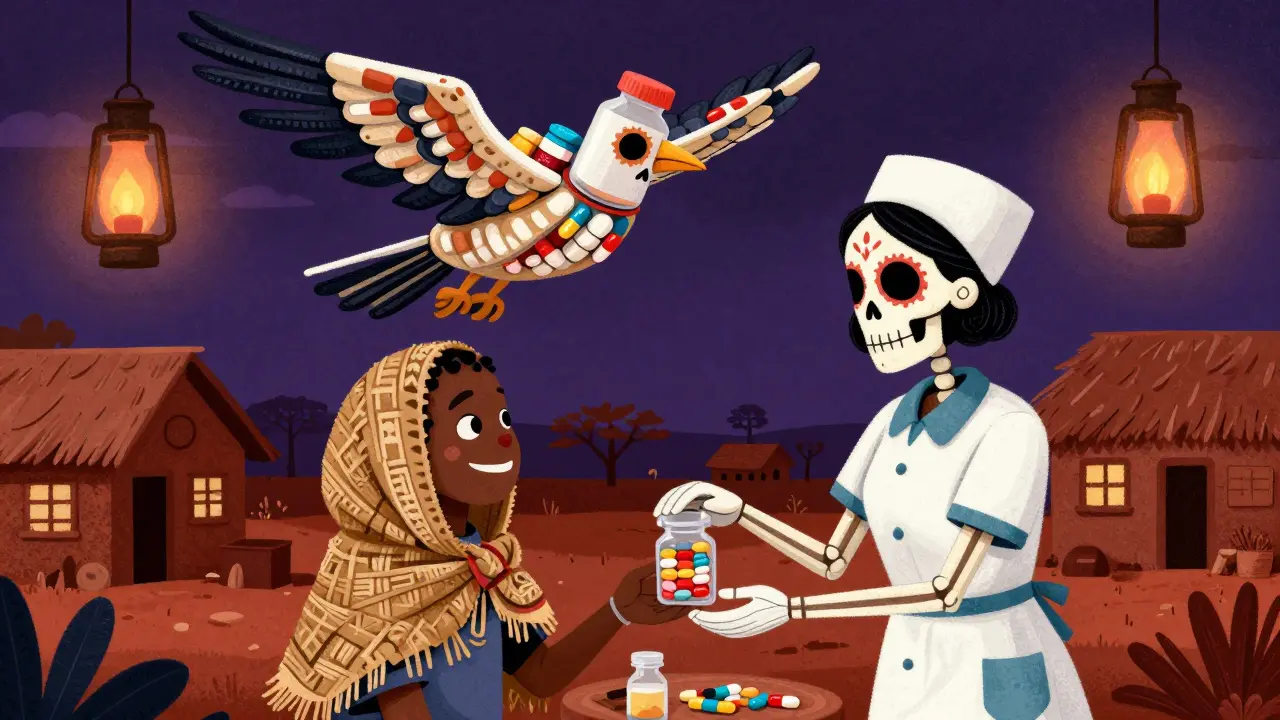
From pills to diagnostics: Building the whole system
Getting pills to people means nothing if you can’t test for HIV first. That’s why progress isn’t just about drugs-it’s about diagnostics too. In Nigeria, Codix Bio is now producing rapid HIV tests under a license from SD Biosensor, thanks to a technology transfer deal backed by WHO. These tests cost less than $1 each and give results in 15 minutes. They’re being rolled out in villages where clinics don’t have labs or electricity. No more waiting days for a result. No more people disappearing before they get treatment.
This is part of a bigger shift: moving from isolated HIV programs to integrated health systems. In the past, HIV clinics operated separately from maternal care, TB services, or even diabetes programs. That wasted resources and confused patients. Now, countries are combining services. A woman coming for antenatal care can get tested for HIV, started on ARVs if needed, and receive counseling-all in one visit. This integration is critical to reaching UNAIDS’ 95-95-95 targets: 95% of people knowing their status, 95% on treatment, and 95% with suppressed virus. In Eastern and Southern Africa, they’re close: 93%-83%-78%. In Western and Central Africa, it’s 81%-76%-70%. The gap is narrowing, but it won’t close without local production.
The economic shift: From aid dependency to health sovereignty
For years, African governments depended on foreign donors to pay for HIV drugs. The Global Fund, PEPFAR, and the Gates Foundation covered most of the cost. That’s still true today-but now, it’s changing. Instead of just writing checks, donors are investing in factories, training engineers, and helping African countries build regulatory agencies that can inspect their own plants. This isn’t charity. It’s market-shaping. The Global Fund is committing to buy a set volume of African-made ARVs each year, giving manufacturers certainty. That’s what lets them borrow money, hire workers, and expand.
And it’s working. The African Union’s Pharmaceutical Manufacturing Plan for Africa (PMPA) wants local production to rise from 2-3% of the continent’s needs to 40% by 2040. That’s ambitious, but possible. Right now, Africa needs about 15 million person-years of first-line ARV treatment annually. If even 20-30% of that comes from within the continent by 2030, it will cut import bills by hundreds of millions of dollars. That money can go to hiring nurses, fixing roads, or building clinics. It’s not just about HIV-it’s about building a health system that can handle the next pandemic, the next outbreak, the next crisis.
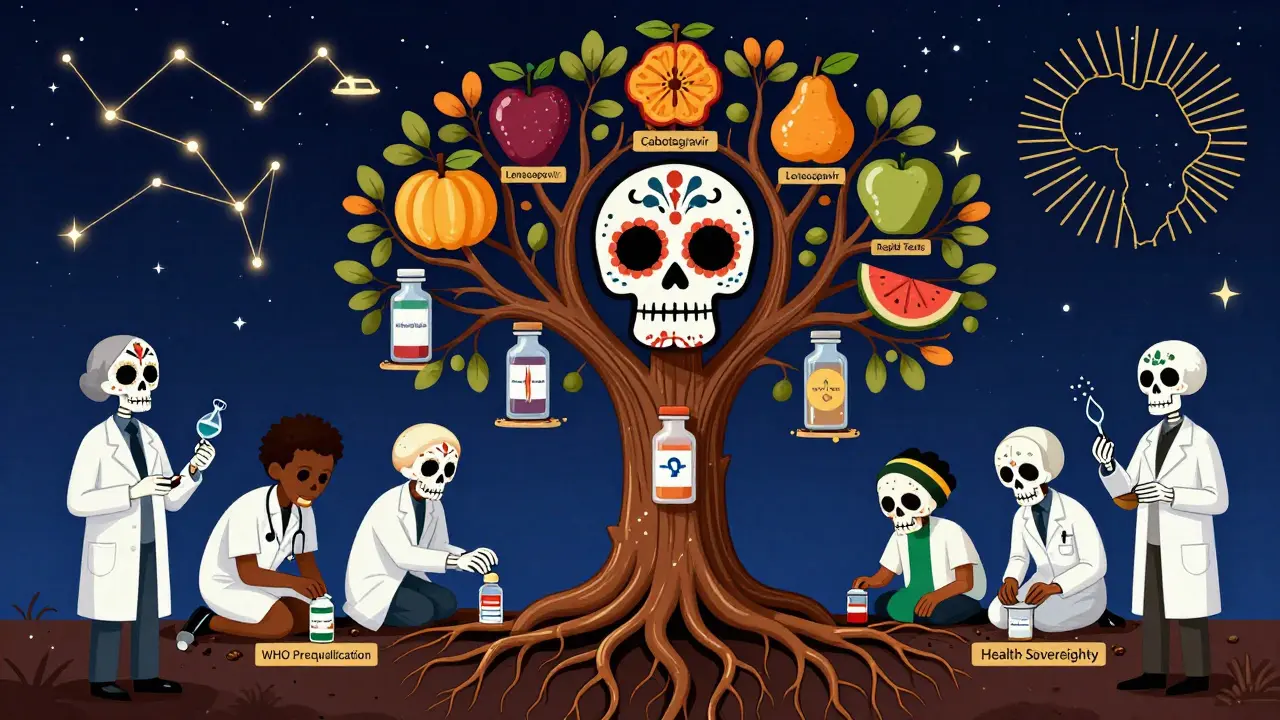
What’s next? Long-acting injections and the race to generics
The future of HIV treatment isn’t just pills. It’s injections. In October 2025, South Africa became the first African country to register cabotegravir long-acting, a shot given every two months instead of a daily pill. It’s a game-changer for people who struggle with adherence or face stigma. But the brand-name version is still expensive. That’s why Gilead signed agreements with 133 countries-including all of Sub-Saharan Africa-to allow generic makers to produce it. Six South African firms are already preparing to launch their versions. Experts predict prices could fall to under $50 per year per person, compared to over $2,000 for the brand. That’s the power of competition.
Even more exciting is lenacapavir, a new long-acting drug for prevention (PrEP). Gilead is giving it away for free to low-income countries until generics arrive. They’re working with the U.S. State Department and the Global Fund to get it into 18 high-burden countries by the end of 2025. By 2026, it could be widely available as a generic. This isn’t just about treatment anymore. It’s about stopping HIV before it starts.
Challenges still remain
Progress isn’t linear. Africa still imports about 80% of its medicines. Many countries lack the power to enforce drug quality standards. Regulatory agencies are underfunded. Some governments still prefer to buy from familiar international suppliers, even if they’re more expensive. And while Kenya and South Africa are leading the way, countries like Chad, Niger, or Burundi still have no local manufacturing at all.
There’s also the question of sustainability. Can African manufacturers survive without donor funding? The answer is yes-but only if governments buy locally. That means changing procurement rules, training public health officials to prioritize African-made drugs, and holding leaders accountable. The African Competition Forum put it bluntly: “African countries must shift from aid dependency to self-sustainability.” That’s the real test.
The bigger picture: Health security starts at home
When a country can make its own medicines, it’s not just healthier-it’s more secure. During the pandemic, Africa learned that relying on others for vaccines and masks was risky. Now, the same lesson is being applied to HIV. Local production means faster responses, lower costs, and more control. It means African scientists can design drugs suited to the region’s unique strains of HIV, not just copy formulas from elsewhere.
And it’s not just about HIV. The factories, labs, and training programs built for ARVs can be used for malaria, TB, diabetes, and beyond. The skills learned here-quality control, regulatory compliance, supply chain management-are transferable. This isn’t a one-disease project. It’s the foundation of a new African health economy.
For the first time, African nations aren’t just asking for help-they’re building it themselves. And the world is finally listening.
Are African-made HIV drugs as effective as those made in India or Europe?
Yes. All African-made antiretrovirals that reach public health programs must pass WHO prequalification, which requires them to meet the same strict standards as drugs from the U.S., EU, or India. The TLD regimen made in Kenya, for example, has been tested in clinical trials and shown to be just as effective as imported versions at suppressing HIV. Quality isn’t about where it’s made-it’s about how it’s made.
Why did it take so long for Africa to start making its own HIV drugs?
For years, cheaper drugs were available from India, and donors were happy to pay for them. There was little incentive for African governments to invest in expensive manufacturing infrastructure. Regulatory systems were weak, and few local companies had the technical expertise. It wasn’t until the pandemic exposed supply chain fragility that donors and governments began to see local production as essential-not optional.
Can African manufacturers compete with Indian companies on price?
Not yet on volume, but they’re catching up fast. Indian manufacturers still produce more pills at lower cost due to decades of scale. But African companies are now benefiting from market-shaping deals-like the Global Fund’s guaranteed purchases-that let them build capacity without risking financial loss. As more factories open and production scales up, prices will drop. The goal isn’t to beat India on price alone-it’s to build resilience.
What’s the role of the Global Fund in all of this?
The Global Fund is the biggest buyer of HIV drugs in the world. By choosing to buy African-made ARVs, they created a guaranteed market. That gave manufacturers the confidence to invest in factories, hire workers, and upgrade labs. Without that demand signal, no company would risk building a plant that might sit empty. The Global Fund didn’t just fund drugs-they funded a new industry.
Is this only about HIV, or does it help with other diseases too?
It’s about much more. The labs, supply chains, and regulatory systems built for HIV are now being used to produce malaria drugs, TB treatments, and even vaccines. When Nigeria’s Codix Bio learned to make HIV rapid tests, they applied the same tech to malaria diagnostics. The same factory that produces TLD can be retooled for antibiotics. This isn’t a siloed HIV project-it’s the foundation of a stronger, more independent health system across Africa.



There are 14 Comments
Nicki Aries
Lilliana Lowe
vivian papadatu
Bryan Coleman
Nancy Nino
June Richards
Jaden Green
Lu Gao
Nidhi Rajpara
Rachel Liew
Jamie Allan Brown
Lisa Rodriguez
Ed Di Cristofaro
Sami Sahil
Write a comment
Your email address will not be published. Required fields are marked *