
Most people think lactose intolerance means you can’t drink milk. But it’s more complicated than that. You might be able to eat cheese or yogurt just fine, yet get bloated after a glass of milk. That’s because lactose intolerance isn’t about being allergic-it’s about your body not making enough of the enzyme lactase to break down lactose, the sugar in milk. When undigested lactose hits your colon, bacteria ferment it, causing gas, cramps, bloating, and diarrhea. The problem? Many people are misdiagnosed, over-restricted, or left confused about what they can actually eat.
How Do You Know It’s Lactose Intolerance?
Not everyone who can’t digest lactose has symptoms. That’s the key difference between lactose malabsorption (your body doesn’t break it down) and lactose intolerance (you actually feel sick from it). Studies show up to 30% of people with a positive breath test never have symptoms. So if you’re feeling bad after dairy, the real question isn’t just whether you absorb lactose-it’s whether it’s causing your discomfort.
The first step most doctors take is a simple elimination diet. Cut out all milk, yogurt, ice cream, and hidden dairy (like bread, salad dressings, and processed snacks) for two to four weeks. If your bloating, cramps, or diarrhea disappear, that’s a strong clue. Then, slowly add back small amounts-like a quarter cup of milk-to see what your body tolerates. This isn’t fancy, but it’s the most reliable way to connect your symptoms to dairy in real life.
The Gold Standard Test: Hydrogen Breath Test
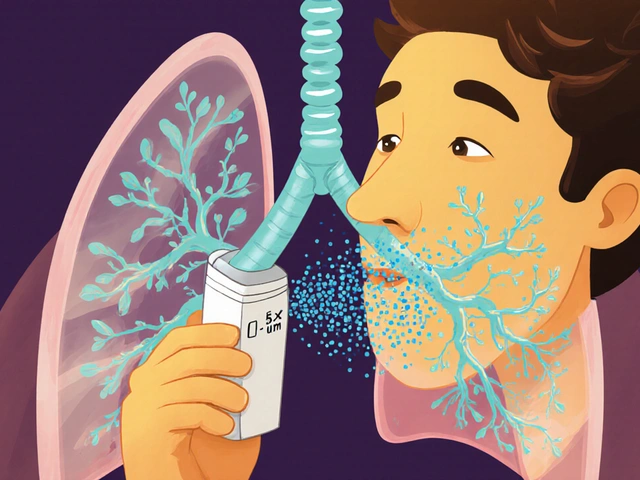
If your symptoms improve with elimination, your doctor might recommend a hydrogen breath test. This is the most accurate clinical tool we have. You drink a liquid with 25 to 50 grams of lactose (about 1 to 2 cups of milk), then breathe into a tube every 30 minutes for 2 to 3 hours. If your breath shows a spike of more than 20 parts per million of hydrogen, your body didn’t digest the lactose-it fermented in your gut, producing gas.
The test is 90% sensitive, meaning it catches almost all cases of malabsorption. But it’s not perfect. If you’ve had antibiotics recently, have bacterial overgrowth in your small intestine (SIBO), or didn’t fast properly before the test, you can get a false positive. That’s why results should never be taken alone. A 2021 study in Gastroenterology Today put it bluntly: “A positive test without symptoms doesn’t mean you’re intolerant.”
There’s also a blood test that checks glucose levels after drinking lactose. But it’s outdated. It’s invasive, requires multiple needle sticks, and gives false results in 1 in 5 people because digestion speeds vary. For kids under 5, doctors use a stool acidity test-acidic poop means undigested lactose is fermenting in the gut.
Genetic Testing: What It Can and Can’t Tell You
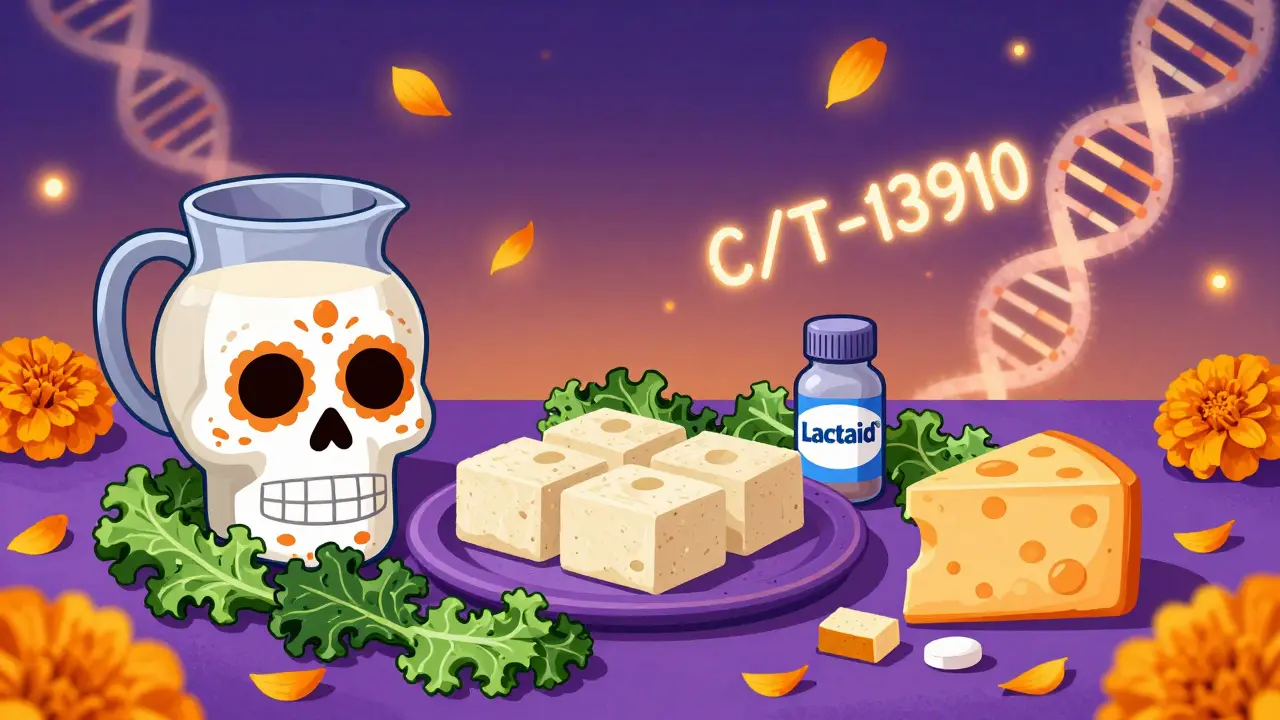
A DNA test can check for the C/T-13910 gene variant linked to lactase non-persistence. If you have it, you’re likely to lose the ability to digest lactose after childhood. This test is 95% specific for primary lactose intolerance, meaning if you have the gene, you probably won’t digest milk well later in life.
But here’s the catch: it won’t catch secondary lactose intolerance caused by illness, surgery, or gut infections. It also doesn’t tell you how much lactose you can handle. Two people with the same gene can have wildly different tolerances. A 2010 study in New Zealand found 8% of people carried the gene, but only some had symptoms. That’s why genetic testing is rarely used in routine care-it’s expensive and adds little to what a simple elimination diet can show.

How Much Lactose Can You Actually Tolerate?
Most people think they need to cut out dairy completely. That’s not true. Research from Mayo Clinic shows most adults can handle up to 12 grams of lactose in one sitting-that’s about one cup of milk. And if you eat it with food, your tolerance jumps to 18 grams. That means you can likely have yogurt, hard cheeses, or even a splash of milk in coffee without issues.
Why? Fermented dairy like yogurt and aged cheeses (cheddar, parmesan, gouda) have much less lactose. The bacteria eat it during fermentation. Butter is almost lactose-free. And cottage cheese? It’s moderate-about 3 grams per half-cup. Many people don’t realize this. A 2023 Gut Health Foundation survey found 73% of people with diagnosed lactose intolerance could eat some dairy without symptoms, but they didn’t know which kinds.
Lactase enzyme supplements (like Lactaid®) can help too. Taking 3,000 to 9,000 FCC units right before a meal cuts symptoms by 70-90%. They’re not magic, but they’re useful for social events or when you’re unsure about ingredients.
What to Eat Instead: Avoiding Nutrient Gaps
Going dairy-free without a plan can hurt your health. Dairy is the main source of calcium and vitamin D for most people, especially teens and older adults. The NHS recommends 1,000-1,200 mg of calcium daily for adults. If you cut out milk, you need to replace it.
Fortified plant milks (soy, oat, almond) are your best bet-most contain 300-500 mg per cup, close to cow’s milk. Look for brands that add calcium carbonate or tricalcium phosphate. Tofu made with calcium sulfate (not magnesium chloride) is another great source. Leafy greens like kale and bok choy have absorbable calcium, but spinach doesn’t-it binds calcium, making it hard to absorb.
Vitamin D is trickier. Sunlight helps, but in the UK, that’s not reliable year-round. Consider a daily supplement of 10 micrograms (400 IU), especially in winter. Many plant milks are fortified with D2 or D3-check the label.
And watch out for hidden lactose. A 2022 FDA audit found 20% of products labeled “non-dairy” still contained trace lactose-often in bread, cereals, and salad dressings. Always read ingredient lists. Look for: milk solids, whey, curds, milk sugar, and sodium caseinate.
Why So Many People Are Misdiagnosed
Overdiagnosis is a real problem. A 2023 study in JAMA Internal Medicine found 35% of people diagnosed with lactose intolerance via breath test could eat normal portions of dairy without symptoms. Doctors sometimes rely too much on tests and not enough on real-world responses.
Patients report long waits. One Reddit user in the UK waited eight months for a breath test. Another survey of 1,200 people found 65% waited over six months for a diagnosis. And 42% were first told they had IBS-because the symptoms overlap so much. But IBS is a functional disorder; lactose intolerance is biochemical. Treating them the same leads to unnecessary restrictions.
Also, the market is pushing dairy-free as a trend. Oat milk sales grew 23% in 2023. But not everyone needs it. The global lactose-free food market hit $14.8 billion in 2022, but most of that growth comes from people without intolerance buying it for perceived health benefits. That confusion makes it harder for those who truly need dietary changes to get clear advice.
What Works Best: A Personalized Approach
The most effective strategy isn’t a blanket no-dairy rule. It’s finding your personal threshold. Start with elimination. Then reintroduce slowly. Track what you eat and how you feel. Use an app like MyLactaseTracker® if it helps-62% of gastroenterology practices now recommend them.
Don’t fear dairy. Fear unnecessary restriction. Hard cheeses, butter, and yogurt are often safe. Enzyme pills work for occasional use. Fortified foods keep your bones strong. And if you’re still unsure after trying these steps, see a dietitian who specializes in gut health. They can help you build a plan that works with your life-not against it.
What’s New in 2025
New tools are making diagnosis faster. The LactoQuik® breath test, approved in 2022, cuts testing time from three hours to 45 minutes with the same accuracy. Probiotics like Pendulum’s LactoSpore® are showing promise in early trials-some users digest 40% more lactose after taking it daily.
Regulations are tightening too. Since January 2023, the FDA requires products labeled “lactose-free” to contain less than 0.01% lactose. That’s a big step toward honest labeling.
But the biggest shift? Medicine is moving away from one-size-fits-all advice. The European Food Safety Authority now sets tolerance levels by age: 12g for adults, 8g for kids 4-8, and 4g for toddlers. That’s more realistic. It acknowledges that lactose intolerance isn’t all-or-nothing-it’s a spectrum.
Can you outgrow lactose intolerance?
Primary lactose intolerance, caused by genetics, is permanent. Once your body stops making lactase after childhood, it doesn’t turn back on. But secondary lactose intolerance-caused by illness, infection, or surgery-can improve once the gut heals. That’s why doctors test for underlying causes before giving a lifelong label.
Is lactose intolerance the same as a milk allergy?
No. A milk allergy is an immune reaction to milk proteins like casein or whey. It can cause hives, swelling, vomiting, or even anaphylaxis. Lactose intolerance is purely digestive-it’s about sugar digestion, not immunity. People with a milk allergy must avoid all dairy. People with lactose intolerance often can tolerate some dairy products.
Why do some people tolerate yogurt but not milk?
Yogurt contains live bacteria that break down lactose during fermentation. By the time you eat it, much of the sugar is already gone. Plus, the thick texture slows digestion, giving your body more time to handle what’s left. Greek yogurt has even less lactose than regular yogurt. That’s why many people with lactose intolerance can eat yogurt without issues-even if milk makes them sick.
Are lactose-free dairy products better than plant-based alternatives?
Lactose-free cow’s milk is real milk with added lactase enzyme-it’s nutritionally identical to regular milk, just without the sugar that causes problems. Plant milks vary widely. Soy milk is closest in protein and calcium content. Oat and almond milk are often lower in protein and may contain added sugars. Choose fortified versions, and check labels. Neither is inherently better-it depends on your nutritional needs and taste.
Can children outgrow lactose intolerance?
True lactose intolerance rarely develops before age 5. If a young child has symptoms after dairy, it’s more likely due to an infection, allergy, or another gut issue. The European Food Safety Authority recommends limiting lactose to 4g per day for kids under 4, but most don’t need to cut it out completely unless symptoms are severe. Always consult a pediatrician before restricting dairy in children.
What to Do Next
If you suspect lactose intolerance, start with a two-week dairy-free trial. Keep a food and symptom journal. If things improve, slowly reintroduce small amounts of dairy-try yogurt, then hard cheese, then milk. Use enzyme pills if needed. If symptoms return, you’ve found your trigger. Don’t rush to eliminate everything. Most people can still enjoy some dairy. And if you’re unsure, ask your doctor about a hydrogen breath test or refer you to a dietitian. You don’t have to live without cheese or ice cream-just know your limits.


There are 12 Comments
Bennett Ryynanen
Bro I thought I was lactose intolerant until I tried cheddar cheese and realized I was fine. Turned out I was just eating shitty processed crap with hidden whey. Now I eat yogurt like it’s candy and my gut’s happier than my ex’s new boyfriend.
Deepika D
Let me tell you something important - lactose intolerance isn’t a life sentence, it’s a lifestyle adjustment. I used to avoid all dairy like it was poison until I learned that 12 grams of lactose is totally manageable, especially with meals. I now enjoy my morning coffee with a splash of milk, a slice of aged cheddar on my toast, and even the occasional scoop of ice cream. The key? Start slow. Track your symptoms. Use enzyme drops if you’re going out. And please, for the love of your gut, don’t believe every TikTok influencer telling you oat milk is the only way. Your body isn’t broken - it’s just misunderstood. You don’t need to eliminate everything. You just need to know your limits. I’ve helped over 30 friends navigate this, and every single one of them was surprised at how much they could still enjoy. It’s not about fear. It’s about knowledge. And honestly? The world of lactose-free cheese has improved SO much in the last five years. Try Miyoko’s or Violife - they melt like real cheese. You’re not missing out. You’re upgrading.
Branden Temew
So let me get this straight - we’ve spent 50 years telling people dairy is essential, then suddenly we’re all terrified of a sugar molecule? 🤔 Maybe the real problem is that we stopped eating real food and started eating marketing labels. Also, why does everyone assume ‘plant-based’ means ‘healthy’? My oat milk has 7 grams of sugar and three unpronounceable additives. But hey, at least it’s vegan, right? 🙃
Paul Huppert
I used to get bloated after milk but can eat yogurt fine. Lactase pills are a game-changer for pizza night.
Hanna Spittel
Big Pharma and Big Dairy are in cahoots. 🤫 They want you to think you’re intolerant so you’ll buy their ‘lactose-free’ overpriced junk. Real food is milk. Real medicine is fasting. 💊🧀
Sara Stinnett
Oh, so now we’re giving people permission to eat dairy based on arbitrary gram thresholds? Brilliant. Next you’ll tell me it’s fine to drink gasoline if you’re under 10ml. The fact that we need a 2023 survey to tell us people don’t know the difference between yogurt and milk says everything about our collective nutritional IQ. You don’t need a breath test - you need a history lesson. And maybe a spoonful of humility.
Lawver Stanton
Okay, but have you considered that maybe the real issue is that our guts are ruined from 30 years of processed food, antibiotics, and stress? I had a breath test - positive. I ate dairy for three weeks anyway - zero symptoms. Turns out my bloating was from gluten, not lactose. But no, let’s just slap a label on it and sell you almond milk at $8 a carton. I swear, the medical-industrial complex is running a dairy-free cult. And we’re all just sheep in leggings.
Also, I tried the LactoQuik test. It was faster, but I still had to sit in a room for 45 minutes breathing into a plastic tube like a lab rat. Who designed this? A toddler? Why not just ask me how I felt after eating cheese? Oh right - because that’s too simple for a $300 procedure.
And don’t get me started on ‘lactose-free’ products that still have sodium caseinate. That’s not lactose-free - that’s lying with a nutrition label. The FDA says ‘less than 0.01%’? Cool. So if I eat 10 of those ‘lactose-free’ yogurts, I’m still ingesting 100x the threshold. Who’s checking? Nobody. Because profit > truth.
Meanwhile, my grandma in 1955 drank whole milk with every meal and lived to 92. No supplements. No tests. No fear. Just food. Maybe we’re the problem, not the lactose.
Brady K.
Let’s reframe this: lactose intolerance isn’t a defect - it’s evolutionary adaptation in reverse. Humans were never meant to digest milk past infancy. The fact that 35% of the population has lactase persistence is the anomaly, not the rule. We’ve been sold a lie that dairy = health, when in reality, it’s just a cultural artifact that got monetized. The breath test? A glorified fart detector. The supplements? A Band-Aid on a bullet wound. And don’t even get me started on ‘plant-based’ marketing - it’s just capitalism repackaging scarcity as virtue. The real solution? Eat real food. Fermented. Local. Unprocessed. And if you crave milk? Drink it. But don’t call it ‘health.’ Call it pleasure. And maybe, just maybe, stop blaming your gut for the sins of the food industry.
Brandon Boyd
You’re not alone. I used to stress about every bite until I found my sweet spot - yogurt, hard cheese, and enzyme pills. Now I enjoy ice cream on weekends without guilt. Your gut’s smarter than you think. Trust the process, not the fear.
Chandreson Chandreas
Life’s too short to fear milk 🥛😌
Turns out my body’s chill with 1/4 cup in coffee and cheddar on toast.
My gut’s not a battlefield - it’s a garden. Feed it right, it thrives.
Stop overthinking. Start tasting.
And if you’re still stressed? Try a walk. Or a nap. Or both. 🌿💤
Frank SSS
Okay but why do people act like they’re the first person ever to have a stomach? Like, we’ve known about lactose intolerance since the 1950s. And yet here we are in 2025, treating it like some new-age revelation. Meanwhile, my Thai neighbor in 1998 drank milk straight from the carton every morning and never blinked. Coincidence? Nah. Culture. Genetics. Context. We’ve turned a biological fact into a wellness crisis. And now we’re selling you $12 oat milk to fix it. 🤡
Also, the fact that you need an app to track whether you can eat yogurt is a red flag. Not for your gut - for your sanity.
linda permata sari
As someone from Indonesia, we drink coconut milk with everything - and never had issues. But when I moved to the US, I started getting bloated after ‘lactose-free’ almond milk. Turns out it was the carrageenan. Not the lactose. The real villain? Food industry additives. 🌏❤️
Write a comment
Your email address will not be published. Required fields are marked *