When your pharmacist hands you a pill that looks completely different from what you’ve been taking, it’s natural to wonder: is this the same thing? You’re not alone. Millions of people in the UK and the US switch from brand-name drugs to generics every year-mostly because it saves money. But what really happens when you make the switch? Do you get the same results? Could something go wrong? The short answer: for most people, it’s perfectly safe. But for some, the change can be more complicated than it seems.
Why Switch to Generic Drugs?
Generic drugs are exact copies of brand-name medicines in terms of active ingredients, strength, and how they work in your body. The FDA and UK’s MHRA require them to meet the same strict standards for safety and effectiveness. The only differences? The shape, color, or name on the pill-and the price. Generic versions often cost 80% less. In the US, 90% of prescriptions are filled with generics. In the UK, the NHS actively encourages switching to cut costs without sacrificing care. For many, the switch is life-changing. A 2019 report found that people were 266% more likely to stop taking a brand-name drug because of cost. Some skip doses. Others don’t fill the prescription at all. Switching to a generic can mean the difference between managing your condition-and letting it get worse.What You Might Notice When You Switch
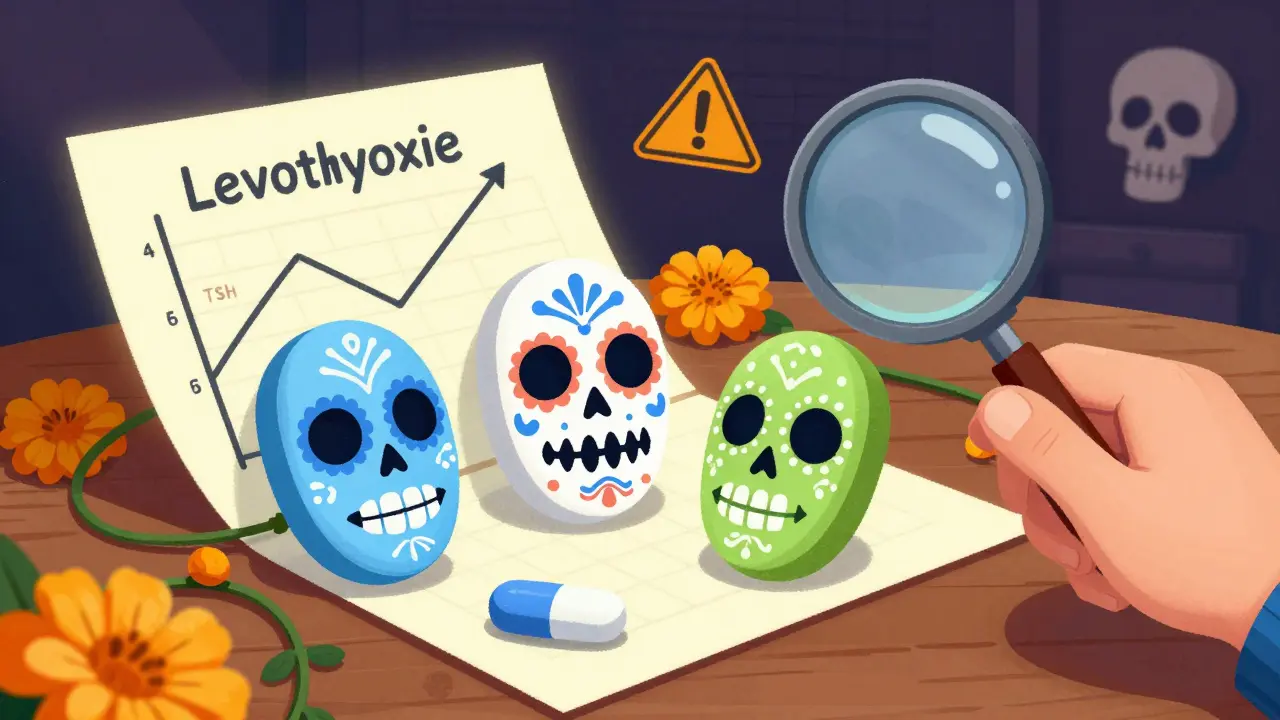
The first thing most people notice? The pill looks different. It might be smaller, rounder, or a different color. That’s because trademark laws stop generic manufacturers from copying the exact appearance of brand-name pills. You might even get a different-looking version the next time you refill, because pharmacies often switch between generic suppliers to get the best price. That can be confusing. One patient in Leeds told me they switched from a white oval Synthroid pill to a blue round generic levothyroxine-and panicked when their TSH levels jumped. That’s not uncommon. For some medications, especially those with a narrow therapeutic index, tiny changes in how the drug is absorbed can matter. Levothyroxine, warfarin, and certain epilepsy drugs fall into this category. A small shift in blood levels can lead to symptoms like fatigue, dizziness, or even seizures. But here’s the thing: most people don’t have any issues. A Drugs.com review of over 1,200 patients found that 78% rated generic versions as “good” or “excellent.” In Massachusetts, where law requires pharmacists to substitute generics unless the doctor says no, 82% of patients were satisfied after three months-even though 63% were worried at first.When Switching Can Cause Problems
Not all drugs are created equal when it comes to switching. Certain categories carry higher risks:- Anti-epileptic drugs: Studies show some patients have more seizures after switching generics. This isn’t because generics are weaker-it’s because the body is sensitive to tiny variations in absorption.
- Thyroid meds (like levothyroxine): Even small changes in hormone levels can throw off your metabolism, energy, and mood.
- Blood thinners (like warfarin): A slight change in how the drug is absorbed can increase bleeding risk or reduce protection against clots.
- Immunosuppressants: Used after organ transplants. Stability is critical.
Why Do Generic Versions Keep Changing?
You might get a different generic every time you refill. That’s because pharmacies buy from the cheapest supplier available. In some countries, like Saudi Arabia, government procurement systems force switches every year to cut costs. That means patients might get switched from one generic to another-sometimes multiple times a year. This isn’t just confusing. It can lead to mistakes. A patient might think they’ve been given the wrong medicine. Or worse, they might stop taking it because they don’t recognize the pill. Some pharmacies now put stickers on bottles saying, “This is a different brand of the same medicine.” That helps.What You Can Do to Stay Safe
Switching doesn’t have to be scary. Here’s how to make it work for you:- Ask your pharmacist-“Is this the same medicine I’ve been taking?” They can explain any changes in shape, color, or size.
- Check your prescription. If your doctor wrote “dispense as written,” the pharmacist can’t switch it without your doctor’s OK.
- Keep a pill diary. Note the appearance of each new batch. If you start feeling off after a switch, write it down. That helps your doctor spot patterns.
- Don’t assume it’s broken. If you feel different, it might be your body adjusting. Give it a few weeks. But if symptoms persist-like dizziness, rashes, or mood changes-call your doctor.
- Ask about authorized generics. These are made by the original brand company but sold under a generic label. They look identical to the brand and often have fewer complaints.
Cost vs. Risk: The Real Trade-Off
The big picture? Generics save billions. In the US, they saved $370 billion in 2023. In the UK, the NHS saves millions annually by using generics. That money helps fund other care-like mental health services, cancer screenings, or community clinics. But savings shouldn’t come at the cost of your health. If you’re stable on a brand-name drug and switching makes you feel worse, you’re not being difficult-you’re being smart. Doctors don’t want you to suffer just to save a few pounds. The key is communication. Talk to your doctor before switching. If you’ve had problems before, say so. If you’re unsure, ask for a trial period. Most insurers will cover the brand name if your doctor documents a medical need.Final Thought: It’s Not One-Size-Fits-All
Generic drugs aren’t “cheap imitations.” They’re regulated, tested, and proven safe for most people. But medicine isn’t a factory line. Your body reacts uniquely. What works for your neighbour might not work for you. If you’ve been on a brand-name drug for years and feel fine, there’s no rush to switch. If you’re struggling to afford your meds, switching to a generic could be the best decision you make this year. The goal isn’t to avoid generics. It’s to make informed choices. Your health isn’t about price tags. It’s about what keeps you feeling like yourself.Are generic drugs as effective as brand-name drugs?
Yes, for most people. Generic drugs must meet the same strict standards as brand-name drugs for active ingredients, strength, safety, and how quickly they’re absorbed. Regulatory agencies like the FDA and MHRA require them to be bioequivalent-meaning they deliver the same amount of medicine into your bloodstream at the same rate. Studies show they work just as well in over 90% of cases.
Why do generic pills look different?
Trademark laws prevent generic manufacturers from copying the exact shape, color, or logo of brand-name pills. So even though the active ingredient is identical, the pill might be a different color, size, or shape. This doesn’t affect how well it works-it’s just a legal requirement.
Can switching to a generic cause side effects?
Rarely. Most side effects come from the active ingredient, which is the same. But some people are sensitive to inactive ingredients like fillers or dyes, which can vary between brands. If you notice new symptoms after switching-like rash, nausea, or dizziness-tell your doctor. It’s not common, but it happens.
Which medications should I avoid switching?
For drugs with a narrow therapeutic index-where small changes in blood levels can cause big effects-switching can be risky. These include levothyroxine (for thyroid), warfarin (a blood thinner), certain anti-seizure drugs, and immunosuppressants after transplants. If you’re stable on a brand-name version, ask your doctor to write “dispense as written” on your prescription.
What if my insurance won’t cover the brand-name drug?
Many insurers require you to try the generic first. If it doesn’t work for you, your doctor can file an appeal. They’ll need to explain why the brand is medically necessary. In many cases, insurers will approve the brand-name drug if there’s documented evidence of problems with the generic.
Can I ask for the same generic every time?
You can ask, but pharmacies often switch suppliers to get the lowest price. If you’ve had a good experience with one brand of generic, tell your pharmacist. Some pharmacies will try to keep you on the same version if it’s available. You can also ask your doctor to specify the manufacturer on the prescription-but not all will do this.
Are generics made in the same places as brand-name drugs?
Yes. Many brand-name drugs are made in the same factories as generics. The FDA and MHRA inspect all manufacturing sites-whether they make brand or generic drugs. A 2023 review found that over 50% of generic drugs in the US are made in facilities that also produce brand-name versions. So the concern about “foreign-made = unsafe” is often misleading.
Will switching to a generic affect my long-term health?
For most people, no. Long-term studies show no difference in health outcomes between brand and generic drugs for conditions like high blood pressure, diabetes, or depression. The biggest risk isn’t the drug-it’s not taking it at all because you can’t afford it. Switching to a generic often means you stick with your treatment, which leads to better long-term results.



There are 9 Comments
Alexandra Enns
Let me get this straight - you’re telling me some guy in India makes my thyroid pill and it’s ‘just as good’? LOL. The FDA doesn’t even inspect half these factories. I’ve seen the reports. Your ‘generic’ levothyroxine? Could be made in a shed with a blender and hope. I’m not some lab rat for cost-cutting bureaucrats. My body knows the difference - and so should you.
Marie-Pier D.
Hey, I get where you're coming from - I was terrified switching from my brand-name Zoloft to the generic too 😔 But I gave it 3 weeks, kept a little journal, and honestly? I felt the same. No panic attacks, no weird dizziness. My pharmacist even showed me the bioequivalence charts. It’s not magic, it’s science 💙 You don’t have to trust me - but please don’t let fear stop you from getting the meds you need. Your wallet and your mental health will thank you.
Tommy Sandri
The regulatory frameworks governing generic pharmaceuticals in both the United States and the United Kingdom are robust and evidence-based. Bioequivalence standards, as mandated by the FDA and MHRA, require generics to demonstrate therapeutic equivalence within statistically acceptable margins. The notion that these products are inherently inferior is a persistent myth unsupported by clinical data. Cost savings are not incidental - they are systemic improvements in public health access.
Luke Davidson
Man, I used to be the guy who’d freak out every time my pill changed color - blue one day, green the next. Thought I was being scammed 😅 But then I started asking my pharmacist what was different - turns out it’s just the filler, not the medicine. I even found out my brand-name was made in the same plant as the generic. Wild, right? Now I just snap a pic of the pill before I take it. No stress. No drama. Just me and my meds. 🙌
Josh McEvoy
so like… i switched to generic blood pressure meds last year and my head felt like a balloon for 2 weeks?? i thought i was gonna die. turned out my body was just adjusting. but then my next refill was a totally different pill - same name, different shape - and i nearly threw it out. pharmacy had to explain it again. why do they keep switching?? i just want one pill that doesn’t look like a alien emoji 🤯
Tiffany Wagner
I’ve been on levothyroxine for 12 years. Switched to generic when my insurance changed. No issues. I check my TSH every 6 months. Same numbers. Same energy. Same life. I don’t care what color the pill is as long as it works. People act like this is some conspiracy but it’s just… medicine. 💤
Darren Links
Oh sure, let’s just trust the government and big pharma to give us the same drug. But wait - why do brand-name companies still exist if generics are ‘identical’? Coincidence? Or are they just hiding the truth? My neighbor’s dog got sick after eating a generic flea pill. Coincidence? I think not. They’re cutting corners. And you’re okay with that? Wake up.
Kat Peterson
Ugh. I used to take the brand-name. It was elegant. The pill had weight. The bottle smelled like science. Now I get some beige tablet that looks like it was stamped out by a toddler with a cookie cutter. And you call that ‘equivalent’? Please. I’m not a peasant who needs to ‘save money.’ I deserve the original. The craftsmanship. The legacy. This isn’t economics - it’s cultural degradation. 🥀
Helen Leite
they put tracking chips in the generics. i read it on a forum. the same people who run the vaccines control the pills. that’s why they keep changing the color - so they can tell which ones you took. i stopped taking mine. now i drink lemon water and pray. 🌞🪐
Write a comment
Your email address will not be published. Required fields are marked *