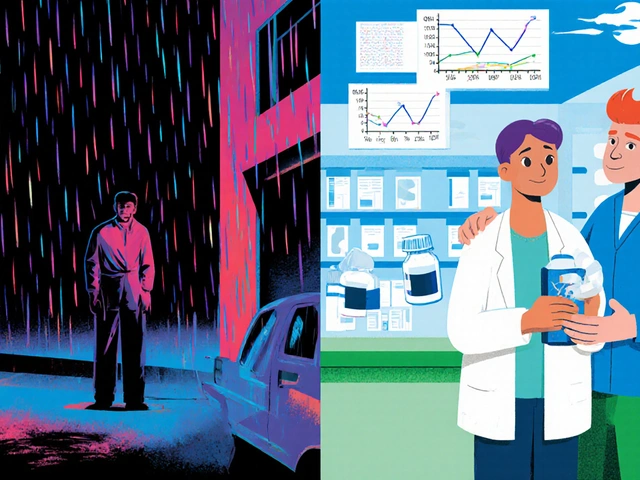
Imagine you switch from a brand-name heart medication to a cheaper generic version. Everything seems fine for a week, then you develop a severe rash or unexpected dizziness. Your first instinct might be to blame the new manufacturer. But here is the reality that often surprises patients and even some clinicians: generic drugs are subject to the exact same rigorous safety monitoring as their brand-name counterparts. The active ingredient is identical. The legal requirements for reporting side effects are identical. Yet, confusion persists about who should report what, and when a reaction qualifies as "rare" enough to trigger an investigation.
If you are a patient experiencing something unusual, or a healthcare provider managing complex cases, understanding the mechanics of adverse event reporting is not just bureaucratic-it is critical for public health. This guide cuts through the noise to explain exactly when you should report a side effect from a generic medication, how the system works, and why your input matters more than you think.
The Myth of Different Safety Standards
A common misconception is that generic medications have lower safety standards or fewer post-market surveillance requirements. This is factually incorrect. Under the U.S. Food and Drug Administration (FDA) regulations, specifically reinforced by the 2012 FDA Safety and Innovation Act (FDASIA), generic manufacturers bear equal responsibility for post-marketing surveillance as innovator companies.
When we talk about generics, we are talking about products that must demonstrate bioequivalence to the reference listed drug (the brand name). This means they deliver the same amount of active ingredient into a patient's bloodstream over the same amount of time. Because the active molecule is the same, the potential for adverse reactions is theoretically the same. The Office of Generic Drugs confirmed in 2022 that 98.7% of adverse event reports in the FAERS database do not distinguish between generic and brand products because the active ingredients are chemically identical.
However, differences can arise from inactive ingredients (excipients) like dyes, fillers, or binders. While these rarely cause serious systemic issues, they can trigger allergic reactions or intolerances in sensitive individuals. For example, lactose intolerance can manifest as gastrointestinal distress if a specific generic formulation uses lactose as a filler, whereas the brand version does not. Understanding this distinction helps clarify whether a reaction is due to the drug class itself or a specific manufacturing choice.
Defining "Rare" and "Serious" Adverse Events
Not every stomach ache or mild headache warrants a formal report. To navigate the reporting system effectively, you need to understand two key definitions used by regulatory bodies like the FDA and the European Medicines Agency (EMA): rarity and seriousness.
Rare adverse events are typically defined as reactions occurring in fewer than 1 in 1,000 patients based on clinical trial data. However, clinical trials often involve only thousands of participants. Post-marketing surveillance, which monitors millions of users, frequently identifies much rarer events-those occurring in 1 in 10,000 or even 1 in 100,000 people. These signals often emerge only after widespread use.
Serious adverse events (SAEs) are defined by outcome, not rarity. An event is considered serious if it results in:
- Death
- A life-threatening condition
- Inpatient hospitalization or prolongation of existing hospitalization
- Persistent or significant disability or incapacity
- A congenital anomaly or birth defect
- Medically important events that may jeopardize the patient and require intervention to prevent one of the above outcomes
For instance, Stevens-Johnson Syndrome (SJS) is a rare but serious skin reaction associated with certain generic anticonvulsants like lamotrigine. While the incidence in trials was around 1 in 1,000, post-marketing data showed rates closer to 1.8 cases per 10,000 person-years. Because SJS is life-threatening and requires immediate medical intervention, it triggers expedited reporting regardless of its rarity.

When Should You Report? Critical Triggers
You might wonder, "Do I really need to report this?" The answer is yes, especially if the event meets specific criteria. Regulatory agencies rely on spontaneous reports to detect signals that were missed in pre-approval trials. Here are the critical triggers for reporting a rare adverse event with a generic drug:
- No Reasonable Alternative Explanation: If a patient develops a reaction that cannot be explained by other conditions or medications, it should be reported. For example, acute liver injury appearing within 1-6 weeks of starting a generic statin, where no viral hepatitis or alcohol abuse is present.
- Pharmacologically Plausible Timeframe: The reaction occurs within a window consistent with the drug’s mechanism of action. Angioedema (swelling of the deeper layers of skin) appearing shortly after initiating an ACE inhibitor generic fits this pattern.
- Unexpected Reactions: Any adverse drug reaction (ADR) not listed in the current product labeling. Unexpected ADRs require expedited reporting by manufacturers within 15 calendar days of awareness.
- Cluster Reports: Even if a single case seems minor, multiple similar reports from different patients can signal a broader issue. In 2021, 17 reports of QT prolongation with generic citalopram led to updated labeling restricting doses for patients over 60.
Remember, you do not need to prove causality to report. The FDA explicitly states that reports should be submitted even when causality is uncertain. In fact, 68.4% of significant safety findings originated from initial reports where the link to the drug was not definitively established at the time of submission.
How to Report: Tools and Protocols
The primary tool for reporting adverse events in the United States is the FDA MedWatch Program. Established in 1993, MedWatch allows both healthcare professionals and consumers to submit reports online or via telephone (800-FDA-1088).
| Reporter Type | Form Name | Key Details Required | Submission Method |
|---|---|---|---|
| Healthcare Professionals | Form 3500 | Patient demographics, concomitant meds, lab values, Naranjo Scale assessment | Online Portal, Fax, Mail |
| Consumers/Patients | Form 3500B | Patient name/contact, drug name, lot number (if available), description of event | Online Portal, Phone, Mail |
For Healthcare Providers: Use Form 3500. Your reports carry significant weight because they include clinical context. The FDA’s 2023 analysis revealed that 63.2% of professional reports included sufficient detail for meaningful analysis, compared to only 28.7% of consumer reports. Include specific details such as:
- Patient age, weight, and comorbidities
- Exact dose and duration of therapy
- Lot number of the medication (critical for identifying manufacturing batches)
- Concomitant medications with doses
- Laboratory values with dates and reference ranges
- Causality assessment using tools like the Naranjo Algorithm (scores ≥9 indicate definite ADR)
For Consumers: Use Form 3500B. It is simpler but still vital. Many patients hesitate to report because they feel their experience isn't "big enough." However, aggregate data drives safety decisions. If you notice a pattern-for example, persistent joint pain (arthralgia) after switching to a generic seizure medication-report it. Between 2019 and 2022, 42 reports of arthralgia with generic levetiracetam prompted an ongoing safety review by the FDA.

The Role of Manufacturers and Global Systems
While individual reports matter, the bulk of pharmacovigilance is handled by manufacturers. Under the ICH E2D guideline, all serious unexpected ADRs must be submitted to regulatory authorities within 15 days. This applies equally to generic and brand-name products.
Generic manufacturers must monitor the FAERS (Adverse Event Reporting System) database, which contains over 25 million reports as of 2023. They are required to submit quarterly reports for expected reactions and annual submissions thereafter. If a signal emerges-such as increased hypoglycemia risk with certain metformin formulations identified by the FDA’s Sentinel Initiative-the manufacturer must update labeling or take corrective action.
This process is not unique to the U.S. The European Medicines Agency’s EudraVigilance system processed 1.4 million ADR reports in 2022, with 38.2% involving generics. This global alignment ensures that safety concerns detected in one region are evaluated worldwide.
Challenges and Future Directions
Despite robust systems, challenges remain. One major gap is the inconsistent reporting of lot numbers. Only 12.4% of consumer reports include this critical information, making it difficult to trace issues back to specific manufacturing batches. Another challenge is distinguishing product-specific issues from class effects. If ten different generic manufacturers produce the same drug, and patients report similar side effects, is it the drug class or a shared excipient?
Technology is helping bridge these gaps. AI-assisted signal detection in FAERS has increased rare event identification by 37.2% since 2020. Machine learning algorithms can now flag potential issues 4.8 months earlier than traditional methods. The FDA’s 2024 action plan aims to increase high-quality generic ADE reports by 25% through enhanced provider training and simplified consumer tools. By December 2025, mandatory electronic reporting for manufacturers will be fully implemented under FDASIA Section 715.
As a stakeholder in your own health, your role is clear. If you experience a reaction that is serious, unexpected, or rare, do not assume it is "just part of the process." Report it. Your data point could be the key to protecting others.
Is it necessary to report side effects if I am taking a generic drug instead of a brand name?
Yes, absolutely. Generic drugs contain the same active ingredient as brand-name drugs and are subject to identical safety monitoring requirements. Reporting side effects helps regulatory agencies like the FDA detect rare or unexpected adverse events that may not have been seen in clinical trials. Your report contributes to the overall safety profile of the medication, regardless of the manufacturer.
What defines a "serious" adverse event that requires immediate reporting?
A serious adverse event (SAE) is one that results in death, is life-threatening, requires hospitalization or prolongs existing hospitalization, causes persistent or significant disability, leads to a congenital anomaly, or is a medically important event that requires intervention to prevent permanent impairment. Examples include severe allergic reactions, organ failure, or strokes.
How long does a manufacturer have to report a serious unexpected adverse reaction?
Under FDA regulations and ICH E2D guidelines, manufacturers must submit reports for serious unexpected adverse reactions within 15 calendar days of becoming aware of the event. Expected reactions follow non-expedited reporting schedules, typically quarterly for the first three years post-approval and annually thereafter.
Why is the lot number important when reporting a side effect?
The lot number identifies the specific batch of medication produced. Including this information allows regulators and manufacturers to determine if a problem is isolated to a particular production run (e.g., contamination or manufacturing error) or if it is a broader issue with the drug formulation itself. Unfortunately, only about 12.4% of consumer reports currently include this critical detail.
Can inactive ingredients in generic drugs cause adverse reactions?
Yes, while rare, inactive ingredients (excipients) such as dyes, fillers, or binders can cause allergic reactions or intolerances in sensitive individuals. For example, some patients may react to lactose used as a filler in certain generic formulations. These reactions are distinct from those caused by the active pharmaceutical ingredient but are still valid reasons for reporting.
What is the difference between expected and unexpected adverse drug reactions?
An expected adverse reaction is one that is already listed in the drug’s official prescribing information (labeling). An unexpected reaction is any adverse event that is not listed in the labeling or differs in severity, frequency, or nature from what is described. Unexpected reactions require expedited reporting by manufacturers to regulatory authorities.