Irregular periods are often brushed off as a normal part of womanhood, but for millions, they signal a deeper issue. Polycystic Ovary Syndrome (PCOS) is a complex endocrine disorder affecting 5-10% of women of reproductive age, characterized by hormonal imbalances that disrupt ovulation and increase metabolic risks. It remains the leading cause of anovulatory infertility globally. If you’ve been struggling to conceive or dealing with unpredictable cycles, understanding the mechanics behind this condition is the first step toward effective management.
This guide breaks down exactly what happens inside your body during PCOS and maps out the current evidence-based treatments available in 2026. We’ll look at why standard advice often falls short and how specific interventions-from lifestyle tweaks to targeted medications-can restore fertility without guesswork.
The Hormonal Cascade Behind PCOS
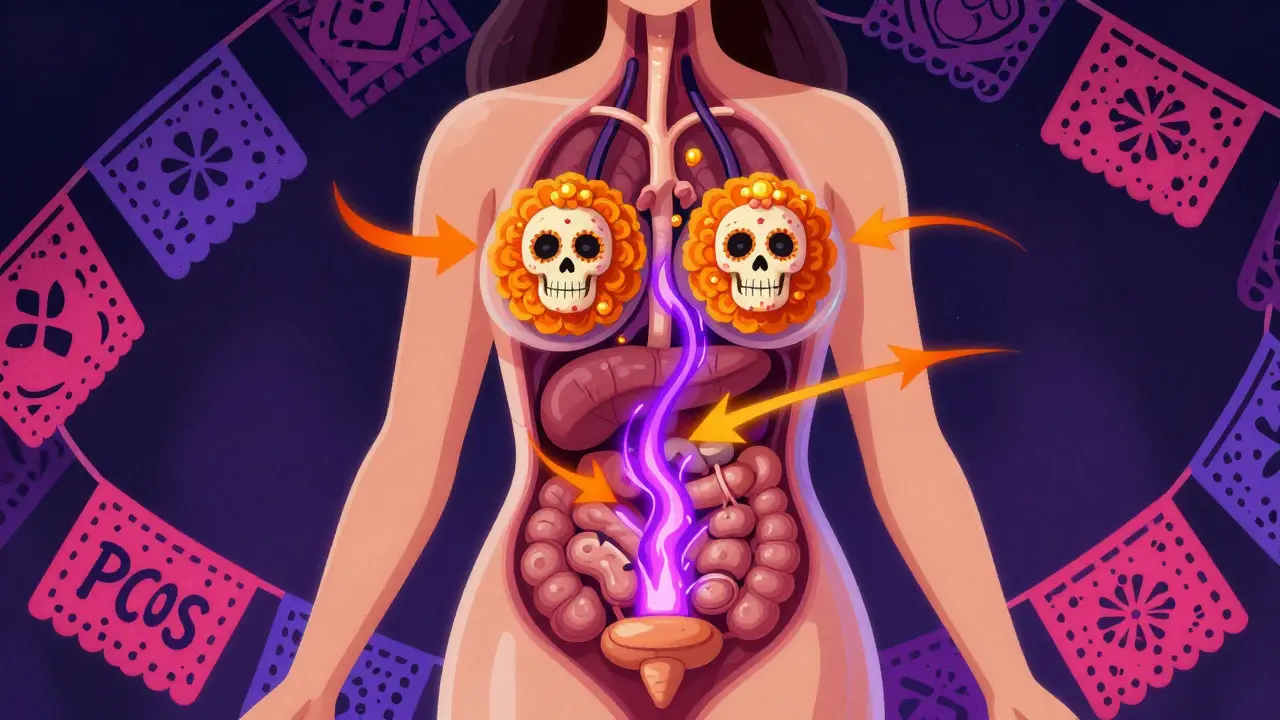
To treat PCOS effectively, you need to understand the root cause. It isn’t just about having "cysts" on your ovaries; it’s a systemic feedback loop involving insulin, androgens, and gonadotropins. In roughly 50-70% of cases, Insulin Resistance is a condition where cells fail to respond properly to insulin, forcing the pancreas to produce more, which subsequently stimulates ovarian androgen production. This excess insulin directly triggers theca cells in the ovaries to overproduce testosterone.
Simultaneously, high insulin levels suppress the liver’s production of Sex Hormone-Binding Globulin (SHBG). With less SHBG to bind up free testosterone, circulating androgen levels spike. Normal total testosterone ranges are typically 15-25 ng/dL, but in PCOS patients, these can reach 20-30 ng/dL or higher. This surplus leads to visible symptoms like hirsutism (excess hair growth) in 70% of cases and acne in 30-40%. But the bigger problem for fertility lies in the pituitary gland.
In a healthy cycle, Follicle-Stimulating Hormone (FSH) and Luteinizing Hormone (LH) work in tandem. In PCOS, LH levels are often elevated (>10 IU/L), creating an LH:FSH ratio greater than 2:1. This imbalance prevents follicles from maturing properly, leading to anovulation. Without ovulation, there is no egg release, and consequently, no pregnancy. Furthermore, the lack of ovulation means low progesterone, which causes irregular bleeding and increases the risk of endometrial hyperplasia if left unmanaged.
Diagnosis: More Than Just an Ultrasound
Many women wait years for a diagnosis because doctors rely too heavily on ultrasound images. While polycystic ovarian morphology is one criterion, the Rotterdam criteria require only two of three features for a diagnosis: oligo/anovulation, clinical/biochemical hyperandrogenism, and polycystic ovaries. However, recent guidelines from the International PCOS Guideline Working Group emphasize excluding other conditions first. Thyroid dysfunction affects 15-20% of PCOS cases, and Congenital Adrenal Hyperplasia can mimic PCOS symptoms in up to 10% of hyperandrogenic women.
For adolescents, routine ultrasound is discouraged because physiological follicular patterns can look similar to PCOM. Instead, focus should be on menstrual history and blood tests. A comprehensive diagnostic panel should include:
- Fasting Insulin and Glucose (to assess metabolic health)
- Total and Free Testosterone
- LH and FSH levels
- Thyroid Stimulating Hormone (TSH)
- Prolactin levels
Getting the right lab work done early saves time and prevents unnecessary treatments for the wrong cause.
First-Line Treatments: Lifestyle and Metformin
Before reaching for strong fertility drugs, the foundation must be set. For overweight or obese women (BMI >25 kg/m²), losing just 5-10% of body weight can improve ovulation rates by 30-50%. This isn't about cosmetic change; it’s about reducing insulin resistance. The Diabetes Prevention Program protocol suggests 150 minutes of moderate exercise per week combined with a 500-750 kcal daily deficit. Studies show this approach restores ovulation in 44% of previously anovulatory women within six months.
Diet plays a crucial role here. Low-glycemic index diets (GI <55) have been shown to reduce insulin levels by 30% compared to high-GI diets. The DASH diet, rich in fruits, vegetables, and lean proteins, improves menstrual regularity by 35% over 12 weeks. These changes address the metabolic core of PCOS rather than just masking symptoms.
Medication-wise, Metformin is an oral antidiabetic drug commonly prescribed to improve insulin sensitivity in PCOS patients, though its efficacy varies significantly between individuals. As a standalone therapy for ovulation, it’s modest, achieving ovulation in only 15-40% of users. However, when combined with other agents, it becomes a powerful tool. Many patients struggle with gastrointestinal side effects like nausea (reported in 53% of users) and diarrhea. To mitigate this, start with a low dose (500 mg) taken with food and titrate up slowly. Consistency is key; only 45% of women take metformin long-term without proper guidance.

Ovulation Induction: Clomiphene vs. Letrozole
If lifestyle changes and metformin aren’t enough, pharmacological ovulation induction is the next step. Historically, Clomiphene Citrate (CC) was the first-line oral medication used to stimulate ovulation in infertile women, working by blocking estrogen receptors in the hypothalamus. It achieves ovulation in 60-85% of cases and pregnancy rates of 30-40% over six cycles. However, CC has drawbacks: it can thin the uterine lining and affect cervical mucus quality, potentially hindering sperm transport.
Enter Letrozole, an aromatase inhibitor that has emerged as a superior alternative to clomiphene for ovulation induction in PCOS, offering higher live birth rates and fewer side effects. The landmark PPCOS-II trial demonstrated that letrozole yields higher ovulation rates (88% vs. 70%) and live birth rates (27.5% vs. 19.1%) compared to clomiphene. Because letrozole doesn’t affect the uterine lining as negatively, it’s now often recommended as the first-line agent for PCOS-related anovulation, especially for those who failed CC or have thin endometrium.
| Feature | Clomiphene Citrate | Letrozole | Metformin (Monotherapy) |
|---|---|---|---|
| Mechanism | Selective Estrogen Receptor Modulator | Aromatase Inhibitor | Biguanide / Insulin Sensitizer |
| Ovulation Rate | 60-85% | ~88% | 15-40% |
| Live Birth Rate | ~19-22% | ~27.5% | Variable / Lower |
| Key Side Effects | Hot flashes, thin endometrium | Generally well-tolerated | Nausea, diarrhea |
| Best For | General anovulation | PCOS-specific anovulation | Significant insulin resistance |
Advanced Interventions: Gonadotropins and IVF
When oral medications fail, injectable Gonadotropins are injectable hormones (FSH and/or LH) used to directly stimulate ovarian follicle development in women who do not respond to oral ovulation induction agents. These achieve pregnancy rates of 15-20% per cycle but carry significant risks. The multiple pregnancy rate is 20-30%, and the risk of Ovarian Hyperstimulation Syndrome (OHSS) is 5-10%. Close monitoring via ultrasound and blood tests is mandatory to adjust doses and prevent complications.
In Vitro Fertilization (IVF) is an assisted reproductive technology where eggs are retrieved from the ovaries and fertilized with sperm in a laboratory before being transferred to the uterus. reserved for cases with additional infertility factors (like tubal blockage or severe male factor) or after failed ovulation induction. PCOS patients actually have good oocyte yield in IVF but require lower starting doses of gonadotropins (150-225 IU/day vs. 225-300 IU/day for non-PCOS) to avoid OHSS. Despite the lower doses, OHSS risk remains higher (10-20%) due to the hypersensitive nature of PCOS ovaries.
Beyond Conception: Long-Term Health Management
Treating PCOS isn’t just about getting pregnant; it’s about managing a lifelong metabolic condition. Women with PCOS face a 2-4 fold increased risk of Type 2 Diabetes, with 50% developing it by age 40 if unmanaged. Cardiovascular risks are also elevated, including a 2x higher risk of myocardial infarction. Regular screening for blood pressure, lipids, and glucose is essential, even after successful conception.
Mental health is another critical component. Depression affects 30-50% of PCOS patients, yet only 32% receive adequate screening. Chronic stress elevates cortisol, which further disrupts the hypothalamic-pituitary-ovarian axis. Integrating mental health support into your care plan can improve both emotional well-being and treatment adherence.
The future of PCOS care is moving toward personalized medicine. New therapies like GnRH antagonists are showing promise in restoring menstrual regularity, and AI-driven diagnostics are becoming more accurate. For now, the most effective strategy remains a coordinated approach: combine metabolic management with targeted ovulation induction, tailored to your specific phenotype.
Frequently Asked Questions
Is PCOS curable?
PCOS is currently considered a chronic condition rather than a disease with a permanent cure. However, symptoms can be effectively managed through lifestyle changes, medication, and fertility treatments. Many women go into remission after menopause, but metabolic risks may persist, requiring ongoing monitoring.
Which is better for PCOS fertility: Clomid or Letrozole?
Recent data favors Letrozole as the first-line treatment for PCOS specifically. It offers higher live birth rates (27.5% vs 19.1%) and fewer side effects related to the uterine lining compared to Clomiphene Citrate. However, individual response varies, so your doctor will determine the best starting point based on your medical history.
Does Metformin help with weight loss in PCOS?
Metformin primarily improves insulin sensitivity rather than acting as a direct weight-loss drug. While some patients experience modest weight loss, it is most effective when paired with dietary changes and exercise. Its main benefit for fertility is improving ovulation rates in women with significant insulin resistance.
Can I get pregnant naturally with PCOS?
Yes, many women with PCOS conceive naturally, especially if they manage their weight and reduce insulin resistance. Spontaneous ovulation can occur even in irregular cycles. Tracking basal body temperature or using ovulation predictor kits can help identify fertile windows, although timing may be unpredictable.
What diet is best for managing PCOS symptoms?
A low-glycemic index diet is generally recommended to stabilize insulin levels. This includes whole grains, lean proteins, healthy fats, and plenty of fiber-rich vegetables. Avoiding refined sugars and processed carbohydrates can help reduce inflammation and improve hormonal balance over time.