Have you ever picked up a prescription and stared at the bottle, wondering why the pill looks nothing like the one you saw in the TV ad? Or maybe you noticed two names on the label - one big and bold, another small and quiet - and got confused? You’re not alone. Millions of people in the U.S. and beyond face this exact moment every time they fill a prescription. The truth is, the big name on top isn’t always the drug you’re actually taking. The real story is written in the smaller text below: the generic name.
What’s Really in Your Pill?
Every prescription drug has two names. The first is the brand name - the catchy, trademarked label you see in commercials. Think Prilosec, Lipitor, or Prozac. These are the names drug companies spend millions marketing. The second is the generic name - the scientific name of the active ingredient. For those same drugs, it’s omeprazole, atorvastatin, and sertraline. Here’s the key: both versions contain the exact same active ingredient. That’s not marketing fluff. It’s federal law. The U.S. Food and Drug Administration (FDA) requires that generic drugs deliver the same therapeutic effect as their brand-name counterparts. They must have the same strength, dosage form (tablet, capsule, liquid), and route of administration. They’re held to the same manufacturing standards. In fact, about half of all generic drugs are made by the same companies that produce the brand-name versions - just under a different label.Why Do They Look Different?
If the active ingredient is identical, why do generic pills look different? Color, shape, size, even the imprint on the tablet - all of it can vary. That’s not a mistake. It’s by design. Trademark laws prevent generic manufacturers from copying the exact appearance of brand-name drugs. A blue oval pill isn’t just a pill - it’s a brand identity. So generics get different colors, different shapes, different markings. But none of that affects how the drug works in your body. The FDA’s strict bioequivalence rules ensure that the generic version releases the active ingredient into your bloodstream at the same rate and to the same extent as the brand. For most drugs, the 90% confidence interval for absorption (measured by AUC and Cmax) must fall between 80% and 125% of the brand. That’s a tight window. In practice, this means your body processes the generic and brand versions almost identically.Why Are Generics So Much Cheaper?
The price difference isn’t close. It’s dramatic. On average, generic drugs cost 80-85% less than brand-name versions. For example, the brand-name cholesterol drug Lipitor used to cost around $300 a month. The generic, atorvastatin,? $4. Why? Because brand-name companies spend billions developing a new drug - clinical trials, research, marketing, patents. The average cost to bring a new drug to market? Around $2.6 billion, according to Tufts Center for the Study of Drug Development. Generic manufacturers don’t repeat that process. They just prove their version behaves the same way in the body. That cuts development costs by over 90%. This isn’t just good for patients. From 2007 to 2016, generic drugs saved the U.S. healthcare system $1.67 trillion. In 2022, generics made up 90.3% of all prescriptions filled - but only 22.7% of total drug spending. That’s the power of competition.What About Safety and Effectiveness?
Some people worry generics aren’t as safe or effective. They’re not. The FDA requires every generic to meet the same quality, purity, and potency standards as the brand. In fact, the agency inspects generic manufacturing facilities just as rigorously as brand-name ones. There’s one exception: drugs with a narrow therapeutic index (NTI). These are medications where even tiny changes in blood levels can cause serious side effects or make the drug ineffective. Examples include warfarin (a blood thinner), levothyroxine (for thyroid), and some seizure medications. For these, some doctors prefer to stick with the brand - not because generics are less effective, but because small variations in inactive ingredients might affect absorption in sensitive patients. Even then, the FDA says generics are still safe and approved for use. Many patients switch successfully. If you’re on an NTI drug and your doctor says to stick with the brand, ask why. It’s not automatic - it’s individual.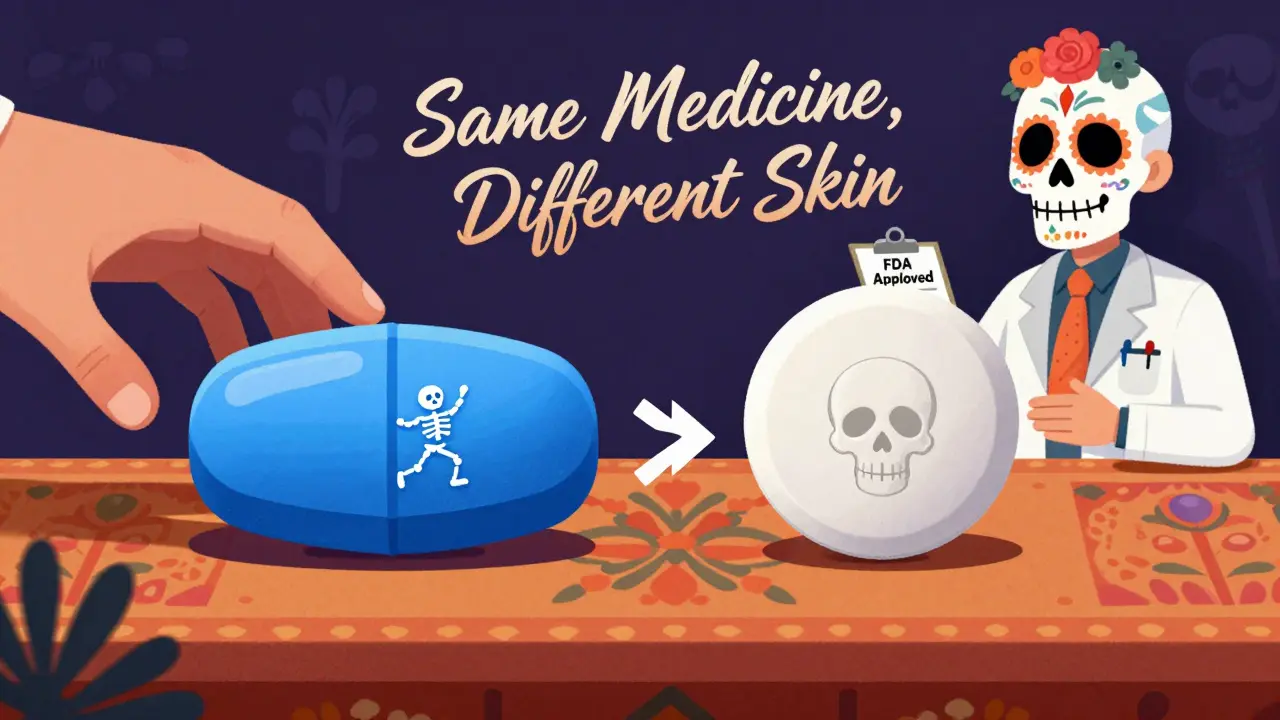
Why Do Some People Say Generics Don’t Work for Them?
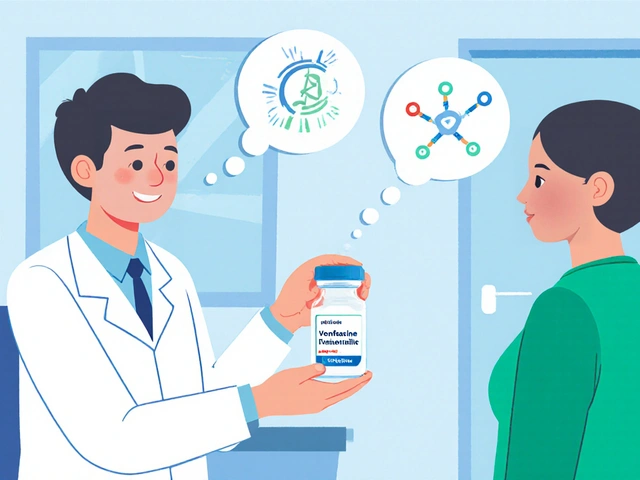
You’ll hear stories. “I switched to the generic and felt worse.” “My anxiety got worse.” “I had more side effects.” These aren’t always imaginary. But they’re rarely about the active ingredient. The culprit? Inactive ingredients - things like fillers, dyes, or coatings. These don’t treat your condition, but they can affect how the pill dissolves or how your stomach reacts. For example, someone with a lactose intolerance might react to a generic version that uses lactose as a filler, while the brand uses cornstarch. That’s why pharmacists are trained to ask: “Have you noticed any changes since switching?” If you feel different, don’t assume the drug isn’t working. Talk to your pharmacist. They can check the inactive ingredients and help you find a generic that matches your needs - or suggest sticking with the brand if it truly makes a difference.How to Read Your Prescription Label
Your pill bottle should clearly show both names. The brand name (if applicable) is usually in larger font. Right below it, in smaller print, is the generic name. This is standard across 92% of U.S. prescriptions, according to the National Association of Boards of Pharmacy. If you don’t see both names, ask for them. Forty-one states require pharmacists to list both the brand and generic names on the label. You have the right to know what you’re taking. Don’t rely on color or shape to identify your medication. Pills change. A red capsule one month might be white the next. Always check the name on the label. Write it down. Keep a list. Use a pill organizer with labels.What Happens When You Go to the Pharmacy?
When your doctor writes a prescription, they can choose whether to allow substitution. If they write “dispense as written” or “do not substitute,” the pharmacist must give you the brand-name drug - even if a cheaper generic exists. But if they don’t say anything? In 28 states, pharmacists can automatically swap in a generic unless you object. Most insurance plans encourage or even require this switch to lower costs. You’ll pay less at the register - and your insurer pays less too. You can always ask: “Is there a generic version?” Even if your doctor didn’t specify, you can request one. It’s your right. And if you’re worried about cost, tools like GoodRx can show you the lowest price for either version - often under $5 for a 30-day supply.
What’s Changing in 2025 and Beyond?
The future of generics is strong. More biologic drugs - complex medications for conditions like rheumatoid arthritis, cancer, and diabetes - are losing patent protection. These aren’t traditional pills; they’re made from living cells. Their generic versions, called biosimilars, are trickier to make and cost less - but only 15-30% less, not 80-85%. The Inflation Reduction Act of 2022 caps out-of-pocket drug costs for Medicare Part D at $2,000 a year starting in 2025. That will push even more seniors toward generics. The FDA is also speeding up approval times for generics through its GDUFA III program, aiming for a 20% reduction by 2027. More generics mean more savings. But there’s a shadow: supply chains. Over 80% of the active ingredients in U.S. drugs come from just two countries - China and India. Pandemic disruptions showed how fragile that system is. If a factory shuts down, shortages follow. That’s why some experts worry about availability, not quality.What Should You Do?
You don’t need to be a pharmacist to understand your meds. Here’s what to do:- Always check the label for both the brand and generic name.
- Don’t assume a pill looks the same every time - check the name, not the color.
- Ask your pharmacist if a generic is available - even if your doctor didn’t mention it.
- If you feel different after switching, talk to your pharmacist. It might be an inactive ingredient.
- Use price-check tools like GoodRx to compare costs.
- For NTI drugs like warfarin or levothyroxine, discuss with your doctor whether staying on brand is right for you.
Bottom Line
Generic drugs aren’t second-rate. They’re the same medicine, sold at a fraction of the cost. The FDA, medical associations, and independent researchers all agree: they’re safe, effective, and widely used. The differences you see - in color, shape, or price - are just packaging and profit. The medicine inside? Identical. The real question isn’t whether generics work. It’s whether you’re paying more than you need to.Are generic drugs as safe as brand-name drugs?
Yes. The FDA requires generic drugs to meet the same strict standards for quality, purity, strength, and manufacturing as brand-name drugs. They must prove they deliver the same active ingredient in the same way and at the same rate in the body. Generic drugs are inspected just as often as brand-name ones.
Why do generic pills look different from brand-name pills?
Trademark laws prevent generic manufacturers from copying the exact appearance of brand-name drugs. So generics are made in different colors, shapes, or sizes. These differences don’t affect how the drug works - only the active ingredient matters. The pill’s appearance is for branding, not function.
Can I ask my pharmacist to give me the brand-name drug instead of the generic?
Yes. You can always request the brand-name version. Your pharmacist can fill it, but your insurance may charge you more - sometimes a lot more. Your doctor can also write "dispense as written" on the prescription to prevent substitution.
Why do some people say generics don’t work for them?
Sometimes, it’s not the active ingredient - it’s the inactive ones. Fillers, dyes, or coatings in generics can differ from brand-name versions. For most people, this doesn’t matter. But if you’re sensitive to certain ingredients (like lactose or gluten), you might notice side effects. Talk to your pharmacist - they can help you find a generic with compatible inactive ingredients.
Are there any drugs where I should avoid generics?
For most drugs, no. But for a small group called narrow therapeutic index (NTI) drugs - like warfarin, levothyroxine, or some epilepsy medications - even tiny changes in blood levels can matter. Some doctors prefer to stick with brand-name versions for these, though generics are still FDA-approved. If you’re on one of these, talk to your doctor before switching.
How do I know if my prescription is generic or brand-name?
Look at the label. The brand name (like "Lipitor") is usually printed in larger font. Right below it, in smaller text, is the generic name ("atorvastatin"). If you only see one name, ask your pharmacist to show you both. By law, they must provide both names on the label in most states.
Do insurance plans force me to take generics?
Many do. Most commercial insurance plans and Medicare Part D require you to try the generic first because it’s cheaper. If you refuse, you may pay more out of pocket. But you can always ask for an exception if you have a medical reason.
Can I trust generics made overseas?
Yes. Over 80% of active ingredients in U.S. drugs come from China and India, but all facilities - whether in the U.S. or abroad - must pass FDA inspections before making drugs for American patients. The FDA regularly audits these factories. The country of origin doesn’t determine safety - the inspection record does.
There are 10 Comments
Sarah Mailloux
Been taking generics for years and never had an issue. My blood pressure med? Same as the brand, half the price. Why pay more for the same pill with a different color?
My grandma switched and saved $200 a month. She’s still alive and kicking.
Nilesh Khedekar
Ohhhhh, so you mean the FDA doesn’t lie? The same people who let Big Pharma run wild with opioids are now our saints? Hahahahaha. I’ve seen the factory videos from India. Dust everywhere. Workers without masks. And you think the active ingredient is the only thing that matters?
Oh, and by the way-why does the label say ‘Made in China’ but the bottle says ‘Manufactured in the USA’? That’s not transparency. That’s theater.
Jami Reynolds
Generics are a Trojan horse. The FDA’s bioequivalence window? 80–125%? That’s a 45% variance. That’s not ‘same drug’-that’s ‘close enough for government work.’
My cousin switched to generic levothyroxine and went into atrial fibrillation. The doctor blamed stress. The pharmacy blamed ‘individual variation.’ I blame the system.
And don’t get me started on fillers. Glyphosate-laced cellulose? Cornstarch from GMO crops? They don’t test for that. They test for ‘active ingredient.’ That’s not safety. That’s negligence.
Amy Ehinger
I used to be super paranoid about generics too, honestly-like, I’d stare at the pill for five minutes wondering if it was gonna work or if I’d wake up with a stroke or something.
But then I switched to generic sertraline after my insurance made me, and honestly? I felt the same. No weird side effects. No mood crashes. Just… me. Calmer. Cheaper.
My pharmacist even gave me a little handout with the inactive ingredients listed, which I thought was weirdly thoughtful. Like, who does that? Turns out, pharmacists are the real MVPs.
Now I just check the name on the bottle, not the color. I even made a little chart in my phone. Generics are cool now. I’m a convert.
Nat Young
Of course generics work. They’re designed to work. That’s the whole point of the system. The real scam isn’t the generic-it’s the brand-name companies paying off doctors to scare patients into paying $300 for a pill that costs $2 to make.
And don’t even get me started on the ‘narrow therapeutic index’ excuse. That’s just a loophole for pharma to keep pricing gouging. Warfarin? People have been switching for decades. If your doctor’s scared, they’re scared of losing the kickback, not your health.
Also, GoodRx? That’s the real revolution. Not generics. The fact that you can buy a 30-day supply for $4 because someone built a price comparison site? That’s capitalism. That’s power.
Nicholas Urmaza
Let me be clear: generics are not a compromise. They are the standard. The FDA doesn’t approve mediocrity. It enforces equality. The fact that you think color or shape matters means you’ve been sold a myth by billion-dollar ad campaigns.
When I was in med school, we were taught: ‘The pill doesn’t care what it looks like. Your body only cares about the molecule.’
Stop paying for branding. Stop letting corporations profit from your ignorance. You’re not saving money-you’re being robbed. Demand the truth. Ask for the generic. Refuse to be a consumer. Be an informed patient.
Niki Van den Bossche
Ah, the great pharmaceutical illusion. We’ve been conditioned to believe that a pill’s identity is tied to its aesthetic-its hue, its contour, its sacred logo. But what if the pill is a metaphor? What if the brand name is the ego, and the generic is the soul?
The active ingredient? That’s the truth. Unadorned. Unmasked. Unbranded.
And yet we cling to the packaging like a security blanket. We fear the unmarked pill as if it were a void. We fear the absence of corporate ritual.
Perhaps the real illness isn’t hypertension or depression. It’s the addiction to spectacle. To the myth of distinction.
What if the only thing that changed when you switched was your perception? And what if that’s the most dangerous thing of all?
RUTH DE OLIVEIRA ALVES
It is of paramount importance to underscore that the United States Food and Drug Administration maintains an uncompromising standard of regulatory rigor for both branded and generic pharmaceutical products. The bioequivalence criteria, as codified in Title 21 of the Code of Federal Regulations, Section 314.94, are not advisory; they are mandatory, enforceable, and subject to periodic audit.
Furthermore, the Global Harmonization Task Force and the International Council for Harmonisation have adopted identical standards, affirming that generic medications are not inferior, but equivalent in therapeutic outcome.
It is therefore scientifically and ethically indefensible to suggest that a generic drug is less safe, less effective, or less reliable than its branded counterpart, absent evidence of noncompliance with Good Manufacturing Practices.
One must question the source of such misinformation: is it ignorance, or is it deliberate obfuscation?
Diane Hendriks
China and India make our pills? That’s not a supply chain. That’s national surrender. We used to make medicine here. Now we outsource our health to foreign factories where labor laws are suggestions and environmental rules are jokes.
Generics might be cheaper, but at what cost? We’re trading sovereignty for savings. We’re letting foreign powers control the very molecules that keep us alive.
And the FDA? They inspect factories? Sure. But how often? And who pays for the inspectors? The same companies they’re supposed to be policing.
This isn’t healthcare. It’s colonization by capsule.
ellen adamina
My mom switched from brand-name warfarin to generic last year. She was terrified. I was too. We watched her INR levels like hawks for three months.
They stayed perfect.
She saved $180 a month. No side effects. No panic attacks. Just a little less stress about money.
I still check the label every time. Just in case. But I don’t freak out anymore.
Pharmacists are amazing. Just talk to them.
Write a comment
Your email address will not be published. Required fields are marked *