
Your liver is working overtime right now. It filters toxins, processes nutrients, and regulates metabolism, but for millions of people, it’s also storing excess fat. This condition, known as Nonalcoholic Fatty Liver Disease (or NAFLD), affects roughly one in four adults globally. The scary part? Most people don’t know they have it until significant damage has occurred. But here is the good news: unlike many chronic diseases, NAFLD is reversible. You can stop the progression and even reverse scarring if you catch it early enough.
The medical community is currently shifting terminology. Many experts now prefer Metabolic Associated Fatty Liver Disease (MAFLD) because it better reflects that this isn't just about alcohol or bad luck-it's deeply tied to your metabolic health, insulin resistance, and weight management. Understanding how this disease progresses from simple fat accumulation to dangerous scarring is the first step to taking control of your liver health.
How Fat Accumulates in the Liver
To reverse the problem, you need to understand how it started. NAFLD begins when triglycerides build up in liver cells (hepatocytes) beyond normal levels-specifically, when more than 5% of liver cells contain fat. This happens primarily due to insulin resistance. When your body stops responding efficiently to insulin, your fat cells release free fatty acids into the bloodstream. These fats travel directly to the liver.
At the same time, high blood sugar triggers a process called de novo lipogenesis (DNL). In simple terms, your liver starts manufacturing new fat from carbohydrates rather than burning them for energy. Studies using stable isotopes show that DNL accounts for 26% of hepatic triglycerides in NAFLD patients, compared to just 5% in healthy individuals. Your liver becomes a factory for fat storage instead of a processing plant.
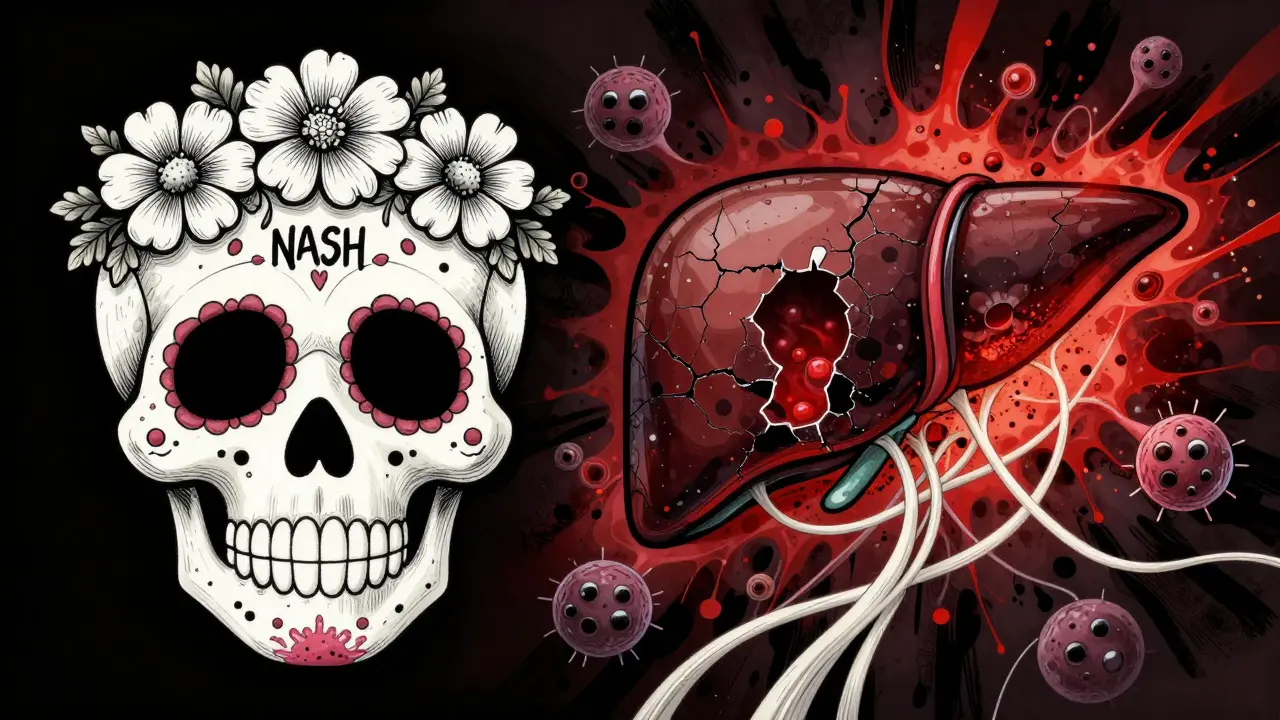
This initial stage is called simple steatosis. While not ideal, simple fat accumulation doesn't always cause immediate harm. However, it creates a vulnerable environment. If left unchecked, oxidative stress and inflammation kick in, turning simple fatty liver into nonalcoholic steatohepatitis (NASH). NASH is the aggressive form of the disease where liver cells are injured and inflamed.
The Danger Zone: From NASH to Fibrosis
Not everyone with fatty liver develops NASH. Only about 10-20% of NAFLD cases progress to this inflammatory stage. But once NASH sets in, the risk of serious complications rises sharply. The key player here is the stellate cell. Normally dormant, these cells activate in response to injury and start pumping out collagen, leading to liver fibrosis.
Fibrosis is essentially scar tissue. Think of it like a cut on your skin healing with a scar. A little scar tissue is manageable, but widespread scarring stiffens the liver, restricting blood flow and impairing function. Dr. Rohit Loomba from UC San Diego notes that 20% of NASH patients develop cirrhosis within 15 years. Cirrhosis is advanced, irreversible scarring that can lead to liver failure or cancer.
However, there is hope. Early-stage fibrosis (F1 and F2) is often reversible. Even some F3 fibrosis can improve with aggressive lifestyle changes. The goal is to halt the 'multiple-hit' process-inflammation, oxidative stress, and gut dysbiosis-before permanent structural damage occurs.
| Stage | Description | Reversibility |
|---|---|---|
| Simple Steatosis | Fat accumulation without inflammation or cell death. | Highly reversible with lifestyle changes. |
| NASH | Inflammation and liver cell injury alongside fat buildup. | Reversible; requires targeted intervention. |
| Fibrosis (F1-F2) | Mild to moderate scarring begins. | Often reversible with sustained weight loss. |
| Cirrhosis (F4) | Advanced, widespread scarring and liver dysfunction. | Largely irreversible; focus shifts to managing complications. |
Proven Strategies to Reverse NAFLD
You don't need magic pills to fix your liver. The most effective treatments are behavioral. Research consistently shows that losing 7-10% of your body weight can resolve NASH in up to 90% of cases. Even a modest 3-5% loss improves fat content significantly. Here is how to do it effectively.
1. Adopt the Mediterranean Diet
Diet is your primary tool. The Mediterranean diet is the gold standard for liver health. It focuses on whole foods, healthy fats, and low glycemic index carbohydrates. Aim for a macronutrient split of roughly 40-45% carbs, 35-40% fat, and 15-20% protein. Crucially, include 25-30 grams of fiber daily from vegetables, legumes, and whole grains. This dietary pattern reduces liver enzymes and steatosis by 60-70% in six months, according to the MedDiet study (2019).
2. Combine Aerobic and Resistance Exercise
Exercise helps burn liver fat independently of weight loss. Aim for 150 minutes of moderate-intensity aerobic activity per week (like brisk walking or cycling) plus two days of resistance training. Studies show that combining both types of exercise reduces liver fat 30% more than cardio alone. Strength training builds muscle, which improves insulin sensitivity and pulls glucose out of the blood.
3. Manage Insulin Resistance
Since insulin resistance drives NAFLD, lowering blood sugar spikes is critical. Avoid sugary drinks, refined carbs, and processed foods. Consider intermittent fasting if suitable for you, as it gives your liver a break from constant insulin production. Some patients benefit from medications like pioglitazone, which improves histology in over half of diabetic patients with NASH, though it may cause slight weight gain.
Emerging Medical Treatments
While lifestyle changes are foundational, medicine is catching up. For decades, options were limited to vitamin E and pioglitazone. Now, we have new drugs targeting specific pathways.
- GLP-1 Receptor Agonists: Drugs like liraglutide help with weight loss and reduce liver inflammation. They inhibit lipogenesis and enhance autophagy (cellular cleanup).
- Resmetirom: Approved by the FDA in March 2024, this thyroid hormone receptor-beta agonist achieved NASH resolution in 26% of patients in clinical trials, significantly improving fibrosis scores.
- FXR Agonists: Compounds like tropifexor activate the farnesoid X receptor, helping clear triglycerides from the liver.
These treatments are often used in combination. Dr. Stephen Harrison notes that dual therapies show 45-50% NASH resolution rates, far exceeding single-drug approaches. Always consult a hepatologist before starting any medication.

Monitoring Your Progress
You can't manage what you don't measure. Regular monitoring ensures your efforts are working. Blood tests check liver enzymes (ALT and AST), but they aren't perfect indicators of fibrosis. More accurate tools include:
- FibroScan: A non-invasive ultrasound test that measures liver stiffness (fibrosis) and fat content. Access is still limited in some primary care settings, so ask your doctor for a referral.
- ELF Test: The Enhanced Liver Fibrosis blood test provides a validated score for scarring severity.
- Biopsy: The gold standard for diagnosis, but invasive. Usually reserved for unclear cases or advanced disease.
Set realistic expectations. Liver enzymes may normalize in 3-6 months, but structural improvements like fibrosis reduction take 6-12 months of consistent effort. Patient reports highlight that discipline is key-one user shared their FibroScan improved from F3 to F1 after a year of strict diet and exercise adherence.
Frequently Asked Questions
Is Nonalcoholic Fatty Liver Disease reversible?
Yes, especially in the early stages. Simple steatosis and early fibrosis (F1-F2) are highly reversible with significant weight loss (7-10%), dietary changes, and exercise. Even some NASH cases can resolve completely. Advanced cirrhosis is harder to reverse but can be managed to prevent further decline.
What is the difference between NAFLD and MAFLD?
NAFLD (Nonalcoholic Fatty Liver Disease) is defined by exclusion-meaning you have fatty liver without heavy alcohol use or other causes. MAFLD (Metabolic Associated Fatty Liver Disease) is a newer term that defines the disease by positive criteria: the presence of fatty liver plus at least one marker of metabolic dysfunction, such as overweight, type 2 diabetes, or dyslipidemia. MAFLD emphasizes the root cause: metabolic health.
How much weight do I need to lose to reverse fatty liver?
A 3-5% weight loss reduces liver fat content. A 7-10% weight loss is typically required to resolve inflammation (NASH) and improve fibrosis. For example, if you weigh 200 pounds, losing 14-20 pounds could significantly heal your liver.
Can exercise alone reverse NAFLD?
Exercise helps reduce liver fat independently of weight loss, but it is most effective when combined with dietary changes. While exercise improves insulin sensitivity and burns triglycerides, achieving the 7-10% weight loss needed for NASH resolution usually requires a calorie deficit from diet as well.
Are there medications approved for NAFLD?
As of 2024, resmetirom is the first FDA-approved drug specifically for NASH with moderate-to-advanced fibrosis. Pioglitazone and vitamin E are also used off-label or for specific patient groups. GLP-1 agonists like semaglutide are increasingly prescribed for weight loss and metabolic benefits that indirectly help the liver.
What foods should I avoid with fatty liver?
Avoid added sugars (especially fructose in sodas and juices), refined carbohydrates (white bread, pastries), saturated fats (fried foods, fatty meats), and excessive alcohol. Focus on whole foods, lean proteins, healthy fats (olive oil, nuts), and high-fiber vegetables.
How long does it take to see results?
Liver enzyme levels (ALT/AST) may improve within 3-6 months of lifestyle changes. Structural improvements, such as reduced fat content and fibrosis, typically take 6-12 months of consistent effort. Patience and adherence are crucial.


There are 1 Comments
sam howard
look at all this jargon about de novo lipogenesis. basically your liver turns sugar into fat because you eat too much crap. simple as that. people act like its a mystery disease but its just biology 101.
Write a comment
Your email address will not be published. Required fields are marked *