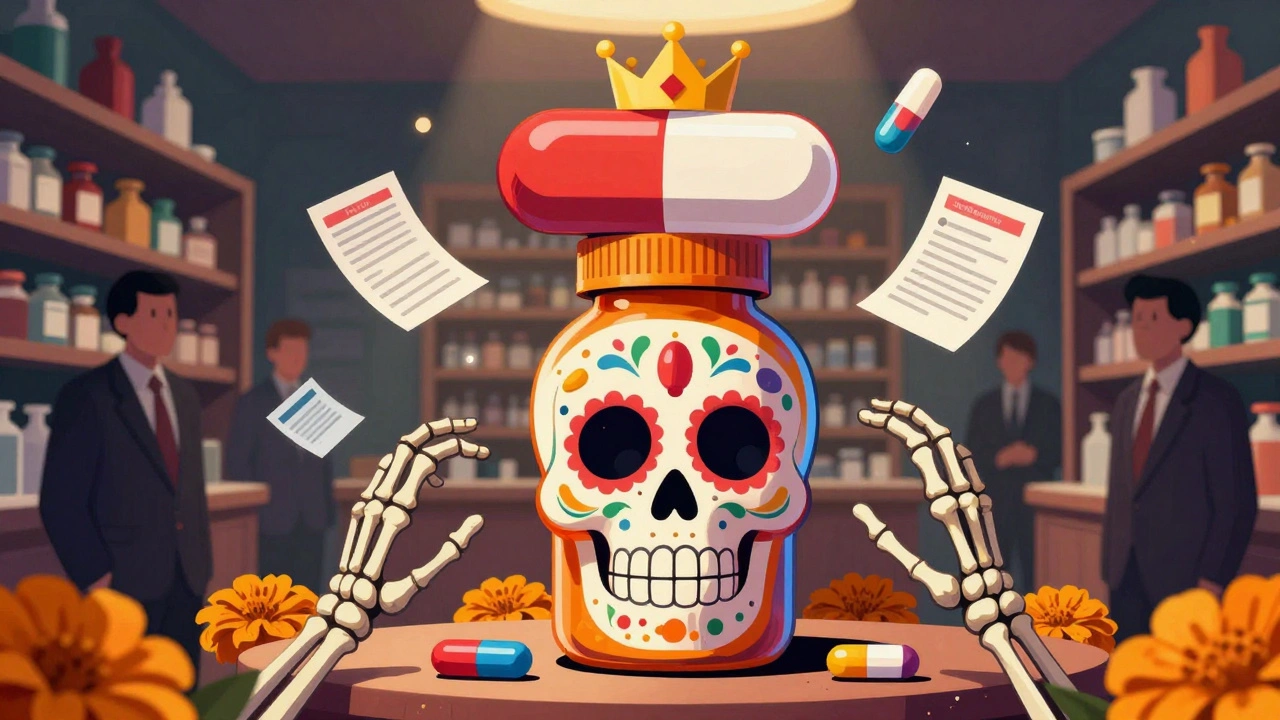
When you walk into a pharmacy and pick up a generic version of your blood pressure pill, you probably assume more brands means lower prices. That’s the logic: more competitors = more choice = cheaper drugs. But in the real world of pharmaceutical markets, that simple equation often breaks down. The truth about generic drug competition is messier, weirder, and more strategic than most people realize.
More Generic Competitors Don’t Always Mean Cheaper Drugs
The FDA says generic drugs make up over 90% of all prescriptions filled in the U.S. But they only account for about 23% of total drug spending. That sounds like a win-until you dig into how prices actually move when more companies start making the same drug.
When the first generic hits the market, prices usually drop by 30% to 40% compared to the brand-name version. With two generics, that drop jumps to about 54%. And when six or more manufacturers are selling the same drug, prices can fall by as much as 95%. Sounds great, right?
But here’s the catch: those numbers are averages. They don’t reflect what’s happening on the ground. In many cases, even when five or six generic versions are approved, only one or two are actually being sold. Why? Because the market doesn’t work like a farmers’ market with stalls lined up side by side. It’s a high-stakes game played by big companies with patents, contracts, and hidden alliances.
The Paradox of Generic Competition
In China, researchers studied 27 brand-name drugs after generics entered the market. Eight quarters later, 15 of those drugs still had more than 70% of their original market share held by the brand. That’s not a failure of generics-it’s a sign that brand companies aren’t giving up without a fight.
Sometimes, they lower their prices by just 3% to stay competitive. Other times, they raise them. Yes, you read that right. In three out of the 27 drugs studied, brand prices actually went up after generics arrived. Why? Because patients and doctors still trust the original name. If a patient believes the brand works better-or their doctor insists on it-the brand can hold onto its pricing power, even as generics crowd the shelves.
This isn’t just happening in China. In Portugal, regulators set strict price caps on generic statins. But instead of driving prices down, the caps created a kind of silent agreement among manufacturers: everyone charges the maximum allowed. No one undercuts the others because they know the cap will hold. It’s called mutual forbearance-a fancy term for competitors not competing aggressively because they’re all playing by the same rules.
Complex Drugs Are Hard to Copy
Not all drugs are created equal. A simple tablet of metformin? Easy to copy. A complex inhaler, a long-acting injectable, or a drug with a special coating that releases medicine slowly over days? Those are a different story.
For these advanced formulations, generic makers don’t just need to match the active ingredient. They have to prove they’re identical in how the drug behaves in the body-its absorption, its release rate, its stability. That’s called proving Q1, Q2, and Q3 (quality attributes). It takes years. It costs millions. And it scares off smaller companies.
As a result, only the biggest generic manufacturers can afford to enter these markets. So even if ten companies have approval to make the same complex drug, only two or three are actually selling it. And those two? They know they’re the only ones left. So they don’t slash prices. They hold steady.
Authorized Generics: The Hidden Player
Here’s another twist: sometimes, the brand-name company itself launches a generic version. It’s called an authorized generic. It’s the same drug, same factory, same packaging-but sold under a different label at a lower price.
Why would a brand do that? To steal market share from other generics before they even get started. The brand gets a head start during the 180-day exclusivity period that the first generic usually gets. And guess what? When the brand owns the authorized generic, it can undercut others and still make a profit.
But here’s the kicker: when the authorized generic is owned by a different company, brand prices jump 22% higher. Why? Because the original maker knows they’re not protecting their own profit-they’re fighting a stranger. So they raise prices to make up for lost ground.
Who’s Really Buying the Drugs?
Most people think pharmacies and patients decide what gets bought. But in the U.S., Pharmacy Benefit Managers (PBMs) control about 90% of all drug purchases. They negotiate rebates, set formularies, and decide which drugs get covered and at what price.
That means a generic drug can be cheaper on the shelf, but if the PBM doesn’t include it in their preferred list, doctors won’t prescribe it. And if the brand pays a bigger rebate, the PBM will push the brand-even if the generic is half the price.
So even with ten generics approved, if the PBM has a deal with one brand, that brand stays on top. Competition doesn’t matter if the buyer isn’t shopping on price.
Patents and Pay-for-Delay: The Legal Roadblocks
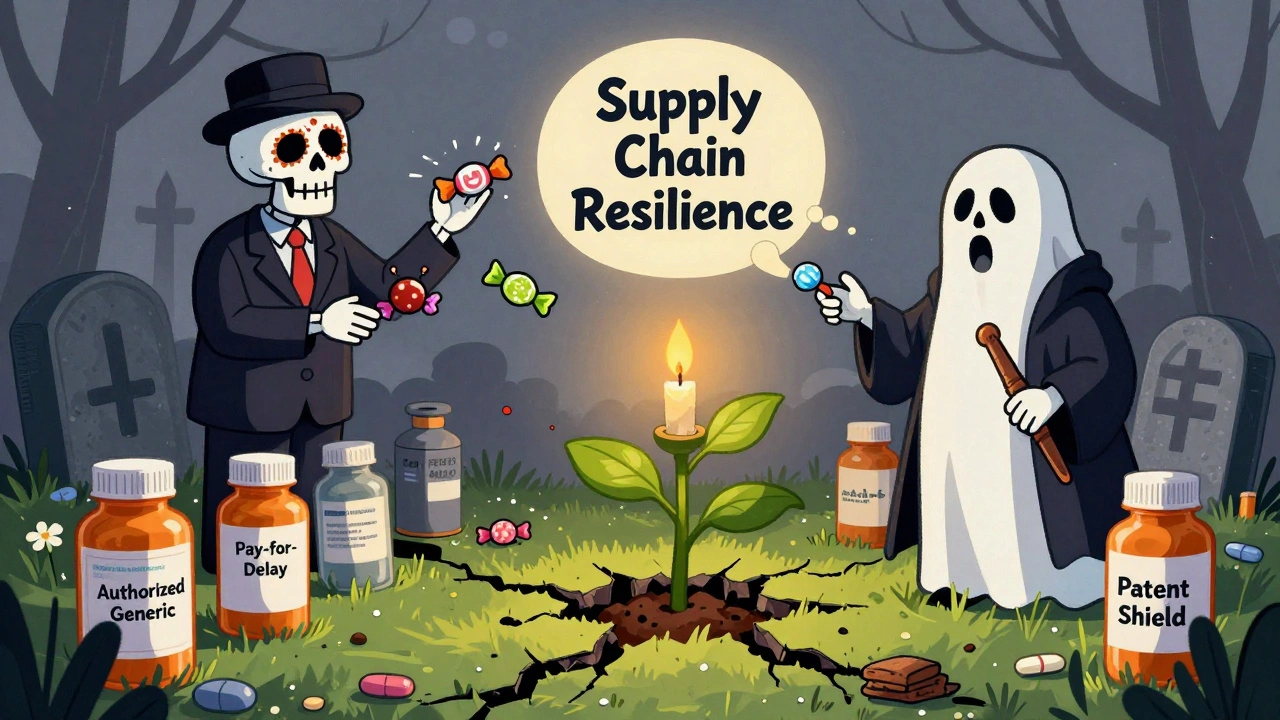
Brand companies don’t just rely on quality or rebates. They use patents like shields. One drug might have 30, 40, even 50 patents covering everything from the pill’s color to the way it’s manufactured. Each one can delay a generic launch.
And sometimes, the brand pays the generic maker to stay away. It’s called a “pay-for-delay” deal. The generic company gets a cut of the brand’s profits in exchange for not entering the market. The FTC has been fighting these deals for years, but they still happen. In 2023, a study found that over 70% of drugs with patent disputes had at least one delay tactic in play.
So even if the FDA approves a generic, it might not hit shelves for years. And when it does, the market is already shaped by the brand’s pricing and PBM deals.
Why More Competitors Can Actually Make Supply More Reliable
There’s one bright spot: when multiple companies make the same generic drug, the supply chain becomes stronger. Between 2018 and 2022, drugs with three or more manufacturers had 67% fewer shortages than those made by just one company.
Why? Because if one factory has a problem-contamination, equipment failure, regulatory inspection-the others can pick up the slack. But if only one company makes the drug? A single hiccup means a nationwide shortage.
This is why the FDA and health economists warn that policies that reduce generic competition-like price caps or Medicare’s new maximum fair prices-could hurt supply more than they help affordability.
What’s Changing Now? The Inflation Reduction Act
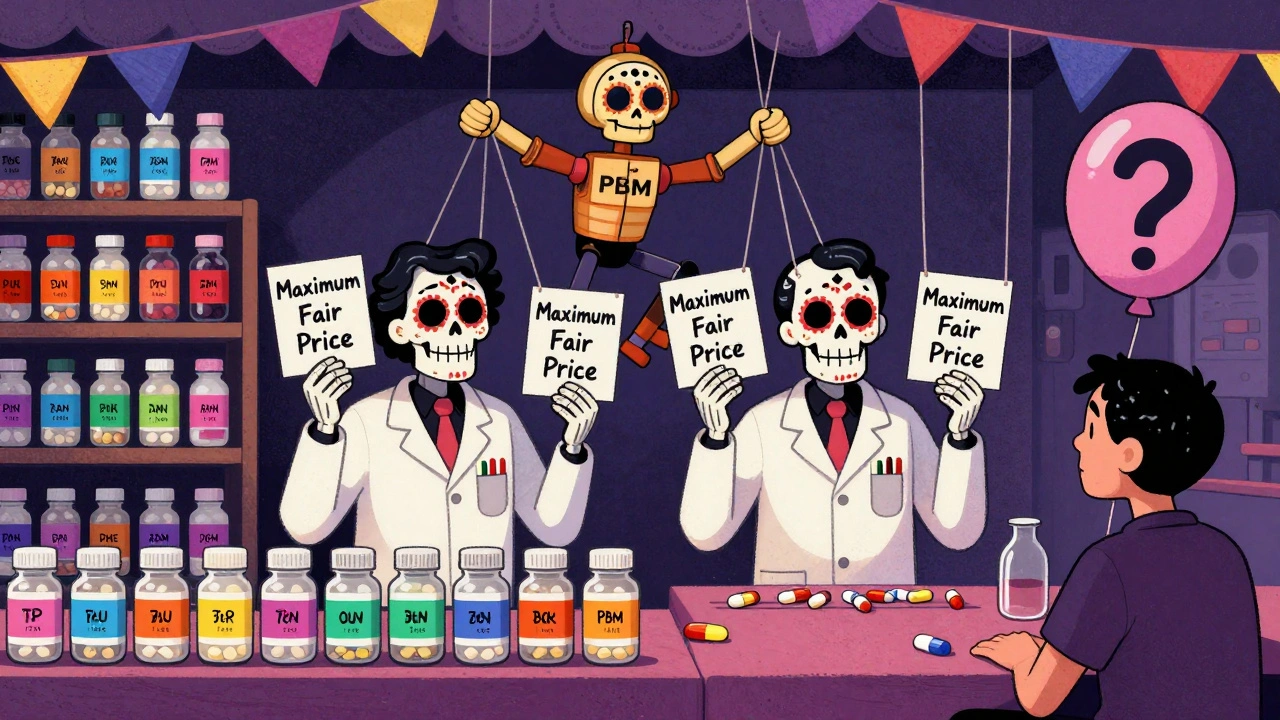
Starting in 2026, Medicare will start negotiating prices for 10 high-cost brand drugs each year. These “Maximum Fair Prices” will be set by the government. That sounds good for patients. But it has a hidden downside.
Generic manufacturers don’t make money on cheap drugs. If the brand’s price is capped at $50 a month, and the generic can only sell for $45, there’s no incentive to produce it. Why spend millions on approval and manufacturing for a drug that barely pays for itself?
Lumanity’s 2023 analysis warns this could shrink the pool of generic competitors. Fewer makers = higher risk of shortages = less competition. The very system meant to lower prices might end up making the market less competitive.
It’s Not Just About Price-It’s About Trust, Power, and Structure
Generic competition isn’t just a numbers game. It’s shaped by who owns the patents, who controls the buying, who can afford the science, and who patients trust. More competitors don’t always mean lower prices. Sometimes, they just mean more players in a game that’s already rigged.
For patients, the lesson is simple: don’t assume a generic is automatically cheaper. Ask your pharmacist: Is this the one your insurance covers? Is it made by the same company as the brand? Is there a shortage risk?
For policymakers, the lesson is harder: if you want real competition, you can’t just approve more generics. You have to change the rules that let brands hold on, let PBMs control access, and let patents block entry. Otherwise, the market won’t work the way it’s supposed to.
What Comes Next? Biosimilars and Digital Tools
The next wave of competition isn’t going to be pills. It’s going to be biologics-complex drugs made from living cells, like insulin or rheumatoid arthritis treatments. These aren’t easy to copy. Even the first biosimilars cost hundreds of millions to develop.
FDA Commissioner Robert Califf said in early 2023 that the 85% price drop we saw with simple generics won’t happen here. These drugs might only drop 15% to 30%-if that.
And digital tools? They’re starting to track drug availability in real time. Soon, pharmacies might know which generic supplier has stock before you even walk in. That could help avoid shortages. But it won’t fix the deeper problem: if the system doesn’t reward competition, then more companies won’t show up.
Market competition in pharmaceuticals isn’t broken. It’s just not what it looks like on the surface. And until we understand the hidden rules, we’ll keep expecting lower prices-and getting confused when they don’t come.
There are 8 Comments
Ben Choy
This is so real. I’ve seen my insulin price stay the same for years even though 3 generics were approved. My pharmacist said the PBM only covers one brand because of the rebate deal. No one talks about this stuff outside of pharmacy circles.
Rachel Bonaparte
Oh please. Of course the system’s rigged. Big Pharma owns the FDA, the PBMs, the doctors’ continuing ed, and half the Congress. They let generics in just enough to look like they’re playing fair while keeping prices high through patent thicketing and authorized generics. It’s not capitalism-it’s a cartel with a white coat. 😏
Scott van Haastrecht
Stop pretending this is about competition. It’s a multi-billion dollar shell game where the only winners are the guys who wrote the rules. The FDA approves 10 generics? Cool. Then the brand pays the first one $200M to delay launch for 18 months. Meanwhile, the other 9 get scared off by the legal bills. This isn’t market failure-it’s market sabotage. And no, I don’t care if you think I’m being dramatic.
Ollie Newland
Q1-Q3 equivalence is the silent killer here. For complex injectables, the bioequivalence studies alone cost $15M+ and take 3–5 years. Most generics can’t afford that, so you end up with oligopoly by default. It’s not collusion-it’s economic attrition. And PBMs? They’re the gatekeepers with zero incentive to push cheaper generics if the rebate on the brand is 40%.
Rebecca Braatz
Guys, this is why we need patient advocacy groups pushing for transparency. If we knew which PBMs had deals with which brands, we could demand better. And if Medicare caps prices, we need to pair it with mandatory multi-sourcing requirements. No drug should have only one manufacturer-period. We can fix this, but only if we stop treating it like a mystery and start treating it like a crisis.
Karl Barrett
It’s funny how we assume markets are rational. But human behavior-trust in brands, fear of the unknown, doctor inertia-creates irrational equilibriums. A patient won’t switch to a generic because they’re scared it won’t work, even if the science says otherwise. And doctors? They prescribe what they know, not what’s cheapest. So competition exists on paper, but not in practice. The system rewards conformity, not innovation or cost-efficiency.
Jake Deeds
Let’s be honest-most people don’t care enough to fight this. They’ll pay $200 for a brand because it’s ‘easier.’ Meanwhile, the people who actually need these drugs are the ones getting squeezed. It’s not just greed. It’s a cultural failure. We’ve normalized pharmaceutical exploitation as the cost of modern medicine. And that’s the real tragedy.
val kendra
Write a comment
Your email address will not be published. Required fields are marked *