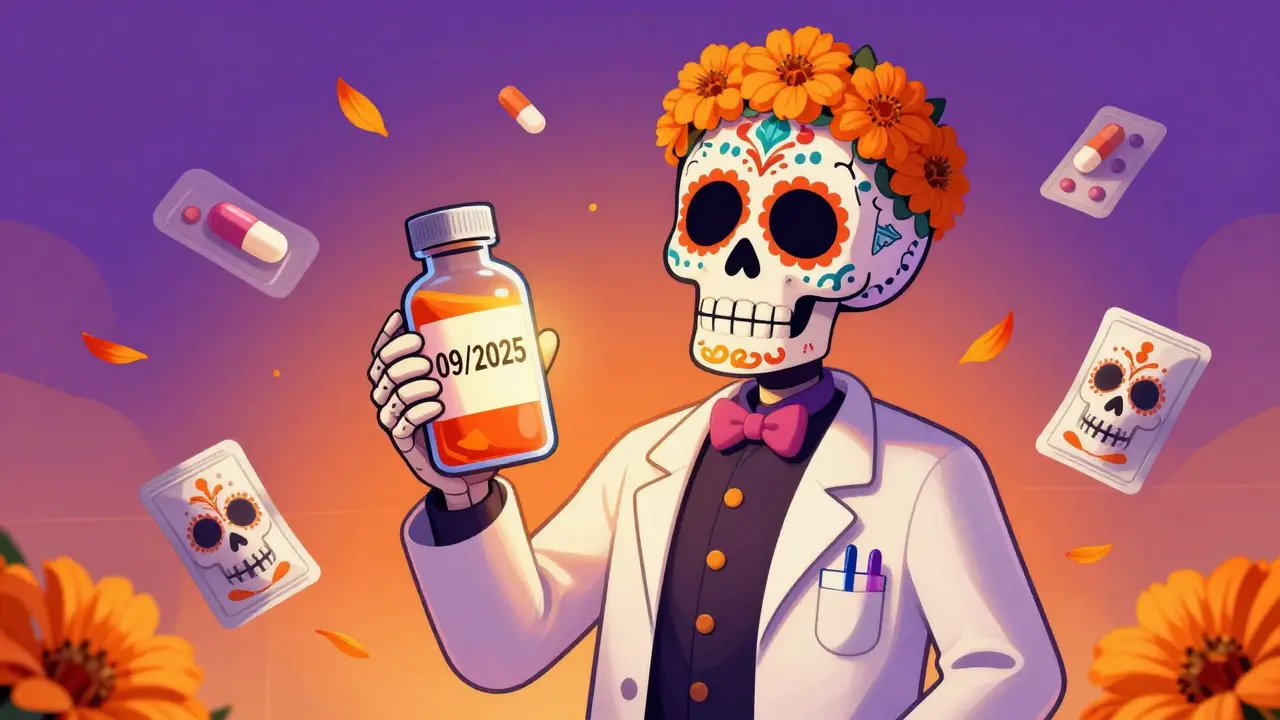
Every year, millions of people throw away perfectly good medicine because they don’t know how to read the date on the bottle. Others keep pills past their expiration date, hoping they’ll still work-only to risk taking something that’s lost its power or, in rare cases, become unsafe. The truth? Expiration dates aren’t arbitrary. They’re science-backed deadlines set by manufacturers to guarantee your medicine works exactly as it should. But they’re also often misunderstood.
What an Expiration Date Actually Means
An expiration date isn’t when your medicine turns poisonous. It’s the last day the manufacturer guarantees it’s at full strength, safe, and pure-if stored properly. That’s it. The U.S. Food and Drug Administration (FDA) has required these dates on all prescription and over-the-counter drugs since 1979. Before that, companies could sell pills with no end date at all.
These dates come from real testing. Manufacturers put batches of medicine under heat, humidity, and light to see how long they hold up. Most pills last 1 to 5 years. Eye drops? Usually 6 months to 2 years. Insulin? Often 1 to 2 years unopened. Injections? Typically 2 to 5 years. The date isn’t a guess-it’s the result of lab tests tracking how the chemicals break down over time.
How Expiration Dates Are Shown on Packaging
You won’t always see the same wording. Look for any of these:
- Expiry date
- Expires
- Exp
- Use by
- Use before
The format changes depending on where you live. In the UK and EU, it’s usually DD/MM/YYYY (like 15/09/2025). In the U.S., it’s often MM/YYYY (like 09/2025). If you only see a month and year, the medicine expires on the last day of that month. So 09/2025 means September 30, 2025.
Some bottles list the date as YYYY-MM-DD (2025-09-15). That’s the global standard the WHO now recommends. If you’re unsure, check the label carefully. If it’s unclear, ask your pharmacist.
Pharmacy Labels vs. Manufacturer Labels
This is where most people get confused. When you pick up a prescription, the pharmacy puts its own label on the bottle. That label often says “Discard after: 03/2026.” That’s not the manufacturer’s expiration date. That’s the pharmacy’s beyond-use date.
Why does this exist? Because once a pill bottle is opened, or a liquid medicine is mixed, it can degrade faster. For example:
- Antibiotic syrups: Often expire in 14 days after mixing
- Insulin pens: Last 28 days once opened
- Pills in a blister pack: Keep their original expiration date if sealed
The pharmacy’s date is usually shorter than the manufacturer’s. Don’t assume the pharmacy date is the final word. If you’re unsure, ask them to write the original manufacturer’s expiration date on the bottle too. Many will do it if you ask.
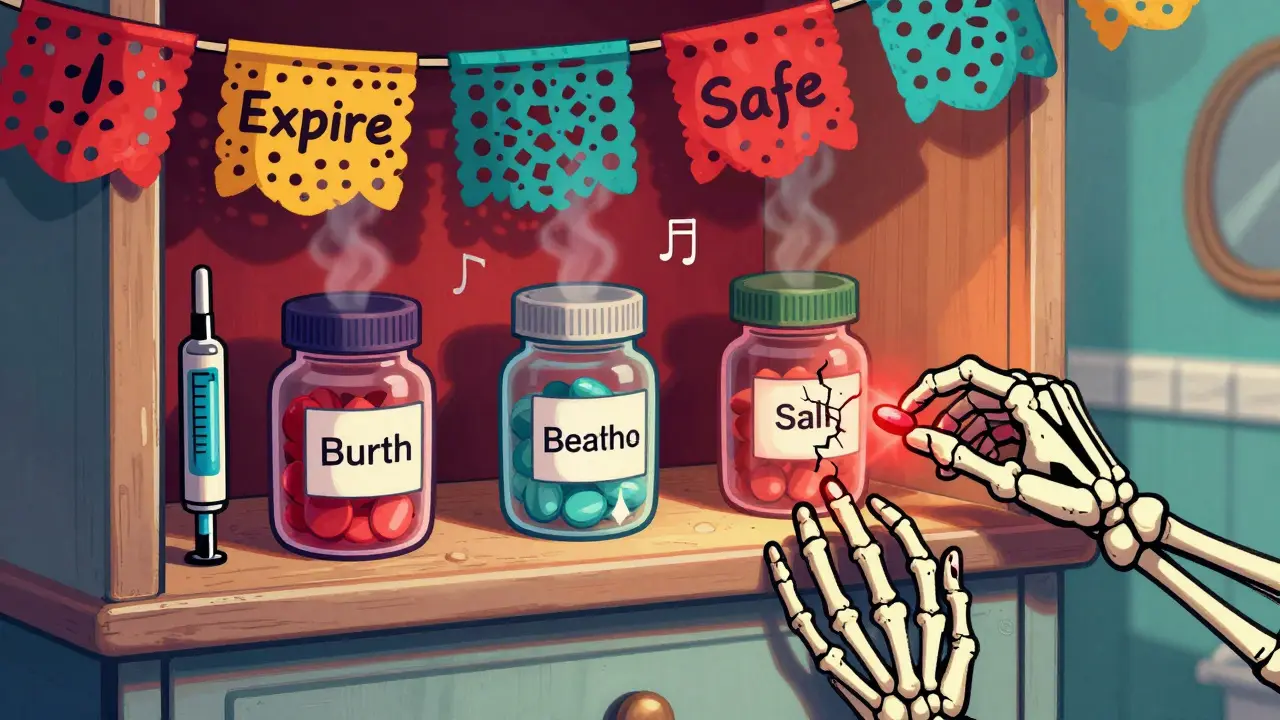
Which Medications Are Dangerous After Expiration?
Most expired pills are harmless-but not all. Some lose effectiveness, and that can be deadly.
Avoid expired versions of these:
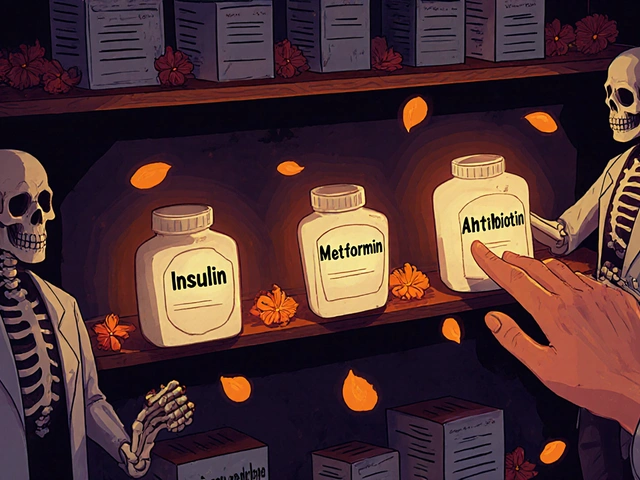
- Insulin - Can lose potency quickly. Taking weak insulin can cause dangerously high blood sugar.
- Birth control pills - Even slight loss of hormone strength can lead to unintended pregnancy.
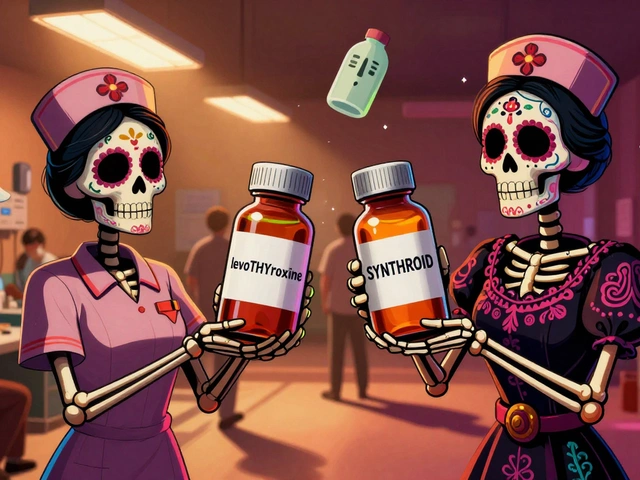
- Thyroid medication - Inconsistent dosing can cause fatigue, weight changes, or heart problems.
- Anti-platelet drugs (like aspirin or clopidogrel) - If they don’t work, you’re at higher risk of heart attack or stroke.
- EpiPens - If the epinephrine has degraded, it won’t stop a life-threatening allergic reaction.
There’s a myth that tetracycline turns toxic after expiring. That was true for old formulas from the 1960s. Modern versions don’t have that risk. But still-don’t take it past the date.
What Happens When Medicine Expires?
Most expired drugs don’t turn into poison. They just get weaker. A 2022 study found that 90% of tested medications were still effective 15 to 66 months past their expiration date-if kept sealed and in cool, dry places. The FDA’s Shelf Life Extension Program tested stockpiled military meds and found this pattern across antibiotics, painkillers, and heart drugs.
But here’s the catch: that’s for sealed, properly stored pills. If your medicine sat in a hot bathroom or a freezing car, it could break down faster. Signs of degradation include:
- Change in color (white pills turning yellow)
- Cracking or crumbling
- Unusual smell
- Liquid medicine turning cloudy or forming particles
Even if it looks fine, potency can drop without visible signs. That’s why antibiotics are risky. If they’re not strong enough, they won’t kill bacteria-and that can lead to antibiotic resistance.
How to Store Medicine to Make It Last
Expiration dates assume ideal storage. Most drugs are fine at room temperature (15-25°C), away from light and moisture. But that’s not where people keep them.
Don’t store medicine in:
- The bathroom (too humid)
- On the kitchen counter (near heat from stove)
- In the car (extreme cold or heat)
- In direct sunlight
Keep them in a cool, dry drawer or cabinet. Some meds, like insulin or certain antibiotics, need refrigeration. Check the label. If it says “Refrigerate,” keep it between 2-8°C. Don’t freeze unless it says to.
Pro tip: If you’re traveling, keep meds in your carry-on-not checked luggage. Freezer temps in cargo holds can ruin them.
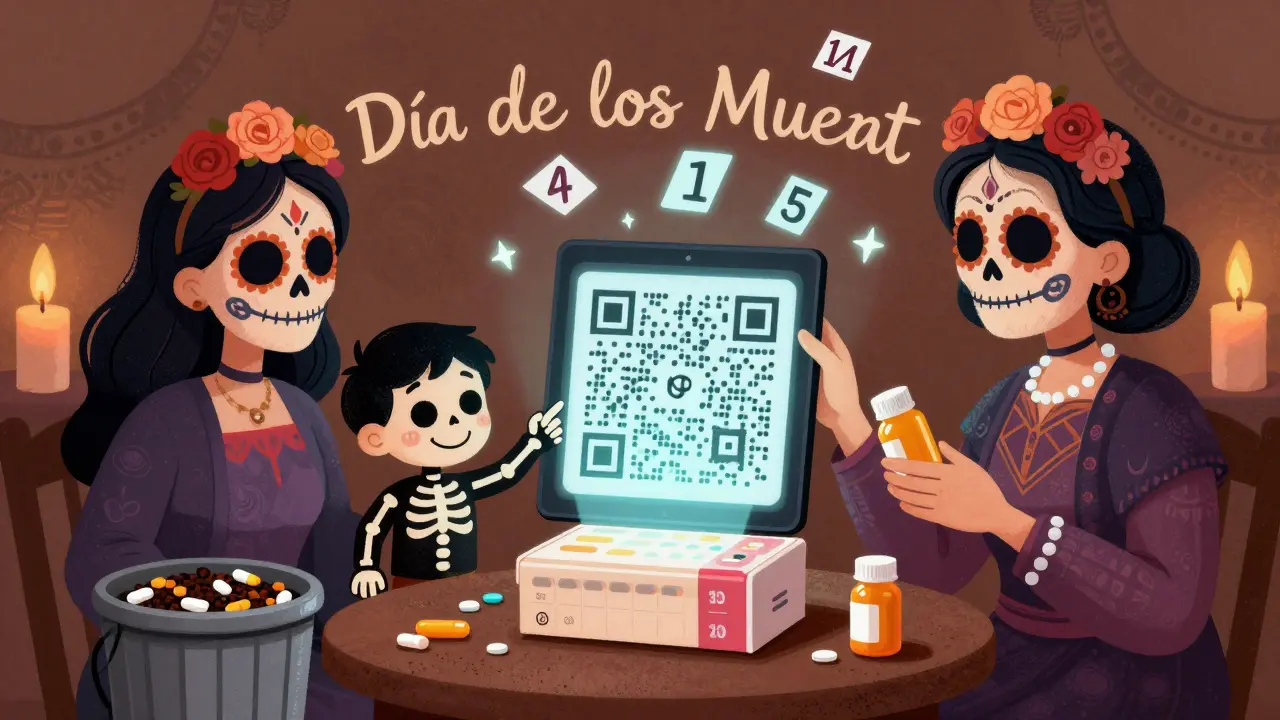
What to Do With Expired Medicine
Never flush pills down the toilet unless the label says to. Most should go to a drug take-back program. Pharmacies in the UK often have drop-off boxes. You can also check with your local council or NHS site for collection points.
If no take-back is available, mix pills with coffee grounds or cat litter in a sealed bag before tossing in the trash. That makes them unappealing to kids or pets. Remove personal info from the bottle before recycling it.
How to Keep Track of Your Medications
One in three older adults misreads expiration dates. They think “use by” means “dangerous after.” It doesn’t. It means “guaranteed full strength until.”
Here’s how to stay safe:
- Check the original packaging when you get a new prescription. Note the manufacturer’s date.
- Ask your pharmacist to write that date on the pharmacy label too.
- Use a phone app like MedSafe or MyTherapy to set alerts 1-2 months before expiration.
- Mark your calendar: 3 months before any critical med expires, call your doctor for a refill.
- Keep original boxes. They have batch numbers and full expiration info.
Some new packaging has QR codes that link to digital expiration info. Merck now uses this for insulin. Look for the small code on the box. Scan it with your phone to see real-time storage and expiry data.
Final Rule: When in Doubt, Ask
Pharmacists are trained to answer this exact question. Don’t feel silly asking. It’s your health. If you’re unsure whether a medicine is still good, take it to the pharmacy. They’ll check the batch, storage history, and tell you if it’s safe.
And if you’re running low on a critical drug-like insulin or blood pressure medicine-don’t wait until it expires. Call your doctor early. A few extra pills saved by a timely refill are better than risking a health crisis because you assumed an old pill would work.
What happens if I take medicine after its expiration date?
Most expired medicines won’t harm you, but they may not work as well. Antibiotics could fail to treat an infection, leading to worse illness or antibiotic resistance. Insulin, birth control, and thyroid meds can become dangerously ineffective. If the medicine looks discolored, smells odd, or is crumbly, don’t take it.
Is it safe to use expired painkillers like ibuprofen or paracetamol?
Generally, yes-if stored properly and only a few months past the date. Studies show these drugs retain potency for years. But after several years, they may lose effectiveness. If you’re treating a serious headache or fever and the pill doesn’t seem to work, replace it. Don’t risk it.
Why does my pharmacy label say a different expiration date than the bottle?
The pharmacy’s date is a “beyond-use” date, not the manufacturer’s. Once a drug is repackaged or mixed (like liquid antibiotics), it can degrade faster. Pharmacies set shorter dates for safety. Always ask them to note the original manufacturer’s date on your label too.
Can I trust expiration dates on online-bought medications?
Be cautious. Only buy from licensed UK pharmacies or those with verified accreditation (like the General Pharmaceutical Council). Unregulated sellers may sell expired, counterfeit, or poorly stored drugs. Check the label for the manufacturer’s name, batch number, and clear expiration date. If it’s missing, don’t take it.
Do expiration dates apply to vitamins and supplements?
Yes, but they’re less critical. Vitamins lose potency slowly. A vitamin D supplement a year past its date might give you less than the labeled dose, but it won’t hurt you. Still, if it smells rancid (like fish oil) or looks discolored, toss it. Supplements aren’t regulated like drugs, so storage matters more.
There are 9 Comments
Shane McGriff
I’ve seen so many people panic about expired meds, especially older folks who hoard pills like gold. The truth is, most of them are fine if stored right-cool, dry, dark place. I keep my ibuprofen in a drawer away from the sink, and it’s been good for three years past the date. No side effects, no weird smell, just works. Don’t let fear drive your decisions; use common sense.
Paul Barnes
Correction: the FDA’s Shelf Life Extension Program tested over 100 drugs, not just antibiotics and painkillers. The data shows that 88% of medications retained 90%+ potency even 15 years past expiration under controlled conditions. The real issue isn’t safety-it’s regulatory liability. Manufacturers don’t want to be sued if someone takes a 10-year-old pill and it doesn’t work.
Crystal August
Why do people even keep medicine past the date? It’s basic hygiene. If it’s expired, toss it. No excuses. You wouldn’t eat spoiled food, so why risk your body with weak pills? This article is just giving people permission to be lazy.
pragya mishra
You people in the US are so careless. In India, we never throw away medicine. We give it to relatives who can’t afford it. If it still looks okay, why waste it? This obsession with dates is a rich-country problem.
Manoj Kumar Billigunta
Good point about the pharmacy label vs manufacturer date. I didn’t know that until my aunt got her antibiotic syrup and threw it out after 10 days. The pharmacist said it was good for 30 if refrigerated. Always ask. No shame in asking. Your health is worth it.
thomas wall
It is an absolute scandal that pharmaceutical corporations are permitted to place arbitrary expiration dates on life-saving medications, knowing full well that the active ingredients remain chemically stable for years beyond the printed date. This is not science-it is corporate greed masked as consumer protection. The FDA’s own data contradicts the industry’s narrative. Shameful.
Nadia Watson
Just a heads up-some of the info here is spot on, but I think the part about insulin pens lasting 28 days after opening might be overstated. My endocrinologist said 14 days max, even if it's refrigerated. And I’ve seen bottles where the date was printed in tiny font on the bottom of the box. Always check the original packaging. I’ve had a few close calls because I trusted the pharmacy label alone.
Courtney Carra
Expiration dates are like the universe’s way of saying ‘you’re not ready for this power yet.’ We treat medicine like a vending machine-insert cash, get result. But biology isn’t transactional. It’s a slow dance of molecules, light, heat, time. That pill you’re holding? It’s been on a journey. The date isn’t a death sentence-it’s a whisper from the chemist who made it. Listen. Store wisely. Don’t fear. Respect.
Jacob Cathro
LMAO this article is so mid. Like yeah, some meds are fine past expiry. But if you’re on blood thinners or insulin and you’re playing Russian roulette with a 3-year-old pill, you’re not ‘resourceful’-you’re just a dumbass. Also, QR codes on meds? That’s a marketing gimmick. Who’s gonna scan a barcode on a pill bottle in the middle of a panic attack? Stop pretending tech fixes dumb behavior.
Write a comment
Your email address will not be published. Required fields are marked *