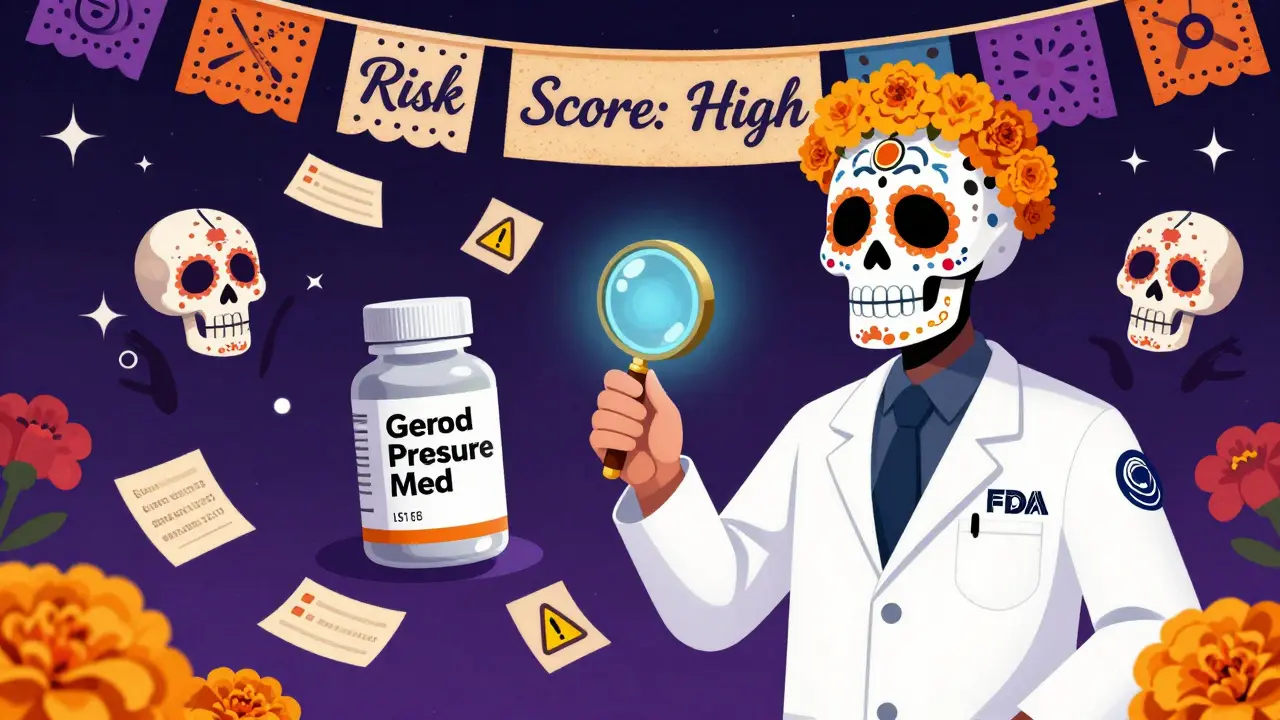
The U.S. Food and Drug Administration (FDA) doesn’t just check drugs made in the U.S. - it screens every single pharmaceutical product that crosses the border. With over 1.2 million drug shipments entering the country each year, the FDA’s import inspection system is one of the most critical - and complex - public health safeguards in place. It’s not just about stopping bad drugs. It’s about ensuring that every pill, injection, or ointment you take was made under the same strict standards as those produced in American factories.
How the FDA Knows What’s Coming In
Before any drug package even reaches a U.S. port, the importer must submit an electronic entry notice through the FDA’s system. This isn’t a form you fill out once and forget. It’s a detailed digital filing that includes the product name, manufacturer, quantity, country of origin, and proof that the facility is registered with the FDA. Missing even one piece of data can delay the shipment for days. The FDA uses automated risk-scoring tools to screen 98% of these entries within minutes. These tools don’t guess - they analyze patterns. Has this manufacturer been flagged before? Is the product from a country with a history of poor manufacturing? Is the shipment labeled as a generic drug but matches the packaging of a brand-name product? If the system spots anything suspicious, it flags the shipment for physical review. About 15.7% of all entries get flagged this way. That’s over 188,000 shipments a year that get pulled aside for deeper inspection.What Happens When a Shipment Gets Held
If your drug shipment is flagged, it doesn’t get shipped back right away. It’s held at the port - intact - while FDA inspectors decide what to do. This is where the real work begins. There are three types of checks:- Field examination: Inspectors physically look at the product. Are the containers damaged? Are the labels correct? Is the lot number legible?
- Label examination: The FDA checks every word on the label against 21 CFR Part 201 rules. Even a missing warning or incorrect dosage instruction can be grounds for detention.
- Sample collection: For every shipment, inspectors take 1 to 3 units for lab testing. These aren’t random samples - they’re targeted. If the product is an antibiotic or a blood pressure med, they test for potency, contaminants, and whether it even contains the active ingredient listed.
The Fast Track: What Is the Secure Supply Chain Pilot Program?
Not every company has to go through the same long wait. The FDA runs a program called the Secure Supply Chain Pilot Program (SSCPP), launched in 2019. It’s designed for manufacturers who’ve proven they can be trusted. To qualify, a company must have zero compliance violations for three straight years, pass an on-site audit, and demonstrate full traceability of their ingredients from start to finish. As of late 2023, only 27 companies are in the program. Each can designate up to five products for fast-track clearance. For them, shipments that normally take 7 to 10 days to clear now move through in 24 to 48 hours. Johnson & Johnson says this has cut their supply chain variability from plus or minus five days to just eight hours. That’s huge for just-in-time manufacturing. But here’s the catch: the program is only open to big players. Small manufacturers, especially those sourcing active pharmaceutical ingredients (APIs) from India or China, can’t meet the bar. Teva Pharmaceuticals reported that generic drug shipments from certain Indian facilities had a 37% detention rate in early 2023 - even when the products were perfectly made. The system doesn’t distinguish between a small factory with no history and a big one with a clean record. It only sees the risk.
Why Some Shipments Still Slip Through
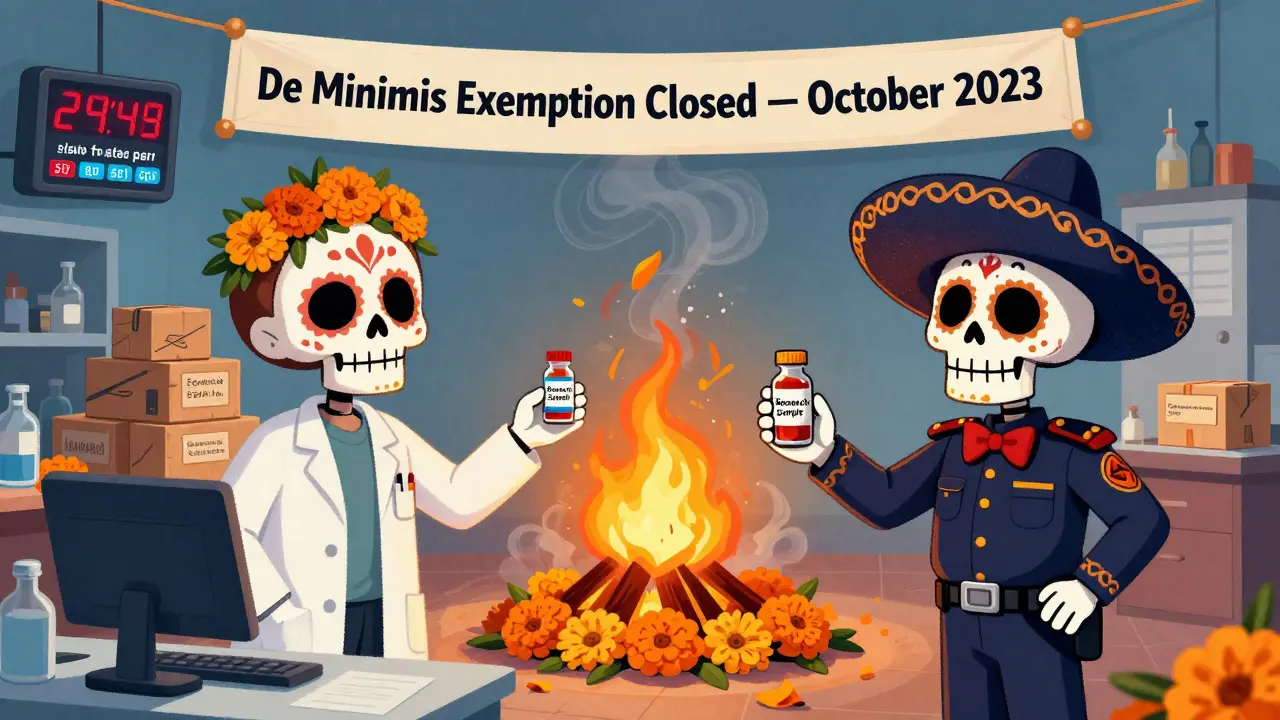
The FDA inspects only about 1.2% of all drug shipments that enter the country. That’s not because they’re lazy - it’s because they can’t afford to inspect every box. There are over 100 million drug shipments coming in each year. If they inspected them all, they’d need 10 times more staff and budget. So they rely on data to pick the worst offenders. But that system has gaps. In 2022, the Government Accountability Office found that only 4 out of 17 key performance indicators set by Congress had been fully implemented. That means the FDA doesn’t even measure half the things it should to prove the system works. And when you don’t measure, you can’t fix. The biggest loophole used to be the de minimis exemption - shipments under $800 were exempt from inspection. That’s how counterfeit pills, unapproved weight-loss drugs, and even pill presses slipped in. In October 2023, the FDA closed that gap. Now, every single shipment, no matter how small or cheap, gets reviewed. That’s added 350,000 more entries to the FDA’s workload. It’s a major win for safety - but it’s also causing delays for researchers and small biotech firms who used to send tiny samples of biological material for free.Who’s Affected - and How
The FDA’s system doesn’t just impact big pharma. It hits everyone who deals with imported drugs.- Academic labs: Researchers now pay $285-$420 more per shipment and wait 3-5 extra days for samples. Some projects have been delayed for months.
- Small pharmacies: Generic drug shortages are getting worse. If a shipment from India gets detained, there’s no backup - and it can take weeks to replace.
- Online buyers: Over 40% of websites selling drugs to U.S. consumers aren’t regulated at all. People order “Canadian” pills from shady sites, and the FDA has no power to stop them at the border because those aren’t commercial shipments.
What Importers Need to Get It Right
If you’re shipping drugs into the U.S., here’s what you need to do:- Register your facility with the FDA - even if you’re overseas. No registration, no entry.
- Make sure your labels match FDA rules exactly. No abbreviations, no missing warnings, no typos.
- Use the right product codes. Wrong code? That’s 28% of all delays.
- Submit your entry notice early. Waiting until the last minute guarantees a bottleneck.
- Keep records for three years. The FDA can audit you anytime.
The Future: AI, Blockchain, and Global Alignment
The FDA isn’t standing still. By 2025, they plan to roll out AI tools that will improve their risk-scoring accuracy by 25%. They’re testing blockchain systems to track drug movement from factory to pharmacy. And they’re working with international regulators through the Pharmaceutical Inspection Co-operation Scheme (PIC/S) to align inspection standards across countries. But the biggest challenge remains: resources. The U.S. imports $186 billion in drugs every year. Over 88% of active ingredients come from abroad. The FDA has to police that with a budget that hasn’t kept pace. The Congressional Budget Office estimates new tech upgrades will cost $187 million over five years. That’s a lot - but it’s less than what the U.S. spends on counterfeit drugs every year: $4.3 billion. The system isn’t perfect. But it’s the best in the world. Switzerland has a tighter network, but the U.S. inspects more volume, more variety, and more risk. The question isn’t whether the system works - it’s whether we’re willing to pay for it to work better.Does the FDA inspect every drug shipment that enters the U.S.?
No, the FDA does not physically inspect every shipment. It electronically reviews all 1.2 million+ entries annually and uses risk-based targeting to select which ones get physical inspection. Only about 1.2% of shipments undergo hands-on examination. However, since October 2023, every shipment - no matter how small or cheap - is subject to review and may be held for inspection.
What happens if a drug shipment is detained by the FDA?
If a shipment is detained, it’s held at the port while the FDA investigates. The importer can submit evidence to prove compliance - like lab reports or manufacturing records. If the FDA accepts the evidence, the shipment may be released. If not, it’s refused entry and must be destroyed or returned at the importer’s expense. In 2022, 67.8% of detained drug shipments were ultimately refused.
Can I import drugs for personal use?
The FDA generally allows personal importation of unapproved drugs only under strict conditions: the drug must be for a serious condition with no approved U.S. alternative, not for resale, and limited to a three-month supply. Even then, the FDA can still seize the shipment. Importing prescription drugs from online pharmacies is risky - many are counterfeit, and the FDA has no authority over most of these sites.
Why are generic drugs detained more often than brand-name drugs?
Generic drugs often come from manufacturers in countries with less rigorous oversight, and many are produced by smaller facilities that lack the resources to maintain full compliance with U.S. standards. The FDA’s risk algorithms flag these shipments more frequently. In 2023, detention rates for generic APIs from certain Indian facilities reached 37%, even when the products were compliant - because the factory’s history triggered the flag.
How can I avoid delays when importing drugs into the U.S.?
Ensure your facility is registered, your labels meet FDA requirements, and your product codes are correct. Submit your entry notice at least 72 hours before arrival. Use the FDA’s Electronic Entry Interface Repository for templates. Build a relationship with your port’s FDA entry reviewer - direct communication can reduce delays by 22-35%. And never skip documentation - errors in commercial invoices or bills of lading cause an average 4.7-day delay.



There are 8 Comments
Neela Sharma
The FDA's system is a masterpiece of bureaucratic overreach wrapped in safety rhetoric. India makes 40% of the world's generics and we treat every batch like it's smuggling heroin. We don't need more inspections-we need trust. The same factories that supply the EU, UK, and WHO are being flagged because their names aren't Johnson & Johnson. This isn't safety-it's economic colonialism dressed in lab coats.
erica yabut
Let’s be real-the FDA’s ‘risk-based’ system is just a fancy word for ‘we’re too lazy to inspect everything, so we scapegoat the Global South.’ The de minimis loophole closure? A performative gesture that punishes academic labs and small biotechs while doing nothing to stop the 40% of online pharmacies that operate entirely outside the system. The real villain isn’t a factory in Hyderabad-it’s the $186 billion pharmaceutical oligopoly that wants to monopolize access through regulatory capture.
Tru Vista
entry notice errors cause 28% delays. label mismatches = detention. no registration = no entry. basic stuff. why is this even a debate?
Tiffany Channell
They’re not ‘inspecting’-they’re playing whack-a-mole with a sledgehammer. 1.2% physical inspection rate? That’s not a system, that’s a lottery. And the ‘Secure Supply Chain Pilot’? A corporate welfare program for Big Pharma. If you’re a small Indian API supplier with zero violations, you still get flagged because your facility isn’t on the Forbes 500 list. This isn’t quality control-it’s class warfare disguised as public health.
Joy F
Here’s the uncomfortable truth: the FDA doesn’t care if your drug works. They care if your label has the right font size. They care if your batch number is printed in Times New Roman instead of Arial. They care if your factory in Vadodara has a certificate from a third-party auditor that’s not on their approved list-even if your product is chemically identical to the one made in New Jersey. We’ve turned medicine into a compliance theater where the actors are regulators, the script is written by lawyers, and the audience-patients-isn’t even allowed to speak.
And don’t get me started on the blockchain ‘solution.’ Blockchain doesn’t fix a broken supply chain. It just makes the paperwork look fancy. If your factory is cutting corners, putting fentanyl in weight-loss pills, or using contaminated solvents, no blockchain will save you. But if your factory is clean and your paperwork has a typo? You’re detained for 30 days while your patients go without.
We’re not protecting public health. We’re protecting the illusion of control. The FDA is a cathedral of bureaucracy, and we’re all worshiping at the altar of paperwork while real people suffer from drug shortages. The real innovation isn’t AI or blockchain-it’s humility. Let’s stop pretending we can police the entire world’s drug supply with a few hundred inspectors and a risk algorithm trained on past failures.
And yet, somehow, we still believe this broken system is the ‘best in the world.’ Maybe it is. But ‘best’ doesn’t mean ‘just.’
Haley Parizo
India and China produce 88% of our APIs. The FDA doesn’t have inspectors on the ground there. So they rely on paper. Paper can be forged. Paper can be outdated. Paper doesn’t tell you if the factory has running water, let alone a functional HPLC machine. This isn’t about safety-it’s about optics. We want to look like we’re doing something. So we detain shipments with typos and call it ‘vigilance.’ Meanwhile, the real threats-counterfeit opioids from darknet vendors, unregulated injectables from Telegram sellers-fly under the radar because they don’t come through commercial ports. The system is designed to catch the wrong things. And we call it progress?
Shruti Badhwar
As someone who works in pharmaceutical logistics from India, I can confirm: the system is broken. We submit perfect documentation, clean lab reports, and FDA-registered facilities-and still get held for 14 days because a label says ‘Tablet’ instead of ‘Tablets.’ The FDA’s risk algorithm doesn’t understand context. It sees ‘India’ and ‘generic’ and flags it. Meanwhile, a company in Switzerland ships the same exact API with the same exact label and gets cleared in 24 hours. This isn’t science. It’s bias. And it’s killing access to affordable medicine worldwide. We need harmonized global standards-not American regulatory imperialism.
Ian Detrick
What if we flipped the script? Instead of punishing every generic manufacturer for the sins of a few, what if we rewarded the good ones? Create a global trust network-like a WHO-certified blockchain ledger where factories earn reputation points for consistent compliance. Let importers choose based on track record, not country of origin. The FDA could focus on audits and random checks instead of drowning in paperwork. Innovation doesn’t come from fear. It comes from trust. And right now, we’re breeding fear, not safety.
Write a comment
Your email address will not be published. Required fields are marked *