Imagine getting a letter from the U.S. Food and Drug Administration (FDA) telling you that your entire manufacturing process is broken. It’s not just an email; it’s a formal warning letter, a public record that can freeze product launches, tank stock prices, and cost millions in remediation. For pharmaceutical manufacturers, this isn’t a hypothetical nightmare-it’s a reality for hundreds of companies every year. In fiscal year 2023 alone, the FDA issued 327 warning letters to global drug makers, a jump of nearly 13% from the previous year.
If you are in charge of quality assurance or regulatory affairs, understanding these letters is critical. They aren’t just bureaucratic paperwork. They are the FDA’s primary tool for addressing serious violations of the Federal Food, Drug, and Cosmetic Act (FD&C Act). Ignoring them leads to import alerts, consent decrees, or even criminal prosecution. But handling them correctly can save your company’s reputation and keep your products on the market. Here is what you need to know about why they happen, how they differ from other enforcement actions, and exactly how to fix the problems they highlight.
What Triggers an FDA Warning Letter?
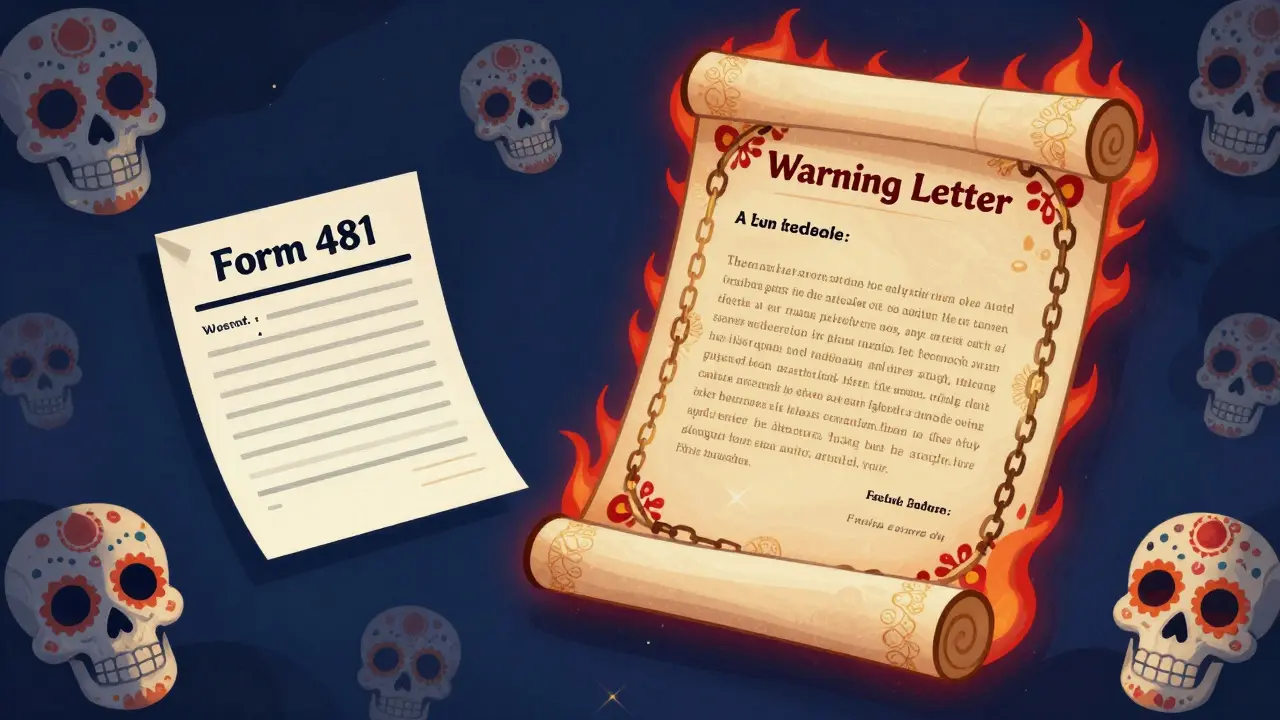
A warning letter is not the first step in FDA enforcement. Usually, inspectors visit your facility and issue a Form 483 if they find deficiencies. A Form 483 lists specific observations, like "exposed skin in an ISO 5 area" or "use of non-sterile tape on the filling line." If you don’t adequately address those issues, or if the violations are severe enough to warrant immediate attention, the FDA escalates to a warning letter.
The FDA issues these letters when evidence shows a firm has violated regulations in a way that warrants regulatory action. The most common trigger is failure to comply with Current Good Manufacturing Practice (CGMP) rules, specifically found in Title 21 of the Code of Federal Regulations (CFR), parts 210 and 211. These rules cover everything from how you test incoming ingredients to how you clean your equipment.
Recent data highlights the top offenders. According to analysis by PharmaTech, inadequate investigation of out-of-specification (OOS) results appears in over 63% of pharmaceutical warning letters. Another huge culprit is inadequate oversight by the quality unit, cited in nearly 58% of cases. If your team ignores a failed test result instead of digging into why it happened, you are walking straight into a warning letter scenario.
| Violation Type | Frequency in Warning Letters | Example Scenario |
|---|---|---|
| Inadequate OOS Investigation | 63.4% | Failing to root-cause analyze a batch that didn't meet purity standards. |
| Poor Quality Unit Oversight | 57.8% | Quality managers not reviewing production records before releasing batches. |
| Aseptic Processing Failures | 78.3% (for sterile products) | Media fill programs failing to detect contamination risks. |
| Data Integrity Issues | 67% (rising trend) | Deleting audit trails or sharing passwords on electronic systems. |
Warning Letters vs. Form 483s: What’s the Difference?
It is easy to confuse a warning letter with a Form 483, but the stakes are vastly different. Think of a Form 483 as a speed ticket. It tells you where you went wrong and gives you a chance to correct it quickly. A warning letter is like being pulled over for reckless driving after ignoring multiple tickets. It is a formal legal notification that you have violated federal law.
Form 483s are issued in about 62% of inspections where deficiencies are found. However, only about 18% of domestic facilities with observed violations receive a warning letter. Foreign facilities face a higher rate, at roughly 23%. This discrepancy has sparked debate, with some experts noting that foreign sites might be scrutinized more heavily due to resource allocation strategies.
The key difference lies in the consequences. A Form 483 is generally confidential between the FDA and the company. A warning letter is published on the FDA website within 15 business days. It becomes part of the permanent public record. Investors, partners, and customers will see it. As one executive noted, a single warning letter delayed their ophthalmic product launch by 14 months, costing $28 million in lost revenue. That is the real-world impact of moving from a Form 483 to a warning letter.
How to Respond Effectively to a Warning Letter
Receiving a warning letter feels overwhelming, but panic is your enemy. You typically have 15 working days to provide an initial response. While complex fixes take longer, the FDA expects to hear back quickly. Your response must be detailed, data-driven, and honest. Vague promises like "we will do better" will get you nowhere.
Here is a step-by-step approach to crafting a winning response:
- Conduct a Thorough Root Cause Analysis: Don’t just fix the symptom. If a machine was dirty, ask why. Was the cleaning procedure unclear? Was staff training insufficient? Did the schedule prevent proper cleaning time? The FDA wants to see that you understand the systemic failure.
- Implement Corrective and Preventive Actions (CAPA): Outline specific steps to fix the current issue and prevent it from happening again. This might involve retraining staff, upgrading equipment, or rewriting standard operating procedures (SOPs).
- Provide Evidence of Effectiveness: Show, don’t just tell. Include data from prospective monitoring. If you changed a testing method, show results from the new method proving it works. The FDA’s 2022 guidance emphasizes that responses must include verification of corrective action effectiveness.
- Assign Clear Ownership: Identify who is responsible for each action item. Cross-functional teams involving microbiology, quality assurance, and regulatory affairs are essential.
Expect the process to take 6 to 12 months. Industry benchmarks suggest median costs of $1.8 million for domestic facilities and $2.7 million for foreign ones. Small manufacturers often struggle here, sometimes hiring consultants at $250/hour just to draft the response. If you are a smaller operation, consider seeking external expertise early to avoid costly mistakes.
The Rising Focus on Data Integrity
In recent years, the FDA has shifted its focus significantly toward data integrity. In 2019, 42% of warning letters mentioned data issues. By 2023, that number jumped to 67%. This reflects a broader trend in digital transformation within pharma. Electronic records are everywhere, and so are the opportunities for manipulation.
The FDA is particularly watchful for deleted audit trails, shared user passwords, and backdated entries. When you implement an electronic system, ensure it complies with 21 CFR Part 11 requirements. Regular audits of your electronic data management systems are no longer optional; they are a survival tactic. One warning letter cited a company for failing to conduct adequate identity testing on incoming components, including APIs, which ties directly to data reliability. If your data can’t be trusted, your product can’t be trusted.
Global Impact and Geographic Trends
Manufacturing is global, and so is FDA scrutiny. Indian pharmaceutical manufacturers received nearly 39% of all warning letters in 2022, followed closely by U.S. manufacturers at 31.5%. This geographic distribution highlights the importance of consistent quality culture across all sites, regardless of location.
The FDA is also increasing its resources for foreign inspections. The 2023 budget allocated $112.7 million specifically for foreign drug facility inspections, up 28.5% from 2020. With initiatives like the Risk-Based Certificate of Pharmaceutical Product Pilot Program, facilities supplying global markets will face even closer scrutiny. If you have a site abroad, treat it with the same rigor as your domestic headquarters. The FDA does not distinguish between locations when it comes to patient safety.
Long-Term Strategies for Compliance
Preventing warning letters requires a shift in culture, not just compliance checklists. Dr. Jane Axelrad, a former FDA official, noted that 85% of warning letters contain repeat violations. This suggests that many companies fail to learn from past mistakes. Building a strong quality culture means empowering employees to speak up about issues without fear of retaliation.
Regular internal audits should mimic FDA inspections. Train your auditors to look for the same red flags: inadequate investigations, poor documentation, and weak oversight. Invest in continuous training for your quality unit. Remember, the quality unit has the authority to approve or reject materials and processes. If they are understaffed or undertrained, the whole system fails.
Finally, stay updated on FDA guidance. The agency regularly updates its expectations, especially regarding aseptic processing and data governance. Subscribing to FDA newsletters and participating in industry groups like ISPE or PDA can keep you ahead of the curve. Compliance is not a destination; it is a continuous journey.
How long does it take to resolve an FDA warning letter?
Effective resolution typically takes 6 to 12 months of intensive effort. While the FDA requests an initial response within 15 working days, full implementation of corrective actions and verification of their effectiveness often requires several months. Complex issues, such as infrastructure changes or major process validations, may extend this timeline.
What is the financial impact of receiving a warning letter?
The costs are significant. Median remediation costs range from $1.8 million for domestic facilities to $2.7 million for foreign ones. Beyond direct costs, companies often face delayed product launches, halted submissions, and lower stock performance. One case study reported $28 million in lost revenue due to a 14-month delay caused by a warning letter.
Can a warning letter lead to criminal charges?
Yes, if violations are unaddressed or egregious. Warning letters are an intermediate step. Failure to respond adequately can lead to more severe actions, including import alerts, product seizures, injunctions, and potentially criminal prosecution for individuals involved in the violations.
Why are data integrity issues so common in warning letters now?
Data integrity citations have risen from 42% in 2019 to 67% in 2023. This reflects the FDA's increased focus on electronic records and the widespread adoption of digital systems in manufacturing. Issues like deleted audit trails, shared passwords, and lack of system validation are now primary targets during inspections.
Is there a difference in how domestic and foreign facilities are treated?
Statistically, yes. Foreign facilities receive warning letters at a slightly higher rate (22.7%) compared to domestic facilities (18.3%) when violations are observed. This may be due to resource allocation, inspection rigor, or the nature of violations found. However, the regulatory standards remain the same globally.