Most people think their insurance covers generic drugs cheaply. But here’s the truth: bulk buying and tendering is what actually keeps those prices low - and many insurers are still missing out on massive savings.
In 2023, generic drugs made up over 90% of all prescriptions filled in the U.S., yet they accounted for just 17% of total drug spending. That’s not magic. It’s strategy. Insurers and pharmacy benefit managers (PBMs) use bulk purchasing and competitive bidding to lock in prices far below what you’d pay at your local pharmacy. But not all systems work the same. Some save you money. Others pocket the difference.
How bulk buying cuts generic drug costs
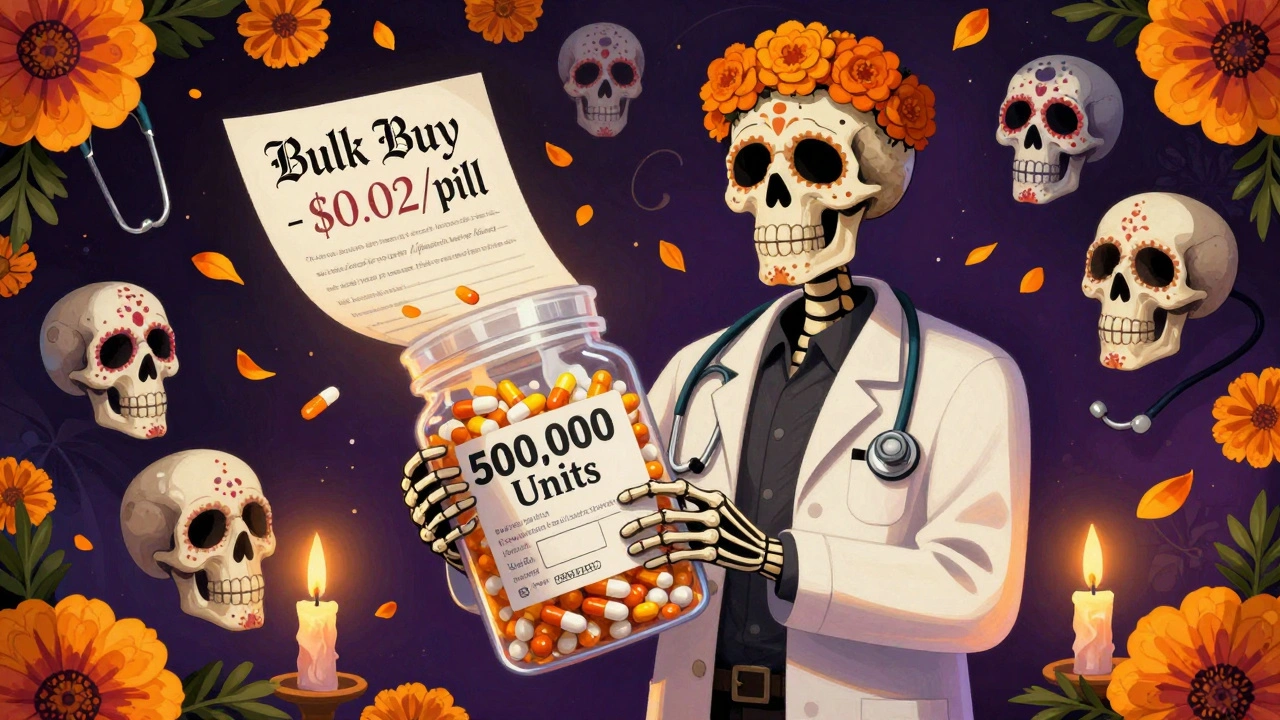
Bulk buying isn’t just buying in large quantities. It’s about leverage. When an insurer signs a contract with a generic drug maker for 500,000 pills of a specific medication - say, metformin or lisinopril - they’re not paying retail. They’re negotiating a price based on volume. The more they commit to buy, the lower the cost per unit. It’s like Costco for prescriptions.
Take the case of lacosamide, a generic epilepsy drug. When its first generic version hit the market in 2022, it saved patients and insurers over $1 billion in the first year alone. That’s not rare. The FDA reports that the first generic version of any drug typically saves $5.2 billion in its first 12 months across all therapies. That’s because manufacturers compete to win the contract. The winner gets volume. The rest get nothing. That competition forces prices down - often by 80% to 90% from the original brand-name price.
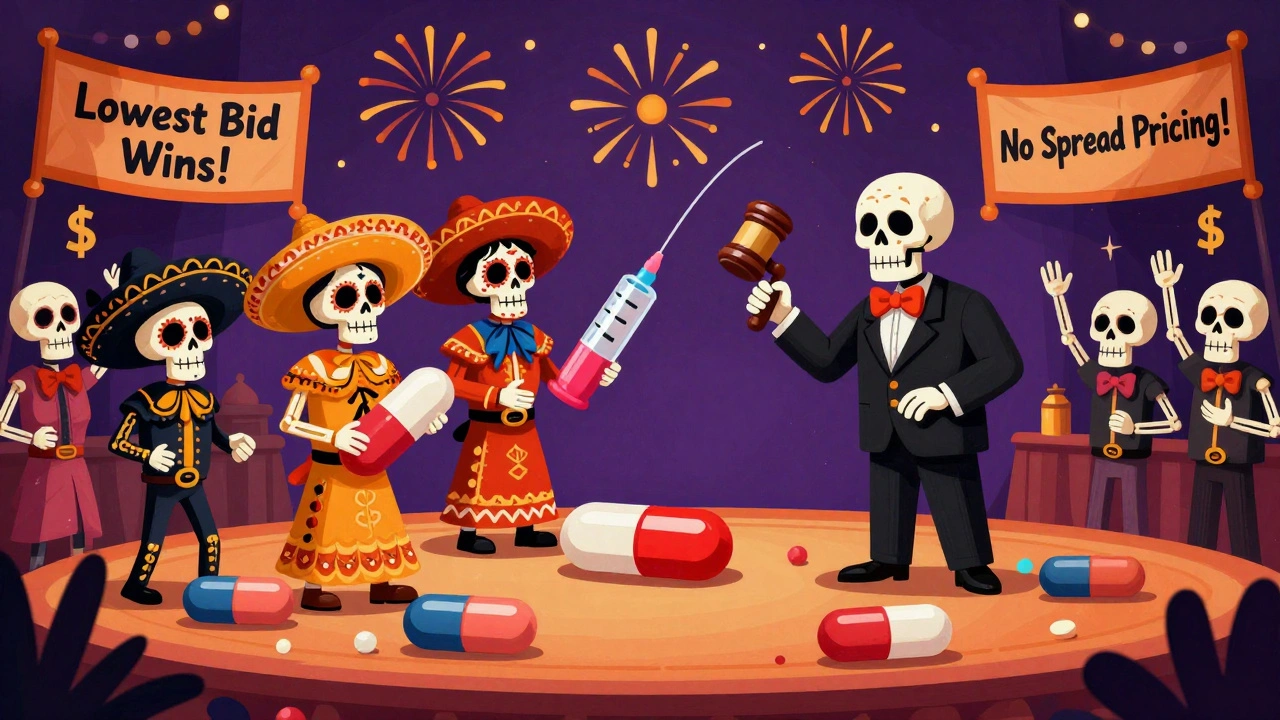
Insurers don’t just buy one drug at a time. They group entire therapeutic classes - like all blood pressure meds, all cholesterol drugs, all diabetes pills - and open bids to every generic manufacturer that can meet quality standards. The lowest bid wins, but only if they can deliver consistent supply. That’s where tendering comes in.
Tendering: The silent auction behind your prescription
Tendering is the formal process of inviting bids. Think of it like a government contract for road construction - but for pills. Insurers publish a list of drugs they need, set minimum quality and supply requirements, and invite manufacturers to submit sealed bids. Contracts usually last one to three years. The insurer commits to buying a certain number of units. The manufacturer commits to delivering at a fixed price.
Here’s the kicker: the best savings come from drugs with multiple manufacturers. If five companies make the same generic, the bidding gets fierce. But if only one or two make it? That’s when prices creep up. That’s why insurers track how many manufacturers supply each drug. If a drug has only one source, they start looking for alternatives - even if they’re slightly different chemically but clinically the same.
That’s called therapeutic substitution. Instead of forcing patients to take the exact same pill, insurers switch them to a therapeutically equivalent drug that’s cheaper. For example, switching from one generic statin to another that’s $20 cheaper per month. No loss in effectiveness. Just savings. And it works. A 2022 JAMA Network Open study found that simple substitutions like this could cut generic drug spending by nearly 90% in some cases.
The PBM problem: Who’s really getting the discount?
But here’s where things get messy. Most insurers don’t buy drugs directly. They hire pharmacy benefit managers - companies like OptumRx, Caremark, and Express Scripts - to handle it for them. These PBMs claim to save money. But many use a hidden trick called “spread pricing.”
Spread pricing works like this: the PBM tells the insurer they’re paying $10 for a prescription. They tell the pharmacy they’re paying $15. Then they pocket the $5 difference. The insurer thinks they’re getting a deal. The pharmacy gets paid less. And the patient? They still pay their copay - even if the drug cost the PBM $10. That $5 spread? It’s pure profit. And it’s legal.
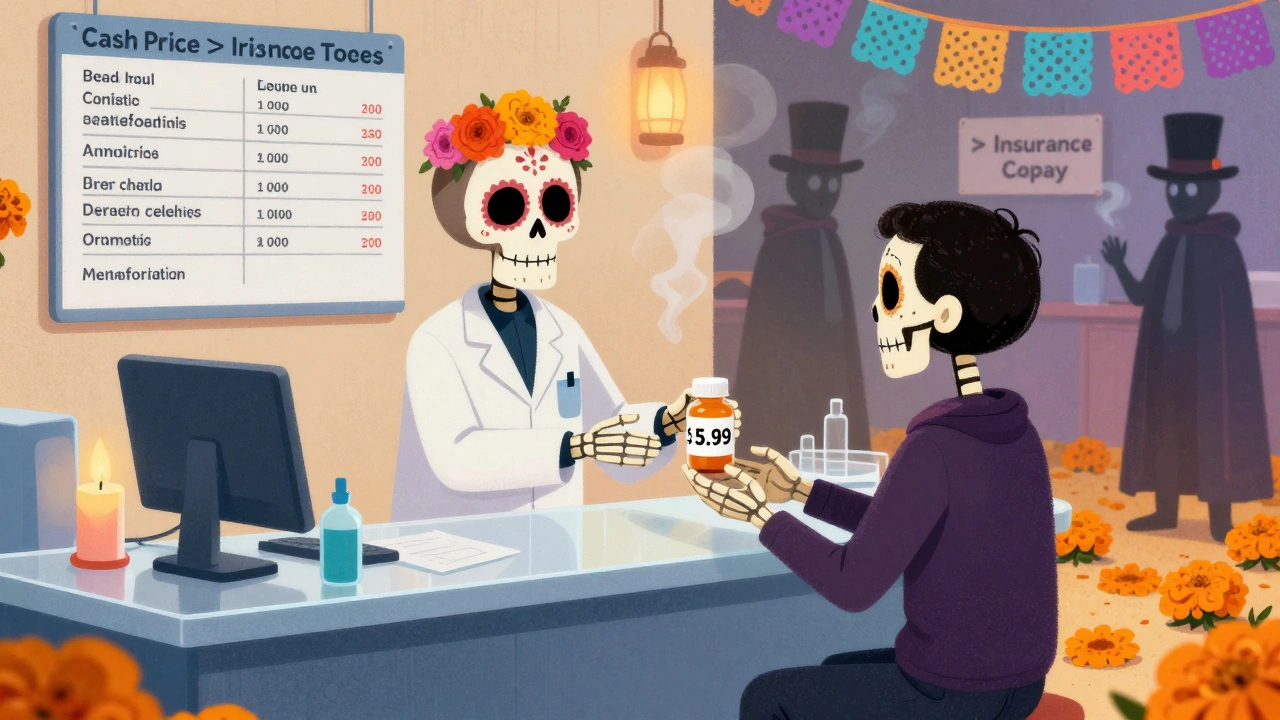
That’s why some people pay $87 out-of-pocket for a generic through insurance, but only $4.99 when they pay cash at Cost Plus Drug Company. The insurance system isn’t broken. It’s designed to hide the real cost. And the more opaque the system, the more the middlemen profit.
Transparent models: What actually works
There’s a better way. Companies like Cost Plus Drug Company and Navitus Health Solutions cut out the middleman entirely. Cost Plus Drug Company sells generic drugs at cost plus 15% markup - no spreads, no rebates, no secrets. They publish their prices openly. A 30-day supply of atorvastatin? $6.49. Metformin? $5.99. No insurance needed. No surprise bills.
And it’s catching on. By October 2023, Cost Plus Drug Company had expanded to 35 locations across 12 states. Blueberry Pharmacy, another transparent model, has a 4.7/5 rating on Trustpilot with over 1,200 reviews. One customer wrote: “My blood pressure medication costs exactly $15/month. No insurance surprises.”
Even Medicare is catching on. In 2024, CMS required all Medicare Part D plans to disclose how much PBMs are paid for each drug. That’s a big step toward transparency. But it’s not enough. Most commercial insurers still don’t require PBMs to show their pricing structure.
Why some generics cost more - even when they’re “generic”
Not all generics are created equal. Some have been on the market for years. Others are new. And some? They’re just expensive because no one else makes them.
Insurers use something called a Maximum Allowable Cost (MAC) list. This is the highest price they’ll reimburse for a generic drug. But here’s the problem: insurers rarely share these lists with their members. So you might see a $40 copay for a drug that the insurer only paid $8 for. The rest? Went to the PBM.
And then there’s the issue of shortages. When prices get squeezed too hard, manufacturers quit. In 2020, albuterol inhalers disappeared from shelves because the price dropped below the cost to make them. Eighty-seven percent of hospitals reported shortages. That’s what happens when you push for the lowest price without thinking about supply.
So the goal isn’t just the cheapest bid. It’s the most reliable one. That’s why insurers now track manufacturer reliability, production capacity, and geographic diversity. If all the metformin in the U.S. comes from just two factories in India? That’s a risk.
What patients can do right now
You don’t need to wait for your insurer to fix the system. Here’s what actually works:
- Check GoodRx or SingleCare before filling any prescription. Often, the cash price is lower than your insurance copay.
- Ask your pharmacist: “Is there a cheaper generic version?” Sometimes, two generics look identical on paper - but one costs half as much.
- If you’re on Medicare or have a high-deductible plan, consider switching to a transparent pharmacy like Cost Plus Drug Company. You don’t need insurance to use them.
- Review your formulary. If your insurer lists a generic drug as Tier 3 (higher copay), ask why. It might be because the PBM gets a bigger rebate on it - not because it’s better.
In 2023, Americans saved $445 billion using generics. But $194 billion of that came from adults aged 40 to 64 - the group most likely to be on multiple prescriptions. That’s not luck. That’s smart procurement.
Insurers save money by being strategic. Patients can too. It’s not about having insurance. It’s about knowing how the system works - and when to bypass it.
What’s next for generic drug pricing
The Inflation Reduction Act of 2022 didn’t fix the PBM problem. It left spread pricing intact. But new models are emerging. Navitus Health Solutions, a PBM that works directly with employers, reported 22% lower generic costs in 2023 than traditional PBMs. Why? They don’t take spreads. They charge a flat fee.
The FDA’s GDUFA III program, launched in 2023, is speeding up generic approvals. More approvals mean more competition. More competition means lower prices. The Congressional Budget Office estimates these changes could save $127 billion over the next decade.
But real change won’t come from laws. It’ll come from awareness. When patients demand transparency, insurers will be forced to choose between hidden profits and real savings. And right now, the best savings aren’t hidden at all. They’re right on the shelf - for $5, $10, or $15 - if you know where to look.
Why do I pay more for a generic drug through insurance than paying cash?
Many insurance plans use pharmacy benefit managers (PBMs) that practice spread pricing - they charge your insurer one price, pay the pharmacy less, and keep the difference. Your copay is based on the inflated price, not the actual cost. Paying cash directly at transparent pharmacies like Cost Plus Drug Company often costs less because there’s no middleman taking a cut.
How do insurers choose which generic drugs to cover?
Insurers use formularies - lists of approved drugs - and prioritize generics with multiple manufacturers, low cost, and proven safety. They run competitive bidding (tendering) to get the lowest price. Drugs with only one manufacturer are often avoided unless absolutely necessary, because they can lead to shortages or price spikes.
Can I ask my insurer to switch me to a cheaper generic?
Yes. Ask your doctor or pharmacist if a therapeutically equivalent generic is available. Many drugs have multiple generic versions with identical effects but different prices. Insurers often allow switches if the alternative is clinically safe and cheaper - especially if the current drug has only one manufacturer.
Are generic drugs as effective as brand-name ones?
Yes. The FDA requires generic drugs to have the same active ingredient, strength, dosage form, and route of administration as the brand-name version. They must also meet the same strict standards for purity and performance. The only differences are in inactive ingredients like fillers or coatings - which rarely affect how the drug works.
What’s the difference between bulk buying and tendering?
Bulk buying means purchasing large quantities to get a lower price per unit. Tendering is the formal process of inviting multiple suppliers to bid on a contract for a specific drug or group of drugs. Bulk buying is the volume; tendering is the competitive bidding system that ensures you get the best price from reliable suppliers.
Insurers save money not by accident, but by design. They use volume, competition, and smart substitution to drive down costs. But if you’re paying more than $10 for a common generic, you’re not getting the deal they’re getting. The system works - if you know how to use it.

There are 10 Comments
Rebecca Dong
So let me get this straight-insurers are secretly pocketing $5 per prescription while we’re told we’re getting ‘coverage’? And you’re telling me this is LEGAL? That’s not capitalism, that’s a pyramid scheme with pill bottles. I’ve paid $87 for metformin while my neighbor paid $4.99 cash-and now I know why. The system isn’t broken. It’s designed to bleed us dry. Someone’s making bank on our insulin, and it’s not us.
Jack Appleby
The entire PBM infrastructure is a grotesque distortion of market efficiency. Spread pricing is not merely unethical-it’s an institutionalized form of price gouging masquerading as administrative overhead. The FDA’s GDUFA III reforms are a start, but they’re toothless without mandatory transparency mandates for PBM rebate structures. One cannot credibly claim to be a ‘benefit manager’ while operating a black-box pricing engine that deliberately obscures cost-to-patient ratios. The economic rent extraction here is staggering-and entirely avoidable.
Raj Rsvpraj
India makes 70% of the world’s generics-and yet, Americans still pay 10x more? Pathetic. Our healthcare system is run by cowards who’d rather pay PBMs $500 million in kickbacks than source directly from reliable Indian manufacturers. We don’t need reform-we need a revolution. Stop trusting these corporate puppets. Buy from Cost Plus. It’s not just smart-it’s patriotic.
Ben Greening
There is a significant difference between cost containment and cost suppression. While competitive tendering drives down prices, excessive pressure on manufacturers can lead to supply chain fragility, as evidenced by the 2020 albuterol shortage. The goal should not be the lowest possible bid, but the most resilient supply network. Reliability, geographic diversification, and quality assurance must be weighted equally with price in procurement decisions.
Kaitlynn nail
It’s wild how we’ve turned medicine into a game of hide-the-cost. Pay cash? Save $80. Use insurance? Pay $87. The real drug is the middleman.
Frank Nouwens
It is worth noting that the emergence of transparent pharmacy models, such as Cost Plus Drug Company and Navitus Health Solutions, represents a paradigm shift in pharmaceutical procurement. These entities operate under a fee-for-service model, eliminating the perverse incentives inherent in spread pricing. Their success demonstrates that market-based transparency is not only ethically preferable but also economically viable on a large scale.
Aileen Ferris
wait… so cost plus drug company is like… a socialist pharmacy? 😳 i mean… if they’re just adding 15%… then who’s really in charge here? is the fda in on this? or is this some kind of deep state thing where they want us to know the truth so we stop trusting the system? i’m confused now…
Queenie Chan
I love how this whole thing exposes the absurdity of ‘insurance’ as we know it. We’re paying premiums to be charged more than cash customers? That’s like buying a membership to a warehouse only to be charged double at the register. And the fact that PBMs get rebates for pushing more expensive generics? That’s not healthcare-it’s a rigged casino where the house prints the cards. The real innovation isn’t in the pills-it’s in the people who cut out the middlemen and just… sell the damn drugs. No fluff. No fine print. Just cost + 15%. It’s almost too simple to be true. But it works.
Stephanie Maillet
It’s fascinating how deeply we’ve normalized exploitation in healthcare. We’ve been taught to trust institutions, to believe that ‘insurance’ means protection-but in reality, it’s often a veil for profit extraction. The fact that patients are being asked to choose between paying $87 or $4.99 for the same pill isn’t a flaw in the system-it’s the system working exactly as designed. And yet, the most radical act might be the simplest: asking your pharmacist, ‘Is there a cheaper version?’ It’s not just a question-it’s a quiet rebellion. Maybe the real revolution isn’t in policy, but in the moment we stop accepting the price they tell us to pay.
Michaux Hyatt
For anyone reading this and thinking, ‘I don’t know how to navigate this’-you’re not alone. Start with GoodRx. It’s free. Compare the cash price to your insurance copay. If cash is cheaper, pay cash. No shame. Then ask your doctor: ‘Can we switch to a generic with multiple manufacturers?’ Most of the time, they’ll say yes. And if you’re on Medicare, request your formulary’s MAC list-it’s your right. You don’t need to be a policy expert. You just need to ask. Small steps. Big savings. You’ve got this.
Write a comment
Your email address will not be published. Required fields are marked *