
When you pick up a generic inhaler, patch, or injection, you expect it to work just like the brand-name version. But how do we know it does? For pills, the answer is simple: check blood levels. For complex delivery systems like inhalers, patches, and injections, it’s far from straightforward. The same active drug doesn’t always mean the same effect-especially when how it gets into your body changes everything.
Why Bioequivalence Isn’t the Same for Everything
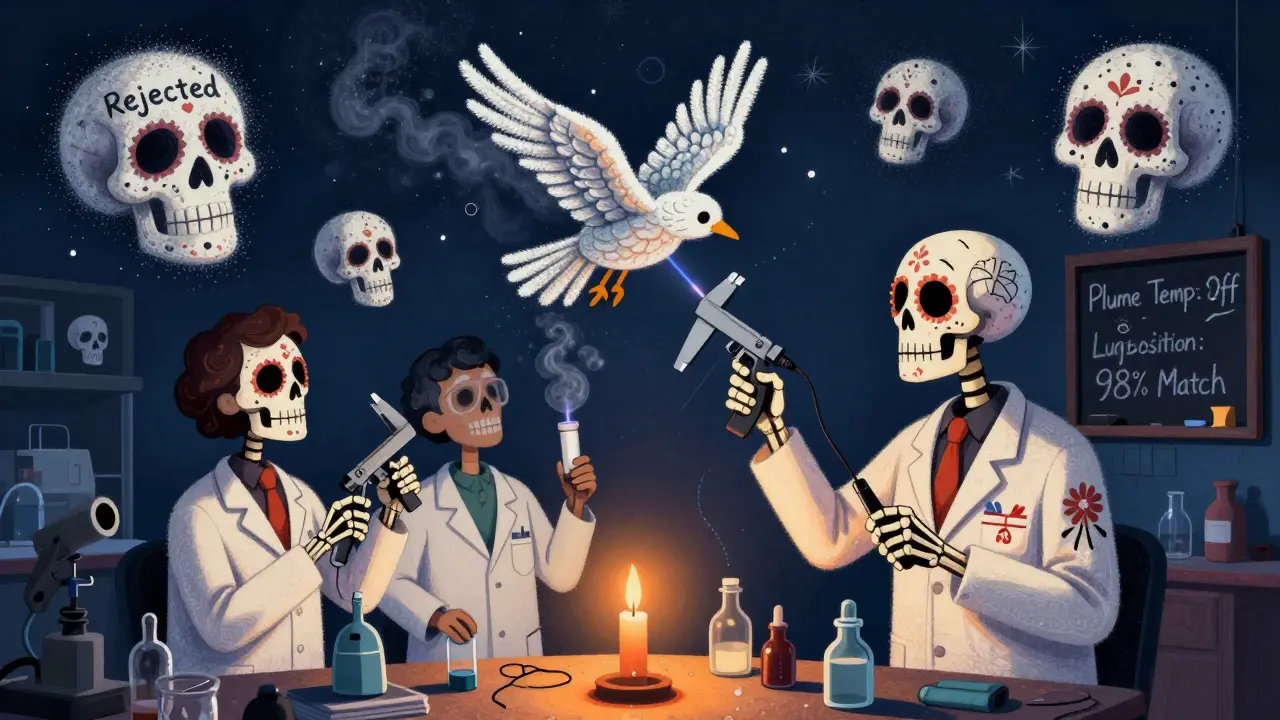
Bioequivalence means two drug products deliver the same amount of medicine to the right place at the same speed. For a tablet, we measure how much drug shows up in your bloodstream-peak concentration (Cmax) and total exposure (AUC). If both are within 80-125% of the brand, it’s approved. Simple. But that rule breaks down for inhalers, patches, and injectables. Why? Because the drug doesn’t always need to enter your blood to work. Take asthma inhalers. The goal isn’t to flood your bloodstream with steroids-it’s to land them directly in your lungs. If the particle size is off by a few micrometers, the drug hits your throat instead of your airways. You get side effects like hoarseness, but no lung benefit. That’s why the FDA requires more than just blood tests. They look at particle size, how the drug sprays out (plume geometry), and even how much sticks to the mouthpiece. One generic albuterol inhaler was rejected because its plume was 2°C warmer than the original. Sounds tiny? That small difference changed how the drug dispersed in the air-enough to affect lung delivery. Transdermal patches face a different problem. They’re designed to release drug slowly over hours or days. A patch that releases 10% more drug in the first two hours might cause dizziness or low blood pressure-even if the total amount over 24 hours matches the brand. That’s why regulators don’t always require Cmax to be within 80-125%. For patches, AUC matters more. But even that’s not enough. The patch must stick the same way, release the drug at the same rate through the skin, and leave the same amount of unused drug behind. If the adhesive changes, the drug might not absorb properly. Injectables are the toughest. Think of a biologic like insulin or a nanoparticle drug like Doxil. These aren’t just chemicals in water-they’re complex structures. Liposomes, micelles, or protein-bound particles have size, charge, and shape. If the generic’s particles are even 10% larger, they might not reach the same tissue. The FDA requires exact matches in size distribution, zeta potential, and release profiles. For enoxaparin (Lovenox), a blood thinner with a narrow safety window, the acceptable range is tighter: 90-111%. One mistake, and you risk clotting or bleeding.How Regulators Test These Complex Products
Regulatory agencies don’t rely on one test. They build a totality-of-the-evidence approach. For inhalers, the FDA requires three layers:- In vitro testing: Particle size (90% must be 1-5 micrometers), delivered dose per puff (within 75-125% of label), and plume shape using laser diffraction.
- In vivo pharmacokinetics: Blood levels of the drug in healthy volunteers-still needed for systemic effects.
- Pharmacodynamics: For inhaled corticosteroids, lung function (FEV1) is measured directly. If the generic doesn’t improve breathing as well, it’s rejected-even if blood levels look fine.
- Franz diffusion cells: These simulate skin and measure how much drug passes through over time.
- Adhesion testing: Does the patch stay on during movement, sweat, or showering?
- Residual drug content: After removal, how much drug is left? Too much means incomplete delivery.
- Particle size analysis: Using laser diffraction or electron microscopy to confirm size distribution.
- Zeta potential: Surface charge that affects how particles behave in the body.
- In vitro release profiles: How the drug leaks out of its carrier over time.
- Comparative pharmacokinetics: Blood levels, but with tighter limits for high-risk drugs.
Why Approval Rates Are So Low
Only 38% of generic inhalers get approved. For patches, it’s 52%. For complex injectables, 58%. Compare that to 78% for oral generics. Why the gap? It’s not just science-it’s cost and complexity. Developing a generic inhaler can cost $25-40 million and take 36-48 months. That’s four times longer and five times more expensive than a regular pill. Why? Because every single component matters:- The propellant in an MDI
- The powder formulation in a DPI
- The adhesive in a patch
- The stabilizers in a nanoparticle injection
Who’s Winning-and Who’s Losing
Only 28 companies have successfully brought a complex generic to market. The leaders? Teva, Mylan, and Sandoz. They have the labs, the regulatory teams, and the cash to absorb failures. Smaller companies struggle. The FDA’s Complex Generic Drug Product Development program has helped 42 small businesses since 2018, but it’s not enough. Most can’t afford the $200,000+ particle analyzers or the $150,000 cascade impactors needed to test inhalers. Market penetration tells the story. Sixty-five percent of transdermal patches are generic within three years of patent expiry. For inhalers? Just 42%. For injectables? 38%. Why? Because patients and doctors don’t trust them. And why don’t they trust them? Because they’ve seen failures. Teva’s generic ProAir RespiClick succeeded because they used scintigraphy imaging to prove identical lung deposition. Within 18 months, it captured 12% of the market. That’s rare. Most generics never get that far.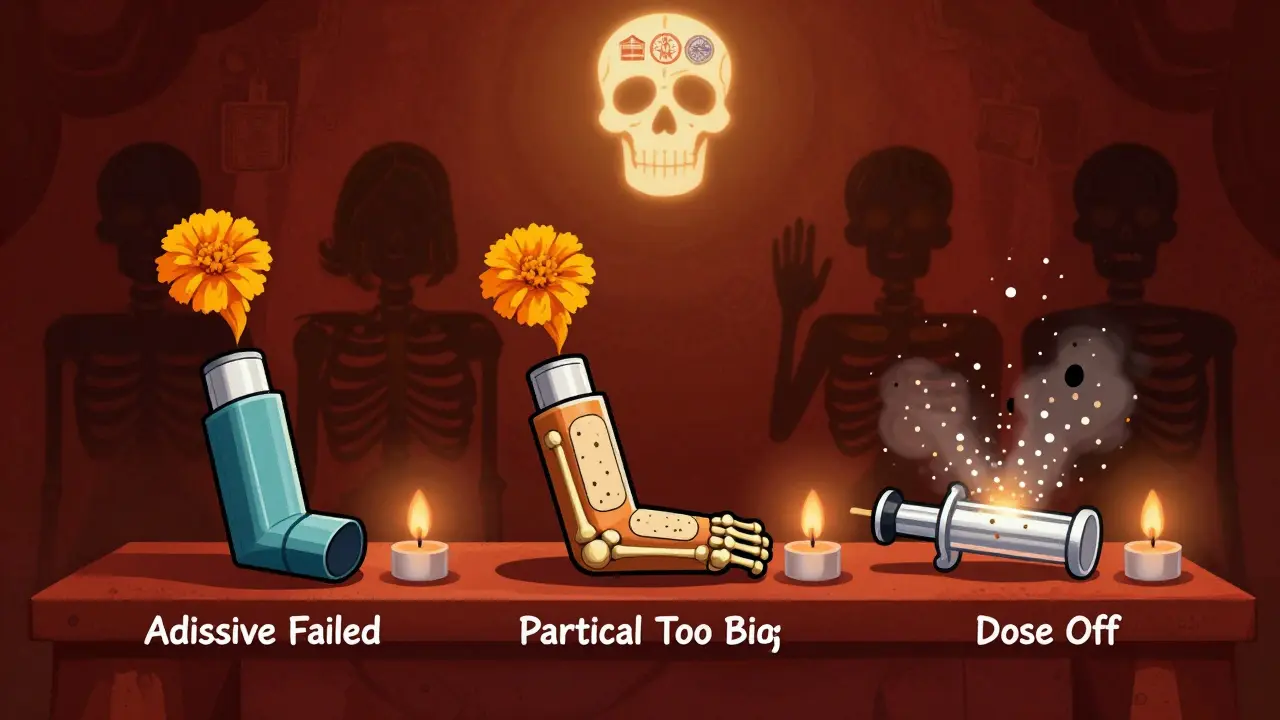
The Future: Better Tools, Smarter Rules
The field is changing. In 2022, 65% of complex generic submissions included physiologically-based pharmacokinetic (PBPK) modeling-up from 22% in 2018. This computer simulation predicts how a drug behaves in the body based on its physical properties, reducing the need for expensive human trials. The FDA is also exploring new methods. Their 2023 draft guidance on monoclonal antibodies suggests using advanced analytics to compare protein structures directly-instead of waiting for clinical outcomes. But there’s a warning. Researchers call it “biocreep.” Imagine a brand drug. Then a first generic. Then a second. Each meets bioequivalence standards. But over time, small differences add up. The final version might be far from the original. No single test catches it. That’s why regulators now demand “totality of evidence”-not just one test, but a full picture.What This Means for You
If you’re prescribed a generic inhaler, patch, or injection, ask your pharmacist or doctor: Is this the one that’s been proven to work like the brand? Most are. But not all. The system works-when it’s done right. The high failure rate isn’t a flaw in the science. It’s proof that regulators are trying to protect you. The next time you use a generic patch for pain or an inhaler for asthma, remember: behind that little device is years of science, millions of dollars, and dozens of failed attempts. It’s not just chemistry. It’s engineering. It’s physics. It’s precision. And that’s why bioequivalence for complex delivery systems isn’t just another regulatory box to check. It’s the difference between relief-and risk.Are generic inhalers really as effective as brand-name ones?
Yes-but only if they’ve passed the full bioequivalence test. Many generic inhalers fail because their particle size, plume shape, or dose delivery doesn’t match the original. The FDA and EMA require in vitro and in vivo testing, including lung function measurements for steroid inhalers. Approved generics like Teva’s ProAir RespiClick have proven equivalent through imaging studies. Always check if your generic is on the FDA’s approved list.
Why do some generic patches cause side effects when the brand didn’t?
Patch failures often come down to differences in adhesive, release rate, or skin contact. A generic might release the drug too quickly at first, causing a spike in blood levels. Or it might not stick well during sweating or movement, leading to inconsistent absorption. Even small changes in the formulation can affect how the drug moves through the skin. If you notice new side effects after switching, talk to your doctor-your patch might not be bioequivalent in practice.
Can I trust a generic injectable like Lovenox or insulin?
For narrow therapeutic index drugs like Lovenox or insulin, bioequivalence standards are much stricter-90-111% instead of 80-125%. The FDA requires exact matches in particle size, charge, and release profile. Only a few companies have succeeded. Always confirm the generic is approved under the complex product pathway. If your doctor prescribes a generic, ask if it’s been tested with the same rigor as the brand. Don’t assume all generics are equal.
Why are complex generics so expensive to develop?
Because they require advanced equipment, specialized expertise, and dozens of failed attempts. Testing an inhaler alone needs a $300,000 cascade impactor and trained scientists. A single formulation change can require 10+ rounds of testing. Companies spend $25-40 million and 3-4 years on average. That’s why only big manufacturers can afford it-and why fewer generics enter the market, keeping prices higher than regular pills.
What’s the difference between bioequivalence and therapeutic equivalence?
Bioequivalence means the drug reaches the body the same way. Therapeutic equivalence means it works the same way in patients. For oral drugs, they’re usually the same. For inhalers and patches, they’re not. A generic might have identical blood levels but still not improve lung function. That’s why regulators now require clinical endpoints-like FEV1 for asthma-alongside blood tests. Therapeutic equivalence is the real goal.


There are 13 Comments
Dorine Anthony
My grandma switched to a generic inhaler last year and swears it works just as well. No hoarseness, no coughing fits. I was skeptical, but she’s been stable for 14 months now. Maybe it’s the one that passed all the tests.
Still, I get why people are nervous. I’d want proof too.
Carolyn Benson
It’s not about bioequivalence-it’s about control. The pharmaceutical industry doesn’t want you to know that the ‘active ingredient’ is just the tip of the iceberg. The real drug isn’t the molecule-it’s the entire delivery system. And they’ve turned it into a monopoly game.
They don’t want generics because they can’t control the narrative. Particle size? Adhesive? Please. It’s all smoke and mirrors to keep prices high.
What’s really being tested here? Profit margins. Not patient outcomes.
Aadil Munshi
Lmao at people acting like this is some deep scientific mystery. It’s not. It’s just that big pharma spent billions designing these devices and now they’re crying because some Indian lab can’t copy the exact same plastic casing.
Let me guess-the ‘plume is 2°C warmer’? Oh no, the universe is collapsing! Tell me again why we’re paying $300 for an inhaler when the active ingredient costs 7 cents?
Also, ‘biocreep’? That’s not a thing. That’s just corporate FUD dressed up as science. You can’t have a ‘creep’ if the original was designed to be uncopyable.
Danielle Stewart
If you’re prescribed a generic inhaler or patch, always ask if it’s on the FDA’s approved list. Not all generics are created equal-some pass the full battery of tests, others barely scrape by.
Don’t assume ‘generic’ means ‘same.’ But also don’t panic. Many are excellent. Just be informed. Your pharmacist can tell you which ones have the full data package.
Knowledge is power here. And yes, it’s worth the extra 2 minutes to ask.
Erica Vest
There is a critical distinction between bioequivalence and therapeutic equivalence that is consistently overlooked in public discourse. Bioequivalence, as defined by pharmacokinetic parameters (Cmax, AUC), is a proxy measure-valid for oral solids, insufficient for complex delivery systems.
Therapeutic equivalence requires demonstration of clinical outcome equivalence: FEV1 for inhalers, pain control for patches, anticoagulant activity for enoxaparin. The FDA’s totality-of-evidence framework is scientifically rigorous and necessary. Any reductionist critique of this process reflects a fundamental misunderstanding of pharmacology.
Furthermore, the cost of developing complex generics is not an artifact of regulatory overreach-it is a direct consequence of the physical and chemical complexity inherent in the drug product. This is not a flaw. It is physics.
Kinnaird Lynsey
Honestly? I used to be mad about generic patches giving me rashes. Then I learned that the adhesive formulation changed-same drug, different glue. Not a conspiracy, just a technical detail nobody talks about.
Now I check the manufacturer. If it’s Teva or Sandoz? I’m cool. If it’s some no-name brand? I ask my pharmacist. It’s not about distrust-it’s about knowing what’s actually in the package.
Also, I appreciate that the FDA doesn’t just say ‘close enough.’ They’re trying to keep us from getting sick because someone cut corners. That’s… kind of admirable?
shivam seo
Why are Americans so obsessed with ‘exact particle size’? We’re not building rockets here. Just give me the drug. If it works, it works.
Meanwhile, India and China make generics that save millions, and we’re over here running laser diffraction tests on inhalers like it’s NASA mission control.
Stop over-engineering healthcare. It’s not a luxury product. It’s medicine.
Andrew Kelly
Let me guess-the ‘FDA-approved’ generics are all secretly made in China and shipped here with a fake certificate. They don’t test the real device, just the placebo. You think they care about your lungs? They care about the stock price.
Remember when they said vaping was safe? Then the deaths happened. Now they’re doing the same thing with inhalers. ‘Oh, the blood levels match!’ Yeah, and the nicotine patch that gave people seizures also had ‘matching AUC.’
Trust the system? I’d rather pay $400 for the brand and sleep at night.
Anna Sedervay
As a former biochemist at a Big Pharma subsidiary (yes, I know what I’m talking about), I can confirm: the ‘bioequivalence’ standards are a farce. The FDA doesn’t test the actual device’s mechanical integrity under real-world conditions-only in controlled labs. What happens when a patient drops the inhaler? When sweat degrades the patch? When the injector jams?
They don’t care. They just want the numbers to look good on paper. And don’t get me started on the ‘totality of evidence’-it’s just PR-speak for ‘we didn’t test enough, but we’ll approve it anyway.’
And yes, I’ve seen the internal emails. The ‘approved’ generics? Half of them are barely distinguishable from the original. The rest? They’re playing Russian roulette with your asthma.
Ashley Bliss
I lost my dad because of a generic insulin. Not because it was bad-but because no one told us it wasn’t the same. The vial looked identical. The label said ‘bioequivalent.’ We trusted it.
He went into DKA three days later. They said his levels were ‘within range.’ But the release profile was off. The peaks were too sharp. The nadirs too deep.
They approved it because the AUC matched. But your body doesn’t care about AUC. It cares about survival.
Now I don’t use anything generic unless I’ve seen the scintigraphy data. And even then… I cry every time I fill the prescription.
It’s not just science. It’s grief.
Meenakshi Jaiswal
As someone who works in pharma logistics in India, I’ve seen the labs that make these generics. They’re not shady-they’re state-of-the-art. The cascade impactors, the Franz cells, the laser diffraction machines? We have them. We use them.
The problem isn’t the quality. It’s the cost of compliance. Getting FDA approval is like climbing Everest in flip-flops. You need a team, a fortune, and a lot of patience.
Most small Indian firms can’t afford it. So they sell elsewhere. That’s why you don’t see more generics here-it’s not because they’re bad. It’s because the system is stacked against them.
Let’s fix the system, not blame the makers.
Mahammad Muradov
You’re all missing the point. The real issue is that regulators are too slow. The science is ready. PBPK modeling, AI-driven release profiles, digital twin simulations-they can predict equivalence without human trials. But the FDA still demands 100 volunteers and 18 months of testing.
Meanwhile, patients suffer. Companies go bankrupt. Innovation dies.
This isn’t about safety. It’s about bureaucracy. And bureaucracy is the real enemy of healthcare.
Connie Zehner
OMG I just switched to a generic patch and now I’m sweating like crazy and my heart is racing 😱 I KNEW IT!! They’re all poisoning us!! I posted about it on 5 Facebook groups and now my whole neighborhood is freaking out 😭😭😭
Someone please tell me which brand is safe?? I’ll pay double!!
Write a comment
Your email address will not be published. Required fields are marked *