
Most people think tinnitus is just a annoying buzz or ring in the ear. But for millions, it’s more than that-it’s a constant companion that steals sleep, ruins focus, and makes quiet rooms feel unbearable. If you’ve been hearing a noise no one else can hear, you’re not alone. About tinnitus affects 1 in 5 people worldwide, and in the U.S. alone, nearly 50 million people deal with it. For 2 million, it’s so severe they can’t work or socialize normally. The good news? You don’t have to just live with it. There are real, science-backed ways to manage it-and often, reduce it significantly.
What’s Actually Happening in Your Brain?
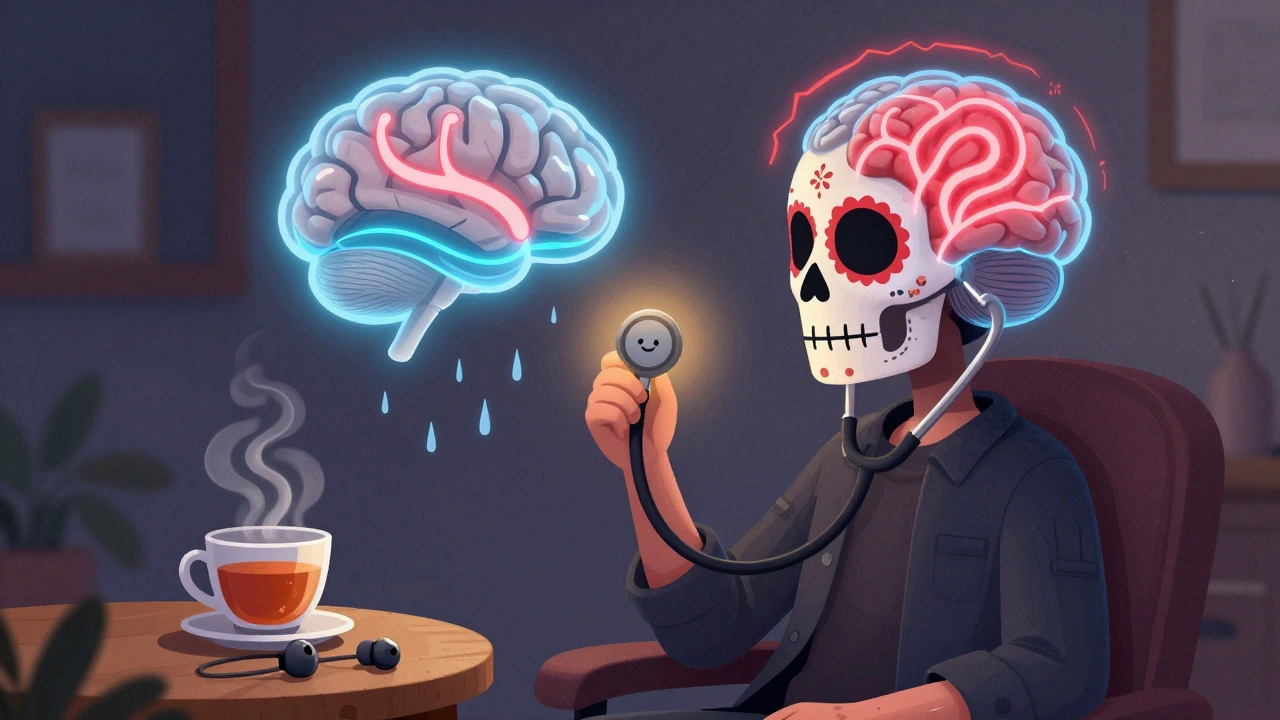
Tinnitus isn’t a disease. It’s a symptom. Your ears aren’t making the sound-you’re hearing something your brain is creating. When the hair cells in your inner ear get damaged-from loud noise, aging, or earwax buildup-they stop sending normal signals to your brain. Instead, your auditory cortex, the part that processes sound, starts filling the silence with noise. It’s like your brain’s trying to make sense of a broken signal, and it guesses wrong. That’s why you hear ringing, buzzing, or hissing even when there’s no external sound.
This isn’t just in your head-it’s in your nervous system. Studies show that people with tinnitus have measurable changes in brain activity. The louder or more constant the sound feels, the more your brain’s emotional centers (like the limbic system) get involved. That’s why tinnitus often comes with stress, anxiety, or insomnia. It’s not psychological-it’s neurological.
Two Types of Tinnitus: Which One Do You Have?
There are two kinds. Over 99% of cases are subjective tinnitus-only you can hear it. This is what most people mean when they say they have tinnitus. The sound can be high-pitched ringing, low rumbling, static, or even a clicking. It might be in one ear or both. Around 60% of people experience it on just one side.
The other 1% is objective tinnitus. This is rare, but important. A doctor can actually hear the noise with a stethoscope. It’s often tied to blood flow issues-like turbulent blood near your ear due to high blood pressure, atherosclerosis, or a rare tumor. If your tinnitus pulses in time with your heartbeat, that’s called pulsatile tinnitus. It’s not common, but it needs medical evaluation. An MRI or CT scan can spot vascular problems that might be causing it.
What’s Causing Your Tinnitus?
Most of the time, tinnitus comes from one of three places: hearing damage, blockages, or medication.
Hearing loss is behind about 80% of cases. It doesn’t have to be severe. Even mild, high-frequency hearing loss-common as we age-can trigger it. About 85% of people over 75 with age-related hearing loss also have tinnitus. Noise exposure is a big culprit too. Working in construction, going to loud concerts, or even listening to headphones too loud for years can damage those delicate inner ear cells.
Earwax blockage is a simple fix. About 10-15% of people with tinnitus have a buildup of wax pressing on the eardrum. Getting it professionally removed often makes the ringing disappear within a day or two.
Medications can cause it too. Over 200 drugs are linked to tinnitus, including high doses of aspirin, certain antibiotics like gentamicin, and some diuretics. If you started a new medication and the ringing began soon after, talk to your doctor. Stopping the drug often helps-70% of cases improve within a few weeks. But in about 30% of cases with ototoxic antibiotics, the damage is permanent.
Other causes include ear infections, head or neck injuries, and conditions like Meniere’s disease. But hearing loss and noise exposure are the big ones.
How Bad Is It? The Tinnitus Handicap Inventory
Not all tinnitus is the same. Some people barely notice it. Others can’t sleep, can’t concentrate, or feel isolated. Doctors use a tool called the Tinnitus Handicap Inventory (THI) to measure how much it’s affecting your life. It’s a simple 25-question survey that gives you a score from 0 to 100.
- 0-16: Slight impact
- 18-36: Mild
- 38-56: Moderate
- 58-76: Severe
- 78-100: Catastrophic
A 2022 survey of 12,000 people found that 68% had trouble sleeping, 52% struggled to focus at work, and 37% avoided social situations because of the noise. If your score is above 36, you’re not just being dramatic-you’re dealing with a real burden that needs attention.
What Actually Works to Manage Tinnitus?
There’s no magic cure. But there are proven ways to make it less intrusive-and sometimes, even quieter.
Hearing aids are the most effective tool for people with hearing loss. They don’t just amplify sound-they reduce the brain’s need to create phantom noise. Studies show about 60% of tinnitus patients with hearing loss get significant relief from hearing aids, especially newer models with built-in sound therapy features.
Sound therapy works by giving your brain something else to focus on. White noise machines, fans, or apps that play ocean waves, rain, or pink noise can mask the ringing. About 40-50% of people find this helpful. Reddit users in the r/tinnitus community say sound masking is the #1 thing that gives them immediate relief. You don’t need expensive gear-a simple phone app with a timer works fine.
Cognitive Behavioral Therapy (CBT) is the gold standard for long-term management. It doesn’t eliminate the sound-it changes how you react to it. In 8 to 12 weekly sessions, you learn to stop fighting the noise, reduce anxiety around it, and retrain your brain to ignore it. Studies show CBT helps 50-60% of people feel significantly less distressed. It’s covered by many health plans and available online.
Removing blockages is quick and effective. If earwax is the cause, professional cleaning resolves symptoms in 85% of cases within 48 hours. Don’t use cotton swabs-they push wax deeper. See a nurse or ENT specialist.
Medication changes can help if your tinnitus is drug-induced. Tell your doctor about every pill you take, even over-the-counter ones. Sometimes switching to a different blood pressure med or painkiller makes all the difference.
New Treatments on the Horizon
Research is moving fast. Two FDA-approved devices are now available in the U.S.:
- Lenire: Uses headphones and a tongue device to deliver bimodal stimulation-sound and gentle electrical pulses to the tongue. In a 2020 trial, 80% of users saw improvement lasting over a year.
- Oasis: A personalized sound therapy device that adapts to your tinnitus frequency. Clinical tests showed 65% of users had meaningful relief.
Other promising approaches include transcranial magnetic stimulation (TMS), which uses magnetic pulses to calm overactive brain areas. Early trials show 30-40% effectiveness. Researchers are also testing drugs that target brain inflammation and GABA pathways. While these aren’t widely available yet, they’re signs that real progress is being made.

What Doesn’t Work (And Why)
There are a lot of scams out there. Avoid anything that promises a “cure.”
- Herbal supplements like ginkgo biloba or zinc have no solid proof they help tinnitus.
- Ear candling is dangerous and useless.
- Unregulated devices sold online with flashy claims? Skip them.
Also, don’t wait for it to go away on its own. While 80% of new tinnitus cases improve within 6-12 months due to brain adaptation, the other 20% become chronic. The sooner you act, the better your chances of preventing long-term distress.
What You Can Do Today
You don’t need to wait for a specialist to start helping yourself.
- Turn down the volume on headphones. Use the 60/60 rule: no more than 60% volume for 60 minutes at a time.
- Use background noise. Play soft music, a fan, or a white noise app while you sleep or work.
- Protect your ears. Wear earplugs at concerts, in noisy workplaces, or even when mowing the lawn.
- See your doctor. Rule out earwax, infections, or medication side effects.
- Get a hearing test. Even if you think your hearing is fine, subtle loss is often the hidden cause.
And if you’re struggling emotionally-feeling anxious, depressed, or isolated-reach out. Support groups, online forums, and CBT therapists who specialize in tinnitus can change your life. You’re not broken. Your brain is just misfiring. And with the right tools, you can learn to live with it-or even forget it’s there.
Can tinnitus go away on its own?
Yes, for many people. About 80% of new tinnitus cases improve significantly within 6 to 12 months as the brain adapts to the abnormal signals. But if it’s still bothering you after a year, it’s unlikely to disappear without intervention. That doesn’t mean it’s permanent-it means you need the right management strategies.
Is tinnitus a sign of hearing loss?
In about 80% of cases, yes. Tinnitus is one of the earliest signs of damage to the inner ear’s hair cells-even if you don’t notice your hearing getting worse yet. A hearing test can detect subtle loss that you might not be aware of. If you have tinnitus, getting tested isn’t optional-it’s essential.
Does stress make tinnitus worse?
Not directly, but it amplifies it. Stress doesn’t cause tinnitus, but it makes your brain more sensitive to the sound. When you’re anxious, your nervous system is on high alert, so the ringing feels louder and more intrusive. Managing stress through sleep, exercise, or therapy can make a big difference in how much you notice it.
Can earwax cause tinnitus?
Yes. Impacted earwax is a common and easily fixable cause. It affects 10-15% of people with tinnitus. When wax presses against the eardrum, it can distort sound signals and trigger ringing. Professional removal-done by a nurse or ENT-often eliminates the tinnitus completely within 48 hours. Never try to dig it out yourself.
Are hearing aids the best treatment for tinnitus?
For people with hearing loss, yes-by far. Hearing aids don’t just make sounds louder; they reduce the brain’s need to create phantom noise. Studies show 60% of users get meaningful relief. Modern hearing aids also include built-in sound therapy features that play gentle tones to distract from the ringing. If you have both hearing loss and tinnitus, hearing aids are the first-line treatment.
Is there a cure for tinnitus?
Not yet. But there are effective ways to manage it so it doesn’t control your life. Treatments like CBT, sound therapy, and hearing aids help most people live normally. New devices like Lenire and Oasis are showing remarkable results, and research into brain-based therapies is advancing fast. The goal isn’t to silence the sound-it’s to make it irrelevant.
What Comes Next?
If you’re just starting out, begin with your GP. Ask for a hearing test and an ear check. If nothing’s found, ask for a referral to an ENT specialist. If your tinnitus is affecting your sleep or mood, ask about cognitive behavioral therapy. You don’t need to suffer in silence. The tools are here. The science is clear. And you’re not the first person to walk this path.
What matters now is taking the next step-not waiting for it to get worse, not hoping it’ll disappear, but acting with confidence that help exists. The brain adapts. With the right support, so can you.





There are 15 Comments
Rebecca Braatz
Just wanted to say this post saved my life. I’ve had tinnitus for 5 years and thought I was going crazy. Hearing aids with sound therapy? Game changer. I didn’t even know they had built-in masking. Now I sleep through the night. You’re not broken-you’re just dealing with a glitchy brain. And guess what? It’s fixable.
Heidi Thomas
Stop giving false hope. There’s no cure and nobody cares about your anecdotal ‘hearing aid worked’ story. Science says tinnitus is permanent if it lasts past 6 months. You’re just training your brain to ignore it not fixing it. Stop lying to people.
Dematteo Lasonya
I’m so glad you broke this down so clearly. I had no idea earwax could cause it. My doctor dismissed me for months until I insisted on a check. Got it cleaned out and the ringing vanished in 36 hours. So simple. Why don’t more people know this?
Rudy Van den Boogaert
Yeah I’ve been dealing with this since I was 22. I’m 38 now. Used to think it was stress. Turns out I had mild high-frequency loss from years of listening to music on headphones. Got hearing aids with noise masking and it’s like a weight lifted. CBT helped too. Not a cure but it’s manageable now. Don’t give up.
Gillian Watson
Been in the UK for 10 years and still can’t get CBT on the NHS without a 9-month wait. Private sessions are £120/hour. The system fails people with tinnitus. This post is spot on but real life? Not so much. We need better access not just info.
John Filby
Same. I tried white noise apps, earplugs, meditation, even hypnosis. Nothing worked until I got a proper hearing test. Turns out I lost the top 3 frequencies. Hearing aids + pink noise at night = life changed. Also stopped drinking caffeine. Small stuff helps too.
Ben Choy
Just wanted to say thank you for writing this. I’ve been silent about my tinnitus for years because I thought people would think I was crazy. This post made me feel seen. I started using a fan at night and it’s made a difference. Not perfect but better. 💙
Jenny Rogers
It is deeply concerning that you are promoting the notion that tinnitus can be ‘managed’ as if it were a lifestyle choice rather than a neurological dysfunction exacerbated by pharmaceutical negligence and industrial noise pollution. The FDA-approved devices you cite are merely palliative band-aids, and the underlying pathophysiology remains unaddressed by mainstream medicine. One must ask: who profits from this narrative of ‘adaptation’?
Rachel Bonaparte
Okay but have you heard about the 2021 leaked documents from the CDC showing that the tinnitus epidemic was deliberately downplayed because the hearing aid industry lobbied to avoid regulation? They know the real cause is EMF exposure from 5G towers and smart meters. They don’t want you to know. The ‘earwax’ and ‘hearing loss’ theories are distractions. Google ‘Project Silent Scream’ and tell me I’m wrong. I’ve been researching this for 7 years and I’m the only one talking about it.
Scott van Haastrecht
Everyone’s just ‘managing’ it like it’s some cute little anxiety thing. Newsflash: I lost my job because I couldn’t focus. I got divorced because I snapped at my wife every time the damn ringing started. My therapist said ‘try mindfulness.’ I threw my phone against the wall. This isn’t a blog post. This is my life. And nobody gets it.
Ollie Newland
Objective tinnitus is wild. I had pulsatile tinnitus from a jugular bulb anomaly. MRI found it. Surgeon fixed it. Gone in 2 weeks. If you hear your heartbeat in your ear-get scanned. Don’t wait. Most docs don’t even know to look. This isn’t ‘just noise’-it’s a vascular red flag.
Benjamin Sedler
Wait so you’re telling me I don’t have to suffer? That’s it? No secret detox? No ancient Tibetan ear chanting? No crystal frequency healing? You’re telling me the solution is… a fan and a hearing aid? I feel cheated. I was promised magic. Where’s my dragon?
zac grant
As an audiologist, I see this daily. The biggest mistake? Waiting. People wait 2-3 years before getting tested. By then, the neural pathways are locked in. Early intervention with hearing aids + CBT = 70%+ improvement rate. Don’t wait for it to get worse. Get tested now. Even if your hearing ‘seems fine.’
michael booth
It is imperative that individuals afflicted with tinnitus recognize the significance of evidence-based interventions. The utilization of cognitive behavioral therapy, coupled with the strategic deployment of sound therapy modalities, constitutes the gold standard of clinical management. One must eschew anecdotal remedies and embrace empirically validated protocols. The brain’s neuroplasticity is a powerful ally when properly engaged.
Rebecca Braatz
Ben Choy, your comment about the fan made me cry. I started using one too. It’s not about silence. It’s about giving your brain something gentle to focus on instead of screaming. Thank you for saying that.
Write a comment
Your email address will not be published. Required fields are marked *