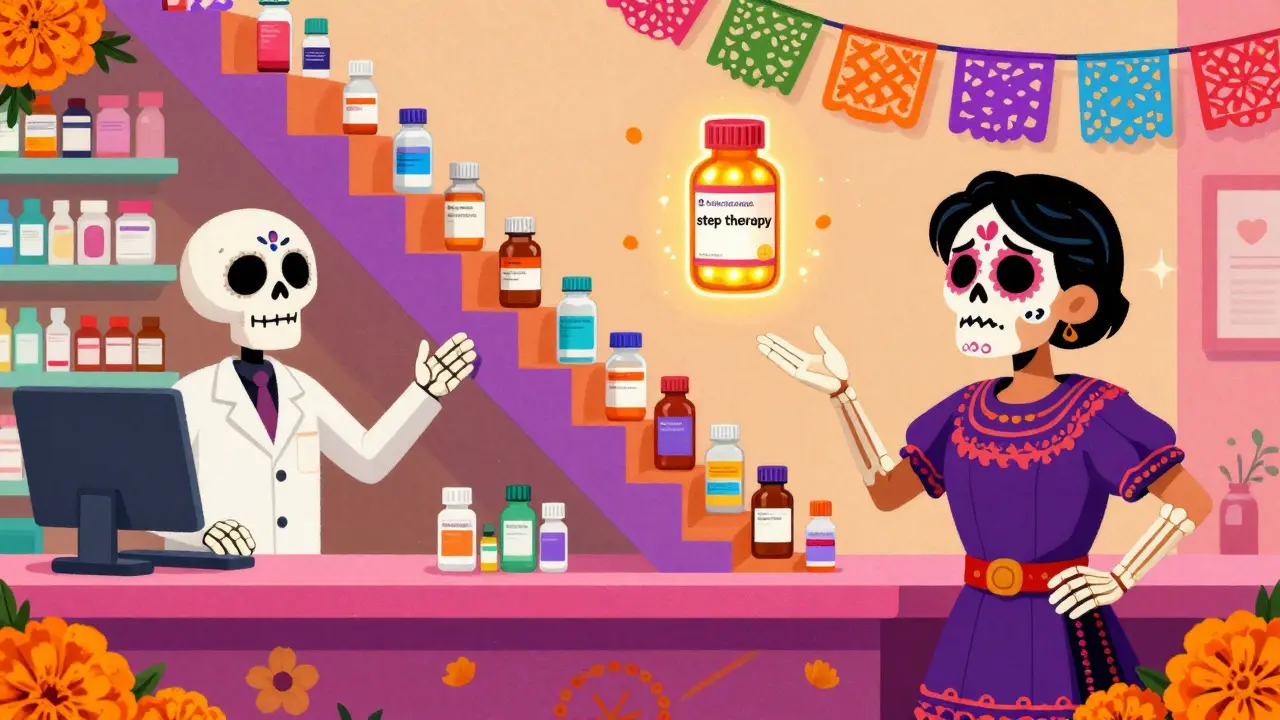
Imagine your doctor prescribes a specific medication that they know works for your condition. You head to the pharmacy, only to find out your insurance won't cover it. Instead, they tell you that you have to try two or three cheaper, generic versions first. If those don't work, then-and only then-will they pay for the drug your doctor actually wanted. This frustrating experience is called step therapy.
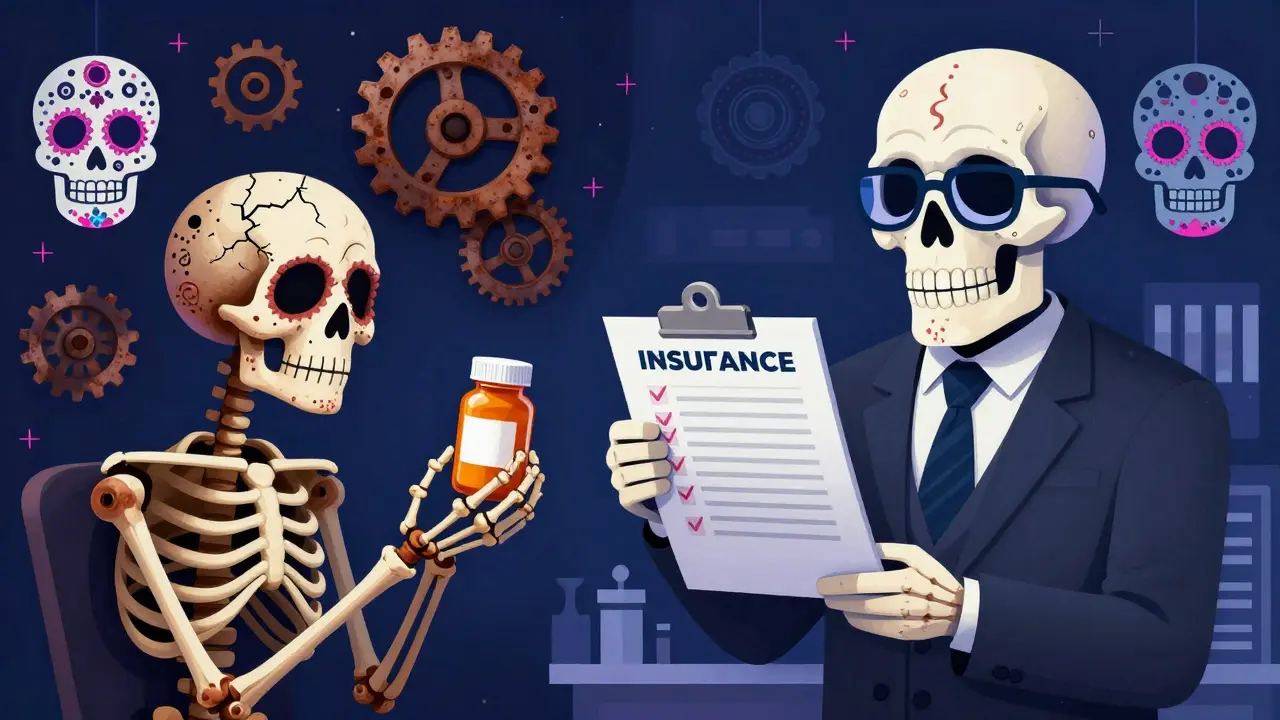

At its core, Step Therapy is a utilization-management strategy where health insurance providers require patients to try less expensive medications before approving more costly treatments. Often called "fail-first" policies, these rules are built into insurance formularies the official lists of prescription drugs covered by a health insurance plan . While insurers argue this ensures patients get the most cost-effective treatment, many doctors and patients see it as a dangerous barrier to timely care.
How Step Therapy Actually Works
Insurers don't just pick random drugs; they organize medications into a sequential pathway. Most protocols follow a two or three-step process. In step one, the insurer covers the lowest-cost options, which are almost always generic drugs medications created to be the same as an already marketed brand-name drug in dosage, safety, strength, and quality . If you can manage your condition with these, the insurer saves money. If you "fail" (meaning the drug doesn't work or causes bad side effects), you can move to step two, which might include mid-tier brand-name drugs. The high-cost specialty meds are usually reserved for the final step.
This approach is common. About 40% of health plan drug coverage policies now use step therapy. It's particularly prevalent in employer-sponsored plans. For the insurance company, the goal is simple: cost containment. According to a Congressional Budget Office analysis, these protocols can cut pharmaceutical spending by 5% to 15%, depending on the type of medication.
The Real-World Impact on Patients
The gap between "cost-effective care" and "patient health" can be wide. When you're dealing with a progressive disease, like rheumatoid arthritis, waiting six months to "fail" through a list of generic NSAIDs isn't just an inconvenience-it can lead to permanent joint damage. The American College of Rheumatology has explicitly opposed these policies because they can cause disease progression during the trial period.
Consider the case of a patient who has to switch insurance because they changed jobs. In many cases, the new insurer doesn't care that the previous one already approved a specific medication. The patient is forced to restart the entire step therapy process from scratch, leading to dangerous gaps in treatment. This administrative loop is a primary reason why 68% of patients in some Arthritis Foundation surveys reported negative health outcomes due to these requirements.
| Feature | Step Therapy (Fail-First) | Prior Authorization |
|---|---|---|
| Structure | Sequential (Drug A → Drug B → Drug C) | Single-gate (Approved or Denied) |
| Primary Goal | Cost reduction via tiered trials | Ensuring medical necessity/safety |
| Patient Experience | Must "fail" cheaper options first | Doctor must justify the drug upfront |
| Timeline | Can take months of trials | Usually resolved in days/weeks |
Getting a Step Therapy Exception
You aren't always stuck in the "fail-first" loop. There is a process to override these rules, known as a step therapy exception a formal request to bypass the sequential drug trial and move immediately to the preferred medication . To get one, your doctor must prove that the required generic drug is inappropriate for you.
Exceptions are typically granted in these specific scenarios:
- Previous Failure: You've already tried the generic drug (perhaps with a different insurer) and it didn't work.
- Contraindications: The generic drug would be dangerous for you due to another health condition or a drug interaction.
- Severe Consequences: A delay in starting the preferred drug would cause irreversible physical damage.
- Stable Condition: You are already on the medication and your condition is stable; switching would be risky.
- Daily Living: The required trial drug would prevent you from performing basic daily activities.
The process involves your doctor submitting medical records and a clinical justification. While some insurers like Blue Cross Blue Shield of Michigan aim for a 72-hour turnaround for standard requests, the reality for many is longer. Some patients report waiting one to three months to navigate the paperwork, which is why many advocacy groups are pushing for stricter federal timelines.
The Legal Landscape: State vs. Federal Laws
Depending on where you live and what kind of insurance you have, you may have more protections than you realize. About 29 states have passed laws requiring insurers to include clear exception processes. However, there is a huge catch: these laws mostly apply to fully-insured plans. If you have a self-insured employer plan (common in large corporations), you are governed by federal law (ERISA), and state-level protections often don't apply.
To close this gap, legislation like the Safe Step Act a proposed federal law aimed at standardizing step therapy exception processes across all health plans, including self-insured ones has been introduced. If passed, it would force all insurers to provide a transparent process for exemptions and set strict timeframes for responses, regardless of the plan type.
Pro Tips for Navigating the System
If you've just been told you need to "step through" a list of generics, don't panic, but do be proactive. First, ask your doctor for a formal Letter of Medical Necessity. This letter shouldn't just say "I prefer this drug"; it should explicitly state why the generics in the insurer's formula are contraindicated or dangerous for your specific case.
Next, check if the pharmaceutical company offers patient assistance programs. Many brand-name manufacturers provide co-pay cards or grants that can lower the cost of the drug enough that you can afford it out-of-pocket while you fight the insurance company for a permanent exception. This can bridge the gap and prevent a lapse in treatment.
Finally, keep a paper trail. Note every phone call, save every denial letter, and track the dates. If your appeal is denied, you often have the right to an external review by an independent third party, which is a powerful tool for getting the medication you actually need.
Is step therapy the same as prior authorization?
No. Prior authorization is a "yes/no" check before a drug is covered. Step therapy is a sequence. It requires you to try and fail specific lower-cost medications in a particular order before the insurer agrees to cover the one your doctor originally prescribed.
Can I get an exception if I've already tried the generic drug with a previous insurance company?
Yes. This is one of the most common grounds for an exception. Your doctor can submit records from your previous provider to prove that the medication was ineffective or caused adverse reactions, which should allow you to bypass the "fail-first" requirement.
How long does it usually take to get a step therapy exception approved?
It varies wildly. Some insurers promise a 72-hour window, but many patients experience delays of four to eight weeks. Urgent requests can sometimes be processed within 24 hours if the doctor can prove a medical emergency.
What happens if my doctor refuses to do the step therapy trials?
If your doctor believes the required generics are unsafe or ineffective for you, they should not prescribe them. Instead, they must file a medical exception request. If the insurer still denies the request, you can file a formal appeal or request an external independent review.
Do all medications require step therapy?
No. Most generic drugs are covered without restrictions because they are already the lowest-cost option. Step therapy is primarily used for brand-name drugs, specialty medications, and biologics used for chronic conditions.




There are 13 Comments
Mark Koepsell
Patient assistance programs are often the fastest way to get medication while waiting for an appeal. Many manufacturers have websites where you can apply for co-pay cards that bring the cost down to as little as $5 or $25 per month.
Joel Bonstell
This is just a nightmare lol. I went throug this with my asthma meds and it took like 3 months of fighting just to get the inhaler that actually worked. Just keep all your paperwork and dont let them brush you off!!
Jimmy Crocker
It is quite obviously a systemic failur of the American healtcare infrastructur, where the sheer audacity of these profit-driven entities outweighs the medical expertise of a trained professional, and frankly, anyone who doesnt see the inherent obsolescence of such a tiered system is simply lacking the intellectual rigor to analyze the socio-economic implications of cost-containment strategies in a capitalist framework.
Elizabeth Holden
obviouseley the system is broke. why do we even have insuranse if they just say no to everythin? total joke
Allison Maier
boring article 🙄 just says what we already know is bad
Prudence Wesson
The lack of rigour in these protocols is simply appalling!!! One must wonder why patients still accept such mediocrity in their care... truly a tragedy of modern medicin!!!
Ken Baldridge
Totally get the struggle here, it's a complete paradigm shift in how we manage the patient journey. When you're dealing with high-efficacy biologics, the clinical inertia caused by these fail-first protocols can be absolutely devastating to the long-term prognosis. We need to pivot toward a more personalized medicine approach where the initial prescription is based on biomarkers rather than a cost-saving algorithm!
princess lovearies
Sending love to everyone fighting these battles. Just remember that you are your own best advocate, and it's okay to feel frustrated when the system makes things hard. Be gentle with yourself while you're navigating the red tape.
Preety Singh
The administrative incompetence is profoundly evident. It is an exercise in futility to expect patients to navigate such a labyrinthine process without professional guidance
nikki paurillo
This whole ordeal feels like a Kafkaesque nightmare where we're just numbers in a ledger. It's a cold, sterile way to treat human suffering, turning a healing process into a bureaucratic chess match. We've traded the art of medicine for the science of accounting, and the soul of patient care is getting lost in the shuffle of generic drug trials.
Divya Patel
The intersection of corporate greed and human health is a profound tragedy... it forces us to question the very purpose of a society that prioritizes a balance sheet over a heartbeat!!!
Sarah Mifsud
I've’ve helped a few patients with this and the key is definitely the Letter of Medical Necessity. Make sure the doctor uses specific keywords from the formulary guidelines, otherwise the insurance bot just auto-denies it.
Alexa Mack
That's a great tip about the keywords!
Write a comment
Your email address will not be published. Required fields are marked *