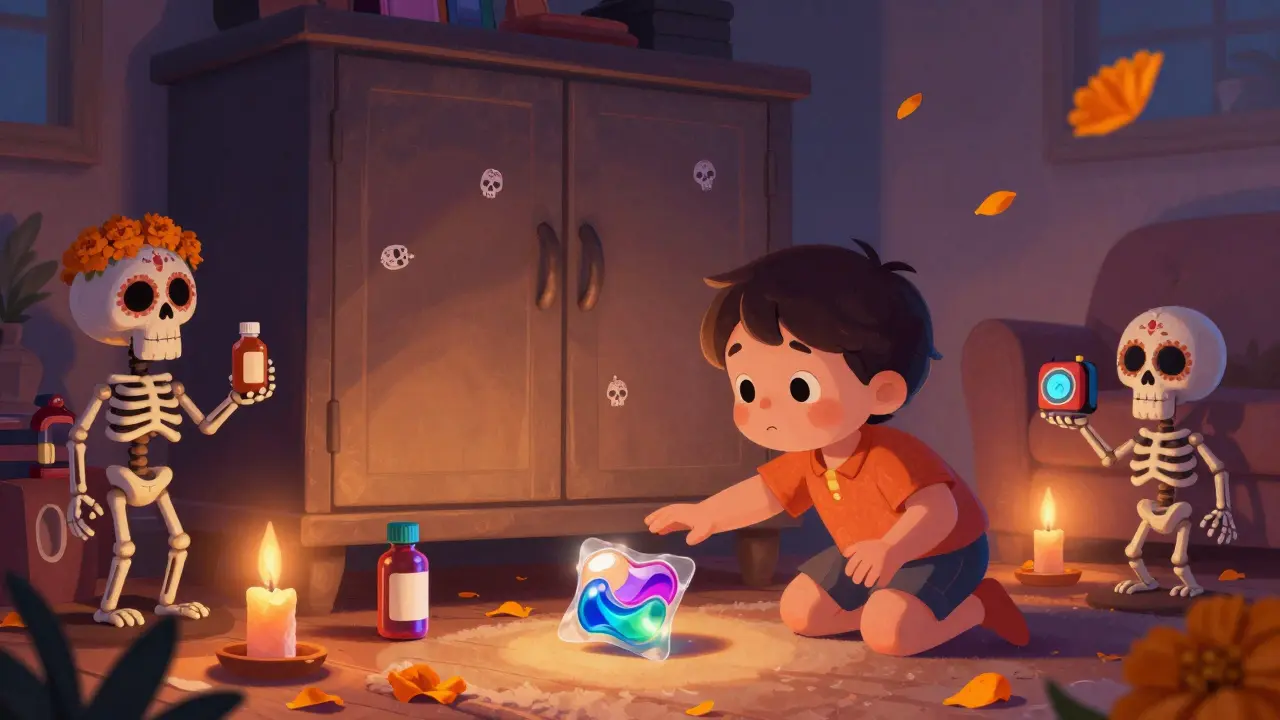
Every year, over 50,000 children under six in the U.S. end up in emergency rooms because they swallowed something they shouldn’t have. Most of these aren’t accidents in the traditional sense-they’re exploratory ingestions. Babies and toddlers don’t mean to poison themselves. They’re just curious. They grab what’s within reach, put it in their mouths, and that’s it. No malice. No rebellion. Just development.
This isn’t rare. It’s predictable. And it’s preventable.
Why Toddlers Are at Highest Risk
Children between 1 and 4 years old are the most vulnerable. That’s when crawling turns into walking, when fingers become tools for discovery, and when everything-medication, cleaner, vitamins, even that glittery lipstick on the bathroom counter-looks like food. Their brains haven’t learned the difference between “yummy” and “dangerous.”
Research shows 75% of poisonings in this age group happen because of normal developmental behavior. Boys are slightly more likely to be affected, and kids with hyperactive temperaments are at higher risk. But the biggest factor? Access.
Most of these incidents happen at home. Not in a stranger’s house. Not in a daycare. Right where you feel safest. And often, it’s something you didn’t think was a threat.
What’s Most Dangerous? It’s Not What You Think
You might assume it’s cleaning products or pills. And yes, those are top culprits. But here’s what’s actually causing the most harm:
- Liquid medications-like cough syrup or acetaminophen-are 69% more likely to cause injury than pills. Why? They’re sweet, easy to swallow, and don’t burn the throat. Kids don’t stop after one sip.
- Button batteries-found in remotes, toys, and scales-can burn through tissue in as little as 15 minutes. Eighty-five percent of severe cases happen in kids under four.
- Liquid nicotine refills-for e-cigarettes-are now a major threat. Poison control calls for these jumped 1,500% between 2012 and 2020. They look like juice boxes. They smell like candy.
- Single-dose laundry pods-bright, colorful, and soft-are still a problem, even after industry changes. Kids bite into them thinking they’re toys or gum.
- Cannabis edibles-especially in states where marijuana is legal-are becoming more common. These look like regular candy, but one piece can send a toddler to the ICU.
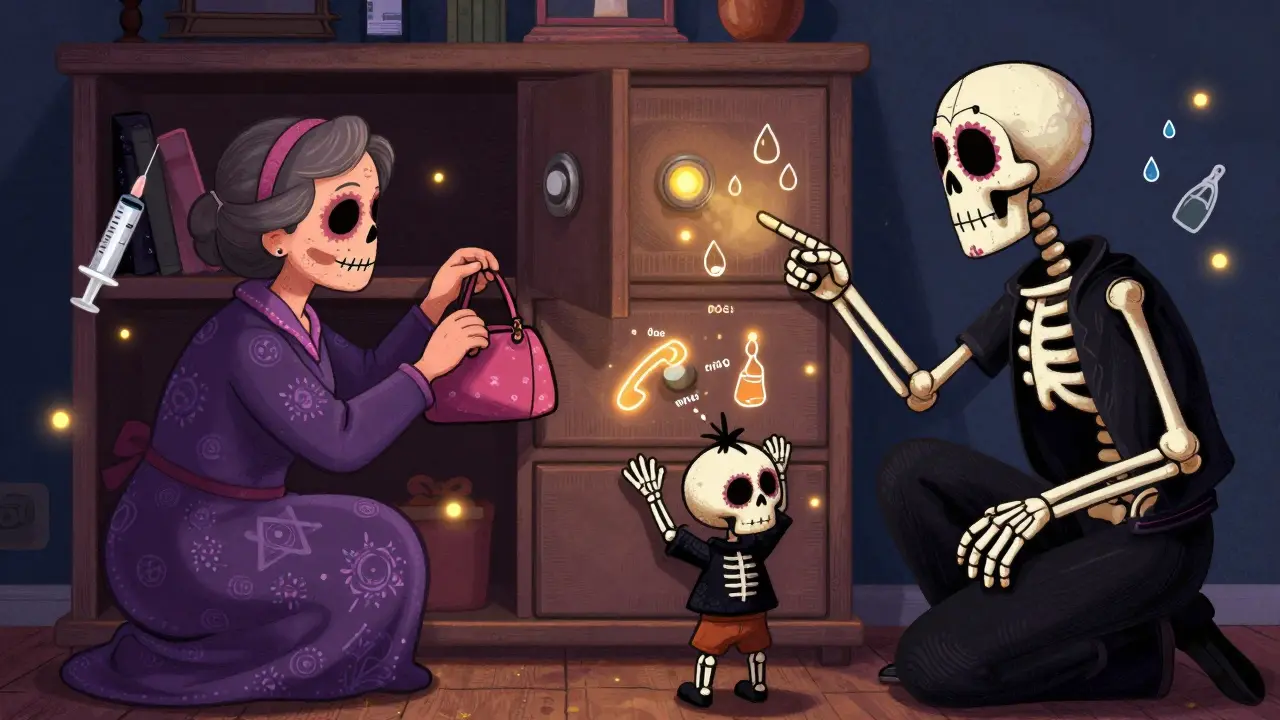
And here’s the kicker: 22% of poisoning cases happen when visitors-grandparents, babysitters, friends-leave their bags or purses on the floor. Medications, patches, or vape pens inside those bags become easy targets.
Storage: The #1 Line of Defense
Child-resistant packaging isn’t foolproof. It’s designed to slow kids down-not stop them. The American Academy of Pediatrics says: “Child-resistant does not mean child-proof.”
So what actually works?
- Lock everything up. Use cabinets with locks, and install them at least 1.5 meters (5 feet) off the ground. Studies show this blocks 82% of access attempts by kids under four.
- Keep meds and cleaners in separate cabinets. Mixing them with food or dishes causes confusion. One study found this simple step cuts confusion-related ingestions by 37%.
- Never leave products in original containers. If you transfer pills to a pill organizer, keep the original bottle locked away. Kids recognize packaging-even if the label is gone.
- Store bags and coats away from the floor. Visitors don’t think to hide their meds. You have to do it for them.
- Use bittering agents. Many household cleaners now contain denatonium benzoate-the bitterest substance known to humans. It reduces multiple swallows by 68%. But it won’t stop a single fatal dose. So don’t rely on it alone.
Medication Mistakes Parents Make (And How to Fix Them)
One of the biggest causes of overdose isn’t access-it’s dosing.
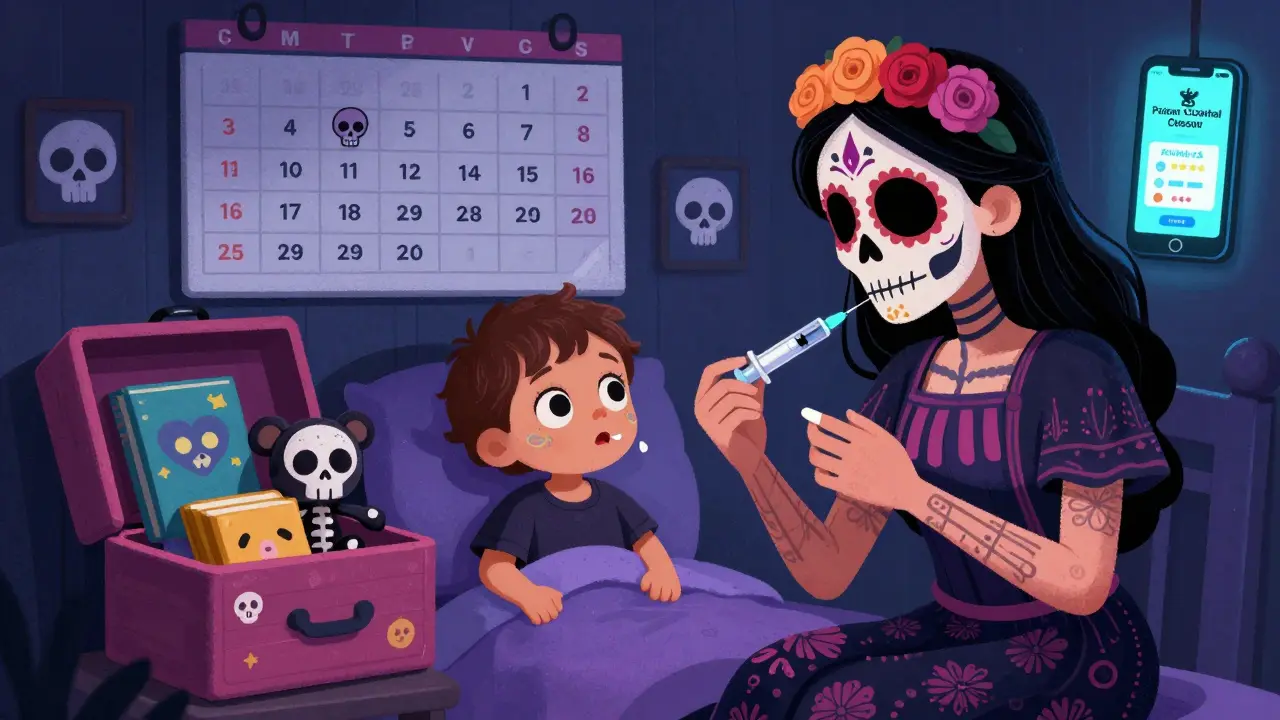
A 2021 study in Pediatrics found that 76% of parents made errors when using kitchen spoons to give medicine. Only 12% made mistakes when using the dosing cup or syringe that came with the bottle.
Here’s what to do:
- Always use the tool that came with the medicine. Not a spoon. Not a cap. Not a dropper from another bottle.
- Double-check the dose. Liquid formulas change by age and weight. Don’t guess. Don’t use “a teaspoon.”
- Teach-back method. After your pediatrician shows you how to dose, have them watch you do it. Studies show this boosts accuracy from 47% to 82%.
- Don’t use medicine as a bribe. Saying “This is candy” or “It tastes good” teaches kids to associate medicine with reward.
What to Do When Something’s Swallowed
Don’t wait. Don’t call your pediatrician first. Don’t try to make them throw up.
Call poison control immediately: 1-800-222-1222.
Why? Because 78% of positive outcomes happen when help is called within 30 minutes. Poison control centers have medical toxicologists on standby 24/7. They’ll tell you exactly what to do-whether it’s watching, giving water, or rushing to the ER.
And don’t rely on apps or Google. Even the best online info can be outdated or wrong. Poison control gives you real-time, expert advice based on what was swallowed, how much, and when.
Download the Poison Control app. It’s rated 4.7 stars. 89% of users say they found help within 90 seconds of a suspected exposure.
When to Start Prevention-Before They Even Crawl
Most parents wait until their baby starts walking. That’s too late.
The American Academy of Pediatrics recommends starting safety checks at the 9-month well-child visit-three to four months before crawling typically begins. That’s when you should:
- Install cabinet locks
- Move all meds and cleaners out of reach
- Remove all accessible purses and bags
- Check outlets, windows, and cords
And don’t stop there. Kids hit new milestones every few months. Pulling up. Walking. Climbing. Each one opens new access points. The CDC says check your home at child’s-eye level every three months. Get down on the floor. Look around. What can they reach now that they couldn’t before?
The Biggest Challenge: Consistency Across Caregivers
Here’s the truth most parents won’t admit: You’re not the only one caring for your child.
63% of households report safety lapses when care switches between parents, grandparents, or babysitters. Grandparents might leave pills on the nightstand. Babysitters might leave their vape pen on the coffee table. Relatives might think, “It’s just one pill-it won’t hurt.”
Here’s how to fix it:
- Have a quick conversation with every caregiver: “This is what we do at home.”
- Give them a printed list: “Keep meds locked. Never leave bags on the floor. Call 1-800-222-1222 if anything’s swallowed.”
- Keep a spare set of child-resistant caps and dosing tools at grandma’s house.
- Don’t assume they know. Assume they don’t.
What’s Changing? The Future of Prevention
There’s good news. Prevention is getting smarter.
- The FDA is considering requiring bittering agents in all e-liquid nicotine products by 2025.
- The WHO is pushing for unit-dose packaging for all liquid medications by 2027-which could prevent 15,000 ER visits a year in the U.S. alone.
- Smart locks on cabinets are growing fast. Sales are up 200% since 2020. But they cost $149 each. Not affordable for everyone.
- Laundry pods are safer now, thanks to opaque packaging and double-latch lids. Incidents dropped 39% after changes.
But technology alone won’t save kids. It’s the combination-locked cabinets, proper dosing, caregiver education, and quick access to poison control-that works.
Final Thought: You’re Not Failing. You’re Human.
Parents feel guilty after a near-miss. “I should’ve been watching.” “I forgot to lock the cabinet.” “It was just for a second.”
Here’s what you need to hear: You’re not alone. A 2022 survey found that 68% of parents admit to leaving meds out during busy mornings. 42% have had a near-miss.
It’s not about perfection. It’s about systems. Locks. Labels. Calls to poison control. Consistency. Even if you mess up once, the next time you lock the cabinet, you’ve made the system stronger.
Preventing pediatric poisoning isn’t about being a perfect parent. It’s about building habits that protect your child-even when you’re tired, distracted, or overwhelmed.
Start today. Lock one cabinet. Keep the poison control number saved in your phone. Use the right dosing tool. And remember: Your child isn’t trying to hurt themselves. They’re just learning. Your job is to make sure their curiosity doesn’t cost them their health.



There are 8 Comments
Anjula Jyala
Exploratory ingestion is a misnomer. It's systemic negligence wrapped in developmental euphemisms. Child-resistant packaging is a placebo. The real intervention is behavioral architecture: locked cabinets at 1.5m, bittering agents mandated by federal law, and zero tolerance for caregiver complacency. No more excuses. No more "I forgot." If your child can reach it, you failed. Period.
Andrew Clausen
The article cites a 2021 Pediatrics study on kitchen spoons but fails to mention that 89% of parents don't even own a dosing syringe. The real problem isn't education-it's poverty. Low-income families can't afford childproof locks, bittering agents, or smart cabinets. Stop blaming parents. Fix the infrastructure. Mandate free distribution of safety kits through WIC and Medicaid.
Kathy McDaniel
i just locked my meds in the bathroom cabinet last night and felt like a hero 😅 i used to leave my vitamins on the counter because "they're just gummies" but then my niece almost ate three of them. whoops. now everything's in the high cabinet with the weird lock. it's a pain but worth it. also i downloaded the poison control app and saved it as "EMERGENCY" on my home screen. small wins, right?
Paul Taylor
Let me tell you something about caregiver consistency because I've been on both sides of this. My sister-in-law thinks leaving her nicotine pod on the coffee table is fine because "it's just one." But then she brings it over when she babysits and my 2-year-old grabs it. It's not malice. It's ignorance. And it's everywhere. You have to treat this like a safety protocol. Not a suggestion. Not a recommendation. A protocol. Print it. Hand it out. Have a 90-second conversation before every visit. Say it like you mean it. "If you leave your purse on the floor, someone's gonna die." It sounds dramatic but it's true. And if you're not willing to say it, you're part of the problem.
astrid cook
I can't believe people still think "child-resistant" means anything. My cousin's baby swallowed a button battery from a remote that was "just on the table for a second." She had to have her esophagus reconstructed. And now the family won't even talk to her. It's not just about locks. It's about shame. It's about guilt. It's about living with the fact that you didn't do enough. And the worst part? You'll never know if you did enough until it's too late.
April Williams
If you're not locking your meds, you're a danger to every child in your vicinity. Period. End of story. No one cares if you're tired. No one cares if you're busy. Your child isn't a guest in your home-they're your responsibility. And if you think it's okay to leave your vape pen or your antidepressants within reach, you're not just negligent-you're morally bankrupt. Lock it. Or get out of parenting.
Harry Henderson
Stop waiting for the FDA to fix this. Stop waiting for smart locks to get cheaper. Stop waiting for someone else to do it. Get up. Right now. Go to the nearest hardware store. Buy a $12 cabinet lock. Install it. Today. Don't wait until tomorrow. Don't wait until your child is in the ER. Do it now. Your child's life is not a future project. It's a now thing. Go. Lock. It. Done.
suhail ahmed
Back home in Kerala, we don't have fancy locks. But we have something better-community. Everyone knows everyone's kids. If a bottle's out on the counter, someone says something. Auntie notices. Uncle reminds. Grandma yells. No one feels alone in this. We don't wait for apps or FDA rules. We just watch out. Maybe we don't need more tech. Maybe we just need to stop treating parenting like a solo sport.
Write a comment
Your email address will not be published. Required fields are marked *