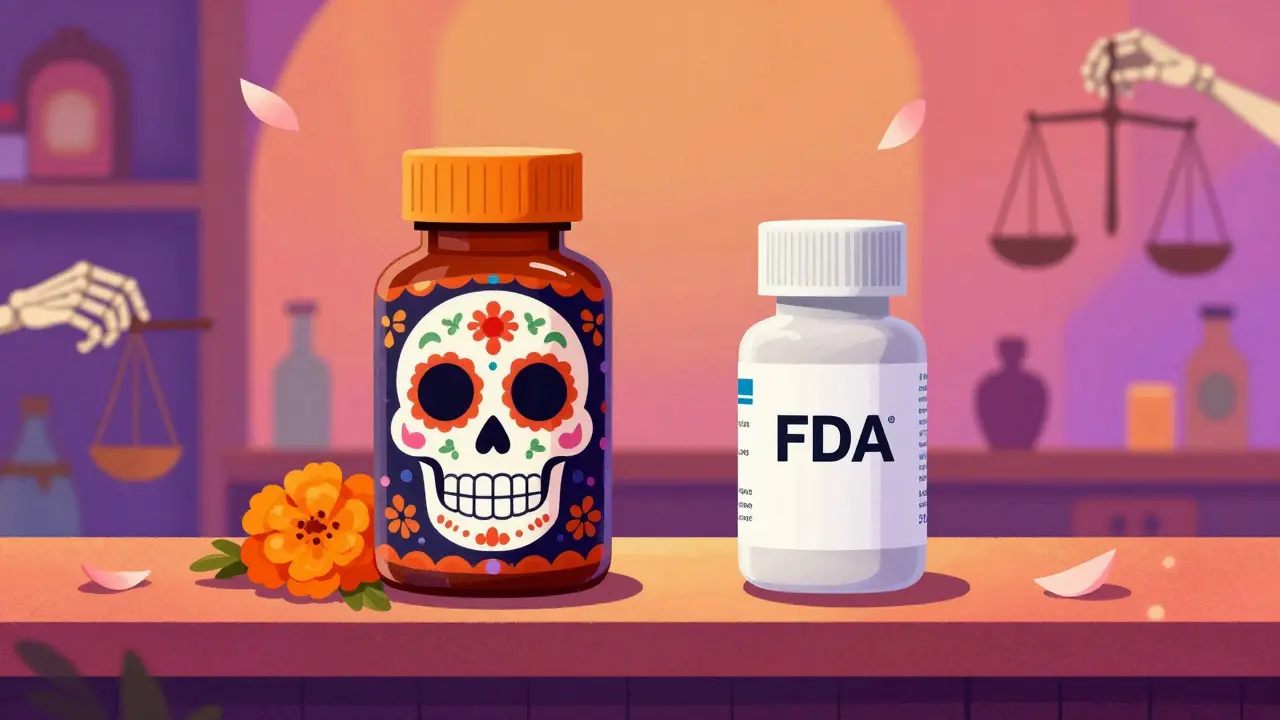
When you pick up a prescription at the pharmacy, there is a 90% chance it is not the original brand-name drug. It is a generic version. But how do we know these cheaper alternatives are safe? The answer lies in the rigorous regulatory authority of the U.S. FDA, specifically its role in generic drug approval through the Abbreviated New Drug Application (ANDA) pathway. This system ensures that while you save money, you do not sacrifice health.
The Legal Backbone: Hatch-Waxman and the ANDA Pathway
To understand how generics get approved, you have to look back to 1984. Before then, getting a new drug to market was incredibly expensive, costing billions. To encourage competition without repeating costly clinical trials for every single copycat pill, Congress passed the Hatch-Waxman Act (officially the Drug Price Competition and Patent Term Restoration Act). This law created Section 505(j) of the Federal Food, Drug, and Cosmetic Act, which established the Abbreviated New Drug Application (ANDA) pathway.
Instead of proving a drug works from scratch, generic manufacturers use the ANDA to prove their product is therapeutically equivalent to an already-approved brand-name drug, known as the Reference Listed Drug (RLD). The FDA’s Office of Generic Drugs (OGD), part of the Center for Drug Evaluation and Research (CDER), manages this process. They don’t ask for new safety or efficacy data from human trials unless necessary. Instead, they demand scientific proof that the generic behaves exactly like the brand name in your body.
What Exactly Must a Generic Prove?
You might think "generic" means "good enough." In FDA terms, it means "identical in action." Under regulations found in 21 CFR 314.94, an approved ANDA must meet strict criteria:
- Active Ingredients: The generic must contain the exact same active chemical compound as the brand name.
- Strength and Dosage Form: If the brand is a 500mg tablet, the generic must be a 500mg tablet. It cannot be a capsule or a liquid unless specifically justified.
- Route of Administration: Both drugs must enter the body the same way (e.g., both swallowed orally).
- Bioequivalence: This is the big one. The generic must show it enters the bloodstream at the same rate and to the same extent as the brand name.
Inactive ingredients-like dyes, fillers, or binders-can differ. This is why some people report different side effects with generics; it’s often due to allergies to specific fillers, not the main drug itself. However, the FDA requires that any difference in inactive ingredients does not affect the drug’s safety or effectiveness.
The Bioequivalence Test: The Core of Approval
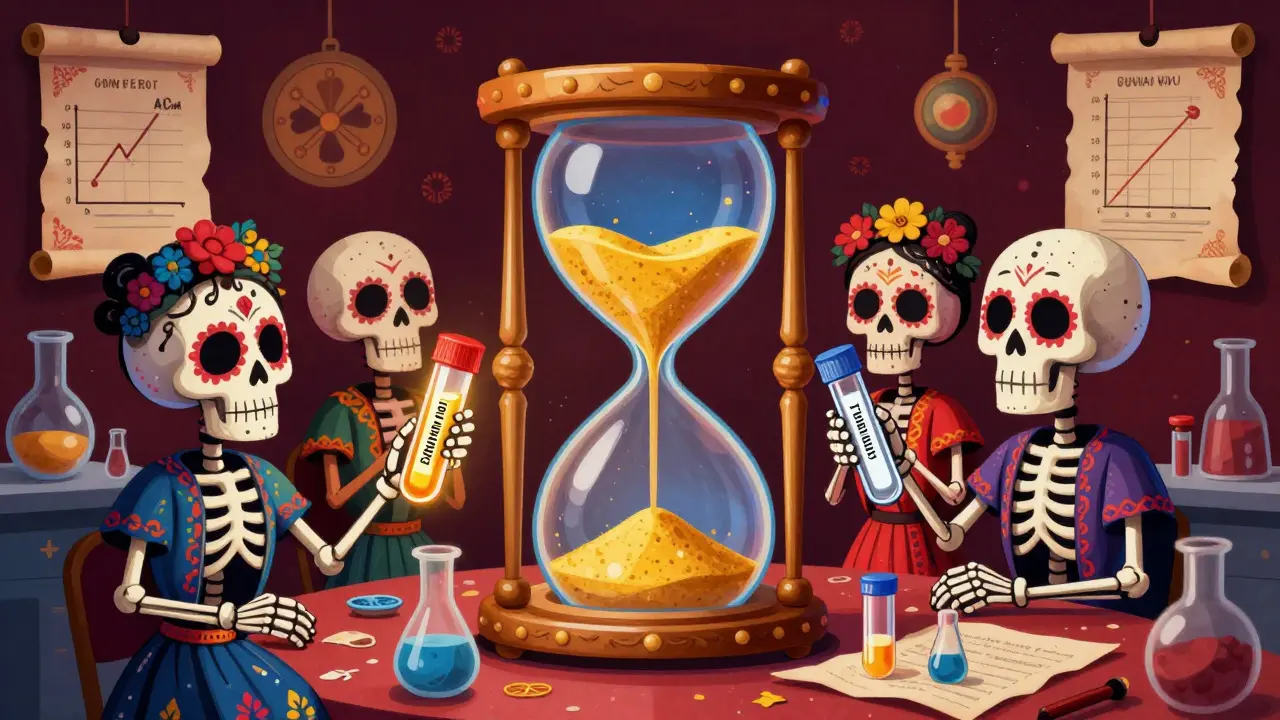
How does the FDA verify bioequivalence? They rely on pharmacokinetic studies. Typically, researchers recruit 24 to 36 healthy volunteers. Half take the brand-name drug, and half take the generic. Blood samples are taken over time to measure two key metrics: AUC (Area Under the Curve, representing total exposure) and Cmax (maximum concentration).
The math is strict. The 90% confidence interval for the ratio of the generic’s performance compared to the brand must fall between 80.00% and 125.00%. If the generic absorbs too slowly or too quickly, it fails. For complex drugs like inhalers or topical creams, where blood tests aren't always accurate, the FDA uses specialized methodologies, including clinical endpoint studies, to ensure equivalence.
| Feature | New Drug Application (NDA) (Brand Name) |
Abbreviated New Drug Application (ANDA) (Generic) |
|---|---|---|
| Development Cost | ~$2.6 billion | $2.4 - $6.3 million |
| Time to Market | 10-15 years | 3-4 years |
| Clinical Trials Required | Yes (Phase I-III) | No (Bioequivalence only) |
| Regulatory Authority | FDA CDER | FDA OGD |
The Review Timeline and GDUFA Standards
The FDA doesn’t just review applications whenever they feel like it. Thanks to the Generic Drug User Fee Amendments (GDUFA III), the agency operates under strict timelines. When you submit an ANDA, it first goes through a Filing Review. If the submission is incomplete-which happens to about 15-25% of applications-it gets a Refuse-to-Receive (RTR) letter and sent back for fixes.
If it passes filing, it moves to Substantive Review. The FDA has set Target Action Dates (TADs):
- Standard Applications: 10 months.
- Priority Reviews: 8 months (for drugs in shortage or first-time generics).
In fiscal year 2023, the FDA approved 1,256 ANDAs. While this is a high volume, backlogs still exist. As of late 2022, Senator Bernie Sanders’ committee reported over 1,800 pending ANDAs, with some waiting more than three years. To combat this, the FDA launched a pilot program in October 2025 to prioritize reviews for companies manufacturing in the U.S., reducing TADs by 30% for qualifying apps.
Quality Control: CGMP and Inspections
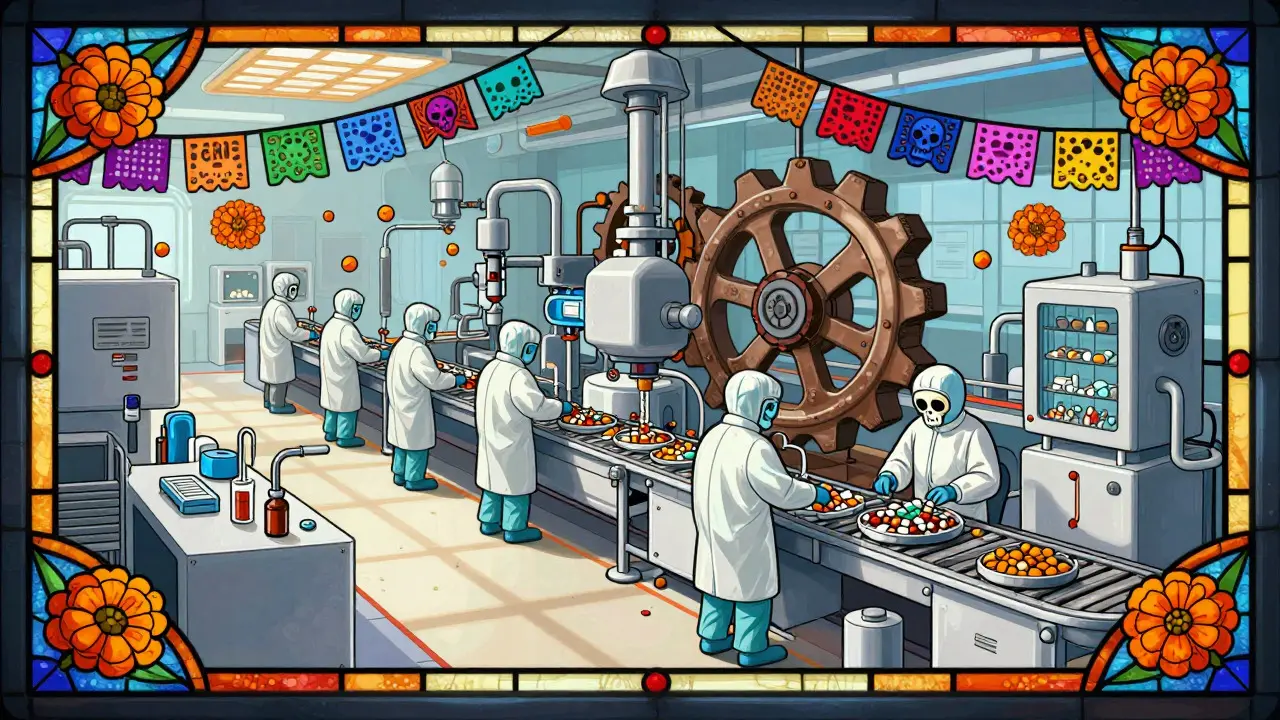
Approval isn’t just about the paperwork. It’s about the factory. Generic manufacturers must comply with Current Good Manufacturing Practice (CGMP) regulations (21 CFR parts 210 and 211). These rules cover everything from water purity to employee hygiene and equipment calibration.
The FDA inspects facilities rigorously. In recent years, inspection rates for generic drug facilities averaged around 82.7% annually. If a facility fails inspection, the FDA can issue warning letters, seize products, or even shut down production. This is crucial because 78% of active pharmaceutical ingredients (APIs) for U.S. generics come from outside the country, mostly from India and China. The FDA relies on these inspections to ensure global supply chains meet American standards.
Why This Matters to You
The impact of this regulatory framework is massive. Generics make up 9 out of 10 prescriptions filled in the U.S., but they account for only 23% of spending. According to the Generic Pharmaceutical Association, this saves consumers $132.6 billion annually. Without the FDA’s strict ANDA process, these savings would come at the cost of reliability.
Patient confidence is high. A 2023 survey showed 78.4% of patients trust FDA-approved generics. However, skepticism remains. Some patients report feeling less effective results. Often, this is the "nocebo effect"-expecting a worse outcome because the pill looks different. In cases where adverse events were reported, FDA investigations found that in 92.3% of cases, the issue was disease progression, not the drug itself.
The Future of Generic Approval
The landscape is changing. Complex generics-like extended-release formulations or biologics-are becoming more common. In 2023, nearly 40% of approvals involved complex products. The FDA is investing heavily here, with GDUFA IV negotiations concluding in September 2024, allocating $412 million specifically for complex generics development through 2027.
Technology is also shifting. The FDA is piloting AI-assisted reviews for 12% of ANDAs to speed up processing. They are also integrating real-world evidence into their decision-making, aiming to use post-market data for 25% of complex generic approvals by 2026. As patent cliffs hit major brand-name drugs, expect a surge in first-generic applications, further testing the FDA’s capacity to maintain both speed and safety.
Is a generic drug really the same as the brand name?
Yes, in terms of active ingredients, strength, dosage form, and route of administration. The FDA requires bioequivalence, meaning the generic performs identically in your body. The only differences may be in inactive ingredients like colors or flavors, which rarely affect therapeutic outcome.
How long does it take for the FDA to approve a generic drug?
Under GDUFA III standards, the target action date is 10 months for standard applications and 8 months for priority reviews. However, actual wait times can vary depending on the complexity of the drug and current backlog levels.
What is the ANDA process?
ANDA stands for Abbreviated New Drug Application. It is the regulatory pathway used by generic manufacturers to gain FDA approval. Unlike brand-name drugs, generics do not need to repeat large-scale clinical trials. Instead, they prove their product is bioequivalent to an existing approved drug.
Are generic drugs safer than brand names?
They are equally safe. The FDA applies the same rigorous quality standards, including Good Manufacturing Practices (CGMP), to both generic and brand-name drugs. In fact, because generics face more scrutiny regarding bioequivalence, they undergo specific testing to ensure they match the proven safety profile of the reference drug.
Why do some doctors prefer brand-name drugs?
Sometimes, for narrow therapeutic index drugs (where small changes in dose matter greatly), doctors may prefer brands to avoid variability. Additionally, if a patient has had issues with inactive ingredients in a generic, a doctor might switch them back to the brand. However, for most medications, generics are the recommended first choice.
What is the Hatch-Waxman Act?
Passed in 1984, the Hatch-Waxman Act balanced the interests of innovator and generic drug companies. It allowed generic manufacturers to bypass lengthy clinical trials by proving bioequivalence (via the ANDA pathway) while extending patent life for brand-name drugs to compensate for time lost during FDA review.
Can I choose a brand-name drug if my insurance covers the generic?
Yes, but it will likely cost you more out-of-pocket. Insurance companies strongly incentivize generic use because of the significant cost savings. You can request the brand name, but your pharmacist may need to contact your insurer for authorization, and you may face higher copays.