Supplement Timing Planner
Select the supplements and medications you take regularly. This tool will generate a conflict-free daily schedule based on clinical guidelines.
My Daily Intake:
Select your medications above and click "Generate My Schedule" to see your personalized plan.
You pop your morning pill, wash it down with a glass of orange juice, and grab a calcium-fortified yogurt for breakfast. It sounds like a healthy routine, right? Wrong. You might just be flushing money-and medicine-down the drain. Taking calcium and iron supplements at the same time as certain medications can block their absorption, rendering them useless. This isn't just a minor hiccup; it’s a biological roadblock that affects millions of people who assume "natural" means "safe to mix."
The Battle for Space in Your Gut
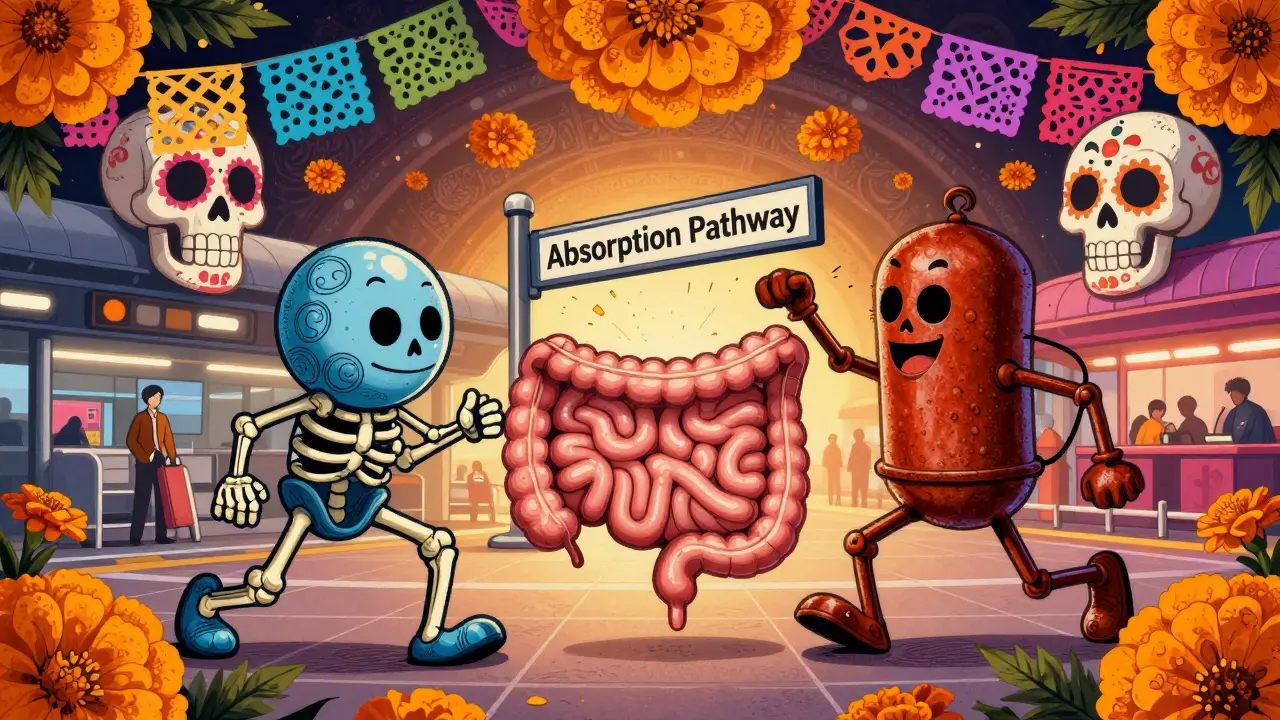
To understand why these interactions happen, you have to look at what’s happening inside your small intestine. Imagine your gut lining is a busy airport terminal, and nutrients and drugs are passengers trying to board specific flights (absorption pathways). Calcium and Iron are both positively charged minerals, known scientifically as cations. When they show up at the same time, they don’t just stand in line; they start fighting for the same boarding gates.
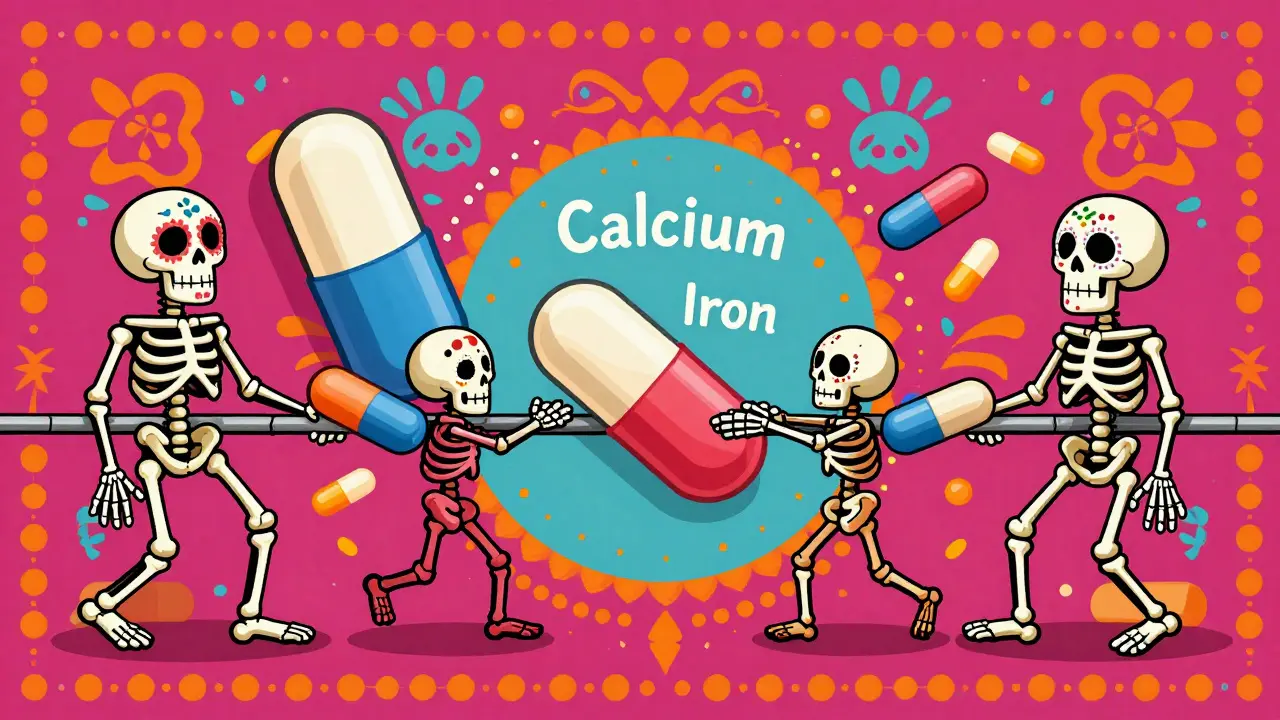
This process is called competitive inhibition. Both minerals rely on similar transport proteins to get from your gut into your bloodstream. If you take a high-dose calcium supplement alongside an iron pill, the calcium crowds out the iron. A landmark study published in the American Journal of Clinical Nutrition by researchers at Kansas University Medical Center demonstrated this clearly. They found that taking 600 mg of calcium with 18 mg of iron reduced iron absorption by nearly half. In some cases, absorption dropped by 62%. That means if you’re relying on that iron pill to treat anemia, you might only be getting a fraction of the dose your body needs.
| Condition | Calcium Dose | Iron Absorption Impact |
|---|---|---|
| Without Food | 600 mg | Reduced by 49-62% |
| With Food | Any significant amount | Significantly inhibited |
| Low Dose (300mg Ca) | 300 mg | No significant inhibition without food |
Antibiotics: The Silent Saboteurs
If mineral-on-mineral competition wasn’t enough, add antibiotics to the mix, and the problem gets worse. Two major classes of antibiotics are particularly sensitive to this interference: fluoroquinolones (like ciprofloxacin) and tetracyclines (like doxycycline). These drugs work by binding to bacteria to stop them from growing. But here’s the catch: calcium, iron, and magnesium can bind to the antibiotic molecules themselves before they ever reach the bacteria.
When this binding happens, it forms a complex that your body cannot absorb. The antibiotic stays in your gut, does nothing to fight your infection, and eventually leaves your system. Pharmacist Alesiani notes that patients often fail to clear infections because they unknowingly neutralize their meds with supplements. For example, if you have a urinary tract infection and take ciprofloxacin with a multivitamin containing calcium, you might feel no better after three days. The drug was never actually working.
The rule of thumb here is strict separation. Most guidelines suggest taking tetracycline antibiotics at least two hours before or four hours after any iron or calcium supplement. Fluoroquinolones usually require a two-hour window on either side. Ignoring this timing can lead to prolonged illness, increased antibiotic resistance, and unnecessary follow-up prescriptions.
Thyroid Meds and Stomach Acid
Your thyroid hormone replacement medication, typically levothyroxine, is another victim of poor timing. Thyroid hormones are delicate and require an acidic environment in the stomach to break down properly. Calcium supplements, especially those based on calcium carbonate (the active ingredient in Tums), act as antacids. They raise the pH level of your stomach, making it less acidic.
When stomach acid drops, levothyroxine doesn’t dissolve well. Even if it does dissolve, calcium can bind directly to the hormone, preventing it from entering your bloodstream. Dr. Wolf from University Hospitals Cleveland Medical Center warns that this interaction is common and often goes unnoticed until blood tests reveal uncontrolled thyroid levels. Patients might experience fatigue, weight gain, or brain fog, blaming aging or stress, when the real culprit is a calcium pill taken with their morning coffee and thyroid med.
Similarly, medications used to treat osteoporosis, such as bisphosphonates (e.g., alendronate), have very specific absorption requirements. These drugs must be taken on an empty stomach with plain water. Any food, beverage, or supplement-including calcium-can reduce their absorption by up to 90%. Taking bisphosphonates with a calcium-rich breakfast essentially cancels out the treatment intended to strengthen your bones.
The Iron Paradox: How to Take It Right
Iron is notoriously difficult to absorb, even without competitors. Non-heme iron (the type found in plants and most supplements) requires stomach acid to become soluble. This is why heartburn medications like proton pump inhibitors (omeprazole) and H2 blockers (famotidine) can inadvertently cause iron deficiency over time. By reducing acid production, they create an environment where iron simply passes through you.
To maximize iron absorption, experts recommend taking it on an empty stomach. However, about 30-50% of people experience nausea, cramps, or constipation when doing so. If you need food to tolerate it, choose wisely. Avoid dairy, tea, coffee, and whole grains, as these contain calcium, tannins, and phytates that block iron. Instead, pair your iron with vitamin C. Studies show that vitamin C can boost iron absorption by up to 300%. A splash of orange juice or a vitamin C tablet turns your iron pill from a passive passenger into an efficient traveler.

Practical Timing Protocols
So, how do you manage all this without needing a degree in pharmacology? The key is spacing. You don’t need to avoid these substances entirely; you just need to separate them. Here is a simple schedule that works for most people:
- Morning (Empty Stomach): Take your thyroid medication (levothyroxine) and wait 30-60 minutes before eating. If you need iron, take it now with vitamin C, but ensure it’s at least 2-4 hours away from any calcium.
- Breakfast/Lunch: If you take antibiotics, space them 2-4 hours apart from any supplements. If you eat a meal rich in calcium (dairy, fortified cereals), avoid taking iron pills during or immediately after this meal.
- Evening/Dinner: This is the best time for calcium supplements. Taking calcium with food improves its absorption and minimizes stomach upset. It also ensures maximum distance from morning iron or thyroid doses.
Remember, "with meals" usually means "within 30 minutes of eating." So, if you take calcium with dinner, don’t take iron until late evening or the next morning. Consistency matters more than perfection, but keeping a 4-6 hour gap between competing minerals is the gold standard.
Safety and Side Effects
Beyond effectiveness, there are safety concerns. Iron overdose is a leading cause of fatal poisoning in young children. Always keep supplements locked away. For adults, excessive iron can cause gastrointestinal bleeding, which may present as black, tarry stools. While dark stools are a normal side effect of iron supplements, red streaks or severe pain require immediate medical attention.
Liquid iron supplements can stain teeth. Use a straw and rinse your mouth afterward. Baking soda or hydrogen peroxide can help remove stains if they occur. Meanwhile, long-term use of high-dose calcium without proper timing can contribute to kidney stones or cardiovascular issues in susceptible individuals. Balance is everything.
Can I take calcium and iron together if I’m not on other medications?
No, you should still separate them. Calcium significantly inhibits iron absorption regardless of other medications. Taking them together reduces the effectiveness of both, potentially leading to deficiencies over time. Aim for at least a 2-4 hour gap between doses.
How long should I wait after taking antibiotics before having dairy?
For fluoroquinolones (like ciprofloxacin) and tetracyclines, wait at least 2 hours before or 4 hours after taking the antibiotic. Dairy products contain calcium, which binds to these antibiotics and prevents them from working effectively.
Does vitamin C really help with iron absorption?
Yes. Vitamin C converts non-heme iron into a form that is easier for the body to absorb. Research shows it can increase absorption rates by up to 300%. Drinking orange juice or taking a vitamin C supplement with your iron pill is highly recommended.
Why shouldn’t I take my thyroid medication with breakfast?
Levothyroxine requires an acidic stomach environment for optimal absorption. Food, coffee, and especially calcium-rich foods raise stomach pH and bind to the hormone, drastically reducing its uptake. Taking it on an empty stomach, waiting 30-60 minutes before eating, ensures you get the full therapeutic dose.
What are the signs that my supplements aren’t absorbing properly?
Symptoms vary by nutrient. For iron, look for persistent fatigue, pale skin, shortness of breath, or brittle nails despite supplementation. For calcium/vitamin D, watch for muscle cramps or bone pain. Regular blood tests are the most reliable way to check absorption levels and adjust dosages accordingly.
Managing your health isn’t just about what you take; it’s about when you take it. By respecting the biological timelines of your body, you ensure that every pill and powder works as hard as it should. Talk to your pharmacist or doctor to create a personalized schedule that fits your lifestyle and medication list. Your future self will thank you.





There are 8 Comments
Lee Coates
Haha, look at us trying to outsmart our own biology like we’re some kind of genius scientists instead of just meat sacks waiting to expire. You think you’re so smart taking your little pills? Newsflash: your gut doesn’t care about your schedule, it’s a chaotic mess of acids and enzymes that wants to eat everything you throw at it. And don’t get me started on the ‘natural’ crowd who think orange juice fixes everything while ignoring that they’re basically flushing their money down the toilet because they didn’t wait two hours. Typical American laziness disguised as self-care. Keep popping those pills, folks, maybe one day you’ll figure out that reading the label isn’t optional. :)
Miranda River
oh my god everyone stop panicking its not like the world is ending if you take your calcium with your coffee lol but seriously why do people always assume they know better than the instructions?? i mean sure science says space them out but have you tried just vibing with it?? sometimes the universe wants you to absorb less iron and thats okay too right?? also tannins are cool dont @ me. anyway i read somewhere that magnesium blocks stuff too so maybe just eat dirt and be done with it. whatever helps i guess. :P
Ganesh Honikol
I truly appreciate the detailed breakdown provided here, as it serves as an excellent reminder of how interconnected our bodily systems are and how easily we can disrupt their delicate balance through seemingly innocuous daily habits. It is wonderful to see such clarity on the topic of competitive inhibition, which often confuses many individuals who simply want to feel healthy but lack the technical knowledge to understand why their efforts seem futile. Please remember that consistency is key, and while it may feel overwhelming to manage multiple medications and supplements, creating a simple routine can make all the difference in achieving your health goals. You are doing great by seeking out this information, and I encourage you to share this with friends or family members who might benefit from understanding the importance of timing in medication absorption. Together, we can support each other in making informed decisions that promote long-term well-being and vitality. Keep up the good work! :)
Callie Skipper
i mean yeah its kinda obvious if you think about it but i guess ppl forget. i used to take my thyroid meds with breakfast and wondered why i felt like crap all day turns out food blocks it lol. now i just wake up early drink water take pill wait an hour then eat. feels weird at first but gets easier. also vitamin c with iron is legit best tip ever makes a huge diff.
AnneKatherine Stiekes
it is interesting how small changes in timing can have such big effects on our health. i think many people struggle with this because life is busy and remembering all these rules seems impossible. perhaps we could find a middle ground where we prioritize the most critical separations like antibiotics and minerals while being more flexible with others. communication between doctors and patients is key here so that everyone feels supported rather than overwhelmed by conflicting advice. let us try to be kind to ourselves as we navigate these complexities together.
Emily Barnhill
Listen up because I am going to say this once and I need you to actually hear me. Your health is YOUR responsibility and no one else is going to hold your hand through this except yourself. If you are taking levothyroxine and eating dairy within an hour you are literally sabotaging your own progress and blaming the doctor is pathetic. Stop making excuses and start following the basic guidelines provided by professionals who actually know what they are talking about. It is not hard to set an alarm on your phone. It is not hard to buy a cheap pill organizer. Do it for yourself because no one cares more about your bloodwork than you should. Get your act together.
Christina S.
You guys are missing the forest for the trees here. Yes timing matters but stress also affects absorption so chill out a bit. I found that taking my iron at night with a little bit of food helped my stomach settle down and I still got decent absorption levels according to my last blood test. Everyone is different though so experiment safely under supervision. Don't let perfection be the enemy of good enough. Just keep moving forward and adjust as needed. You've got this!
Hailey Dunston
Oh please, spare me the simplistic reductionism of human physiology to mere 'boarding gates' and 'flights'. Such pedestrian analogies fail to capture the exquisite complexity of molecular transport mechanisms governed by intricate allosteric regulations and pH-dependent solubility profiles. While the article attempts to educate the masses, it does so with a condescending tone that assumes a baseline intellectual deficiency in its readership. Moreover, the suggestion that one can simply 'space out' supplements ignores the nuanced interplay of circadian rhythms on enzyme activity and transporter expression. One must question whether the average consumer possesses the cognitive capacity to adhere to such rigid protocols without professional oversight. Perhaps the real issue lies not in the patient's inability to comply, but in the pharmaceutical industry's design of compounds that require such precarious administration windows. A true understanding requires delving into the biochemistry, not relying on pop-science summaries. :)
Write a comment
Your email address will not be published. Required fields are marked *