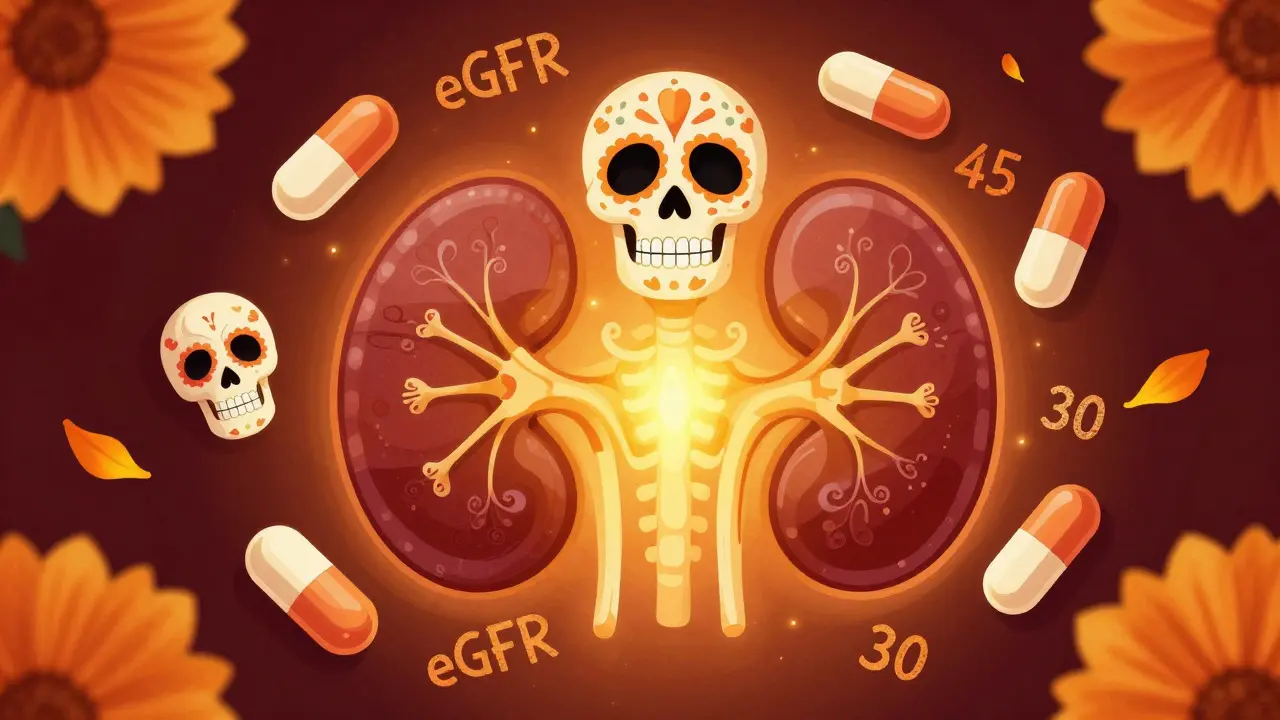
Metformin Dose Calculator
Metformin Safety Calculator
Enter your current eGFR value to determine your maximum safe metformin dose and monitoring schedule.
Metformin is the most common starting medicine for type 2 diabetes. It’s cheap, effective, and lowers the risk of heart attacks. But for years, doctors stopped prescribing it when patients had even mild kidney problems. That changed in 2016 - and many people still don’t know why. If you’re on metformin and your kidney numbers have changed, you might be unnecessarily stopping a drug that could keep you healthier longer.
Why Kidney Function Matters for Metformin
Metformin doesn’t get broken down by the liver. It leaves your body through your kidneys. That means if your kidneys aren’t working well, the drug builds up. High levels can, in rare cases, lead to lactic acidosis - a serious condition where acid builds up in your blood. But here’s the key: metformin doesn’t damage your kidneys. It just needs them to clear it out.
For decades, doctors used serum creatinine levels to decide if someone could take metformin. If your creatinine was above 1.4 or 1.5, you were told to stop. But creatinine alone doesn’t tell the full story. It can be normal in older adults or people with low muscle mass, even if their kidneys are failing. That’s why the FDA switched to using eGFR - estimated glomerular filtration rate - in 2016. eGFR gives a much clearer picture of how well your kidneys are filtering waste.
Current Dosing Rules Based on eGFR
Today, guidelines are based on eGFR numbers measured in mL/min/1.73 m². These aren’t arbitrary. They’re backed by years of studies tracking what doses are safe at each level of kidney function.
- eGFR 60 or higher: You can take the full dose - up to 2,550 mg per day. Check your kidney function every 6 to 12 months.
- eGFR 45-59: Max dose drops to 2,000 mg per day. Monitor every 3 to 6 months.
- eGFR 30-44: Max dose is 1,000 mg per day. Check every 3 months.
- eGFR below 30: Metformin is generally not recommended. Some specialists may use 500 mg daily in very stable patients, but only with close supervision.
These numbers aren’t just suggestions. They’re safety thresholds. A 2022 case report in the Renal Fellow Network described a 76-year-old man who kept taking 2,000 mg daily despite an eGFR of 27. He ended up with a blood pH of 6.98 and lactate levels over 12 mmol/L - life-threatening levels. He survived, but only after intensive care.
When to Hold Metformin - Contrast Scans and Illness
Your kidneys can take a temporary hit. Things like severe dehydration, infections, or heart failure can cause your eGFR to drop suddenly. That’s when you need to pause metformin - even if your usual number is in the safe range.
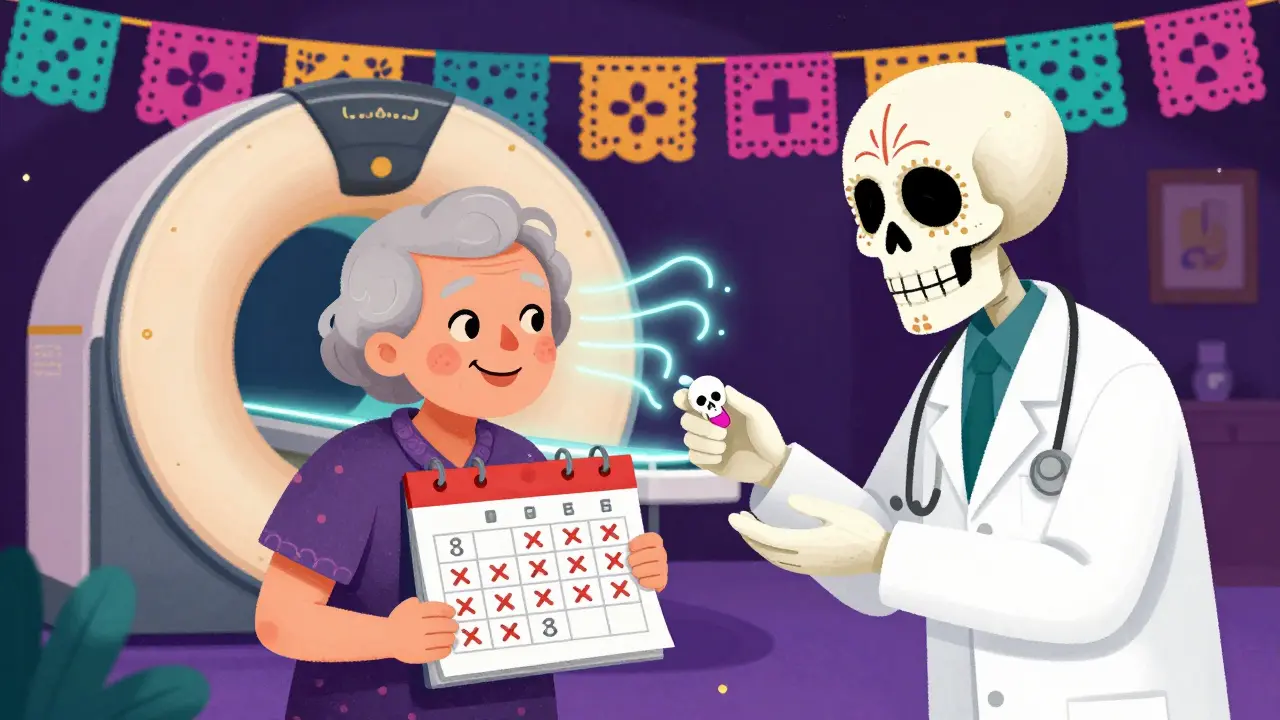
One major trigger is iodinated contrast dye used in CT scans or angiograms. If your eGFR is below 60, you should stop metformin 48 hours before the scan and not restart until your kidney function is checked again and confirmed stable. The National Kidney Foundation recommends this for everyone in that range, regardless of age or other conditions.
Same goes for serious illness. If you’re hospitalized with pneumonia, sepsis, or a heart attack, your doctor should hold metformin until you’re stable. It’s not about the drug itself - it’s about your body being under stress and kidneys not working at full capacity.
What About Dialysis Patients?
People on dialysis were once completely excluded from metformin use. But newer data shows it can be safe with careful dosing.
- Peritoneal dialysis: 250 mg once daily is common.
- Hemodialysis: Take 500 mg after each session. The dialysis machine removes metformin, so you need to replace it afterward.
These aren’t guesses. They’re based on how much metformin is cleared during dialysis. A 2023 review in RxFiles confirmed these regimens keep plasma levels safely below 5 mg/L - the threshold where lactic acidosis risk becomes measurable.
Common Myths That Put Patients at Risk
One of the biggest problems isn’t lack of knowledge - it’s misinformation.
A 2022 chart review from the Cleveland Clinic found that 22% of patients with eGFR between 30 and 59 had metformin stopped - even though they were stable and had no signs of acute kidney injury. Why? Because patients and even some providers believed metformin was hurting their kidneys.
It’s not. Metformin is not nephrotoxic. It doesn’t cause scarring, inflammation, or decline in kidney function. In fact, some studies suggest it may slow kidney damage in people with diabetes by improving blood sugar control and reducing inflammation.
When patients were told, “Metformin doesn’t harm your kidneys - your kidneys just need to clear it, so we monitor to make sure it doesn’t build up,” adherence to monitoring jumped by 35%. That’s not just a stat - it’s a life-saving shift in mindset.
Why Some Doctors Still Overcorrect
Despite clear guidelines, confusion remains. A 2021 survey of 347 primary care doctors found 68% were unsure how to dose metformin between eGFR 30 and 45. Forty-two percent admitted they’d stopped the drug unnecessarily.
One Reddit user, a physician, shared a case: an 82-year-old woman with stable eGFR of 38. Her A1C was 6.8%. She was taken off metformin because “her kidneys were failing.” Three months later, her A1C shot up to 8.9%. She needed insulin. Her blood sugar spikes led to falls, hospital visits, and a loss of independence. All because a simple dose adjustment - not discontinuation - was needed.
On the flip side, nephrologists report rare but dangerous cases where patients with eGFR in the 25-30 range kept taking full doses without monitoring. Those are the cases that make headlines - and scare doctors into being too cautious.
Monitoring Beyond eGFR
Metformin isn’t just about kidney numbers. Long-term use can lower vitamin B12 levels in 7-10% of people. That’s not a side effect you’ll feel right away. But over time, low B12 can cause nerve damage, fatigue, and even memory problems.
The National Kidney Foundation recommends checking B12 every 2-3 years if you’ve been on metformin for more than 4 years. If levels are low, supplements are simple and effective.
Also, avoid NSAIDs like ibuprofen or naproxen if your eGFR is between 30 and 59. These drugs can cause sudden drops in kidney function - and combined with metformin, that’s a dangerous mix.

How to Get It Right: A Practical Plan
If you’re on metformin and have diabetes and kidney disease, here’s what to do:
- Ask for your latest eGFR number - not just creatinine. Make sure it’s from a recent blood test.
- Know your dose limit based on that number. Write it down.
- Set a calendar reminder to get your kidney function checked every 3 to 6 months - depending on your eGFR.
- Before any CT scan or procedure with contrast dye, ask if you need to hold metformin.
- Ask your doctor to check your B12 level if you’ve been on metformin for more than 4 years.
- Never stop metformin because you heard it “harms kidneys.” Ask for evidence.
A Cleveland Clinic quality improvement project showed that starting at 500 mg and increasing by 500 mg weekly cut gastrointestinal side effects - the main reason people quit - from 28% down to 9%. Slow titration works. So does patient education.
The Bigger Picture: Why This Matters
Metformin reduces heart attacks by 32% over 10 years, according to the landmark UKPDS trial. It’s the only diabetes drug with that kind of proven cardiovascular benefit. Newer drugs like SGLT2 inhibitors and GLP-1 agonists are great - but they cost 10 to 20 times more. In 2023, metformin still made up 76% of all first prescriptions for type 2 diabetes in the U.S.
Stopping metformin in someone with mild kidney disease doesn’t protect their kidneys. It just leaves them with higher blood sugar, more insulin resistance, and higher risk of heart disease, stroke, and nerve damage.
The goal isn’t to avoid risk - it’s to manage it. With the right monitoring, metformin remains one of the safest, most effective tools we have for long-term diabetes care - even when kidneys aren’t perfect.
Can metformin cause kidney damage?
No, metformin does not cause kidney damage. It is cleared by the kidneys, but it doesn’t harm them. The myth that it damages kidneys leads many patients to stop taking it unnecessarily, which can worsen diabetes control and increase heart disease risk.
What eGFR level stops you from taking metformin?
Metformin is generally contraindicated when eGFR falls below 30 mL/min/1.73 m². For eGFR between 30 and 44, the maximum dose is 1,000 mg per day with monitoring every 3 months. Some experts may use 500 mg daily in stable patients with eGFR as low as 15-30, but only with close supervision.
Should I stop metformin before a CT scan?
Yes, if your eGFR is below 60 mL/min/1.73 m², you should stop metformin 48 hours before a CT scan with iodinated contrast dye. Restart it only after your kidney function is checked and confirmed stable. This prevents contrast-induced kidney injury and metformin buildup.
How often should I get my kidney function checked on metformin?
If your eGFR is 60 or above, check every 6-12 months. If it’s between 45 and 59, check every 3-6 months. If it’s between 30 and 44, check every 3 months. More frequent checks are needed if you’re ill, dehydrated, or starting new medications.
Can I take metformin if I’m on dialysis?
Yes, but dosing must be adjusted. For peritoneal dialysis, 250 mg once daily is typical. For hemodialysis, take 500 mg after each session, since dialysis removes metformin from your blood. Always follow your nephrologist’s guidance.
Does metformin cause low B12?
Yes. Long-term metformin use (over 4 years) is linked to vitamin B12 deficiency in 7-10% of people. This can cause nerve damage or anemia. Get your B12 level checked every 2-3 years if you’ve been on metformin for a while. Supplements are safe and effective if levels are low.
What to Do Next
If you’re on metformin and have diabetes, ask your doctor for your latest eGFR number. If you don’t know it, request a copy of your last blood test. Compare it to the dosing ranges above. If you’re unsure whether your dose is right, don’t guess - ask for a review.
If you’ve been told to stop metformin because of kidney disease, ask: “Is it because my kidneys are failing, or because my kidneys need help clearing the drug?” The difference matters. Stopping metformin can be more dangerous than keeping it - if it’s done without understanding the real risk.
Metformin isn’t perfect. It causes stomach upset. It needs monitoring. But for millions of people, it’s the difference between managing diabetes and being overwhelmed by it. The science is clear: with proper care, metformin is safe and powerful - even with reduced kidney function.




There are 15 Comments
jefferson fernandes
Let me just say this: if your doctor still tells you to stop metformin because your creatinine is 1.5, they’re practicing medicine from 2003. eGFR is the standard for a reason. I’ve seen patients with eGFR 35 on 1,000mg daily-stable, no lactic acidosis, better HbA1c than when they were on insulin. Stop fearing the drug; fear uncontrolled diabetes.
Milla Masliy
This is such an important post. I’m a nurse in a rural clinic, and I’ve had so many elderly patients told to quit metformin because their kidneys were ‘failing’-but their eGFR was 48. They’d come back with HbA1c at 9.5 and no idea why. We started educating them with simple charts: ‘Your kidneys don’t break metformin-they just need help flushing it out.’ It changed everything. Thank you for putting this out there.
sam abas
Okay so i read this whole thing and i have to say... the fact that people still think metformin harms kidneys is just... wild? like, it’s like saying a garbage truck causes landfills. no. it just moves the trash. and if the truck can’t get to the dump because the road’s blocked (low eGFR), you don’t burn the truck-you clear the road or use a smaller truck (lower dose). also, i’m pretty sure the 2022 case report they cited had a guy with eGFR 27 taking 2000mg-so like, yeah, dumbass. not the drug’s fault. also, why is everyone so scared of 500mg? it’s not a death sentence. also, B12? yeah, check it. but that’s like saying ‘don’t drive cars because airbags can malfunction.’ it’s a known risk, not a reason to ban the whole system.
John Pope
Metformin is the last bastion of pharmaceutical humility-a 60-year-old drug that still outperforms billion-dollar GLP-1s in cardiovascular outcomes, and yet we treat it like a toxic relic. The real tragedy isn’t lactic acidosis-it’s the institutional inertia that lets clinicians confuse clearance with causation. We’ve turned pharmacokinetics into a moral panic. And for what? To avoid a 0.01% risk while exposing patients to a 32% higher chance of MI? The cognitive dissonance here is pathological. If you’re prescribing SGLT2i for renal protection, why are you denying metformin to the same patient because their eGFR is 38? It’s not science-it’s superstition dressed in white coats.
vishnu priyanka
Man, I live in India and we’ve got this weird thing where doctors just stop metformin if you’re over 60. Like, my uncle’s eGFR was 41, A1c 6.9, and they yanked him off it. He started craving sugar like crazy, gained 15kg, and now he’s on insulin. Meanwhile, in the UK, they’re using metformin in dialysis patients. We need better guidelines here. This post? It’s a gift.
Angel Molano
Stop being lazy. If your kidneys are bad, don’t take metformin. Period. The data doesn’t matter if you’re risking death. You think you’re smart? You’re just gambling with your life.
Vinaypriy Wane
I’ve seen this too many times: elderly patients, terrified to take their meds because they heard ‘kidneys’ and thought ‘failure.’ But the truth? It’s not about stopping the drug-it’s about adjusting it. My mom’s eGFR dropped to 42 last year. We didn’t stop metformin-we dropped the dose to 1,000mg, checked labs every 8 weeks, and she’s been stable for 14 months. Knowledge saves lives. Fear kills.
Randall Little
So let me get this straight: we’ve got a drug that cuts heart attacks by 32%, costs pennies, and is safer than aspirin for most people… but we treat it like it’s radioactive? Meanwhile, people are paying $1,000/month for a drug that does basically the same thing. And the real kicker? The people who panic and stop metformin are the same ones who then get admitted for DKA because their A1c went from 7 to 11. It’s not science-it’s a comedy of errors written by doctors who skipped pharmacology class.
lucy cooke
Oh, darling, how quaint. We’ve moved from ‘metformin is toxic’ to ‘metformin is a miracle’-but neither is true. The truth is far more nuanced: it’s a tool. A flawed, imperfect tool. Like a scalpel. You don’t ban scalpels because someone once used one to stab someone. You train people to use them. And yet, we’ve turned a simple dose adjustment into a moral crusade. The real villain isn’t metformin-it’s the medical industry’s obsession with binary thinking. ‘Safe’ or ‘dangerous.’ ‘On’ or ‘off.’ Life isn’t a light switch. Neither is kidney function.
Trevor Whipple
bro i just got my labs back and my egfr is 39 and my doc told me to stop metformin. i came here to see if i was dumb or if he was. turns out he was. i’m gonna go back and say ‘read the 2016 guidelines’ and watch him squirm. also, b12 check? yes please. i’ve been tired for months.
Lethabo Phalafala
I’m from South Africa, and here, metformin is like oxygen for diabetics-cheap, everywhere, and life-saving. But when my cousin’s eGFR dropped to 34, her doctor said, ‘No more metformin.’ She cried. She was scared of insulin. I showed her this post. Two weeks later, she’s on 500mg daily, her A1c is 7.1, and she’s walking again. This isn’t just data-it’s dignity. Thank you.
Lance Nickie
metformin dont hurt kidneys. but if you have bad kidneys, you gotta watch the dose. duh. also, contrast dye? yeah, hold it. but like, 48 hours? that’s overkill. my doc says 24. who’s right?
Clay .Haeber
Oh, so now we’re treating metformin like a sacred herb? The truth? It’s just a molecule. A very useful one. But let’s not pretend it’s a panacea. It causes GI distress in half the people who take it. It lowers B12. It’s not magic. And yes, lactic acidosis is rare-but when it happens, it’s catastrophic. So maybe-just maybe-we should treat it with caution, not cult-like reverence. The ‘don’t stop metformin’ crowd sounds like they’re selling supplements.
Adam Vella
It is imperative to recognize that the pharmacokinetic profile of metformin necessitates renal clearance as its primary elimination pathway. Consequently, any impairment in glomerular filtration rate-however mild-demands a proportional reduction in dosage to maintain plasma concentrations within the therapeutic window. The 2016 FDA guidelines represent a paradigm shift grounded in empirical evidence, and adherence to these protocols mitigates the risk of iatrogenic lactic acidosis. One must not conflate drug clearance with nephrotoxicity; such conflation constitutes a fundamental misunderstanding of renal physiology.
Nelly Oruko
thank you for this. i’ve been on metformin for 7 years. got my b12 checked last month-was 180. took a supplement. energy’s back. also, i never knew about the contrast dye thing. gonna tell my radiologist next time. <3
Write a comment
Your email address will not be published. Required fields are marked *